THE SUPREME COURT, THE $2.7 MILLION BRIBE AND THE PRICE OF A JUDGMENT

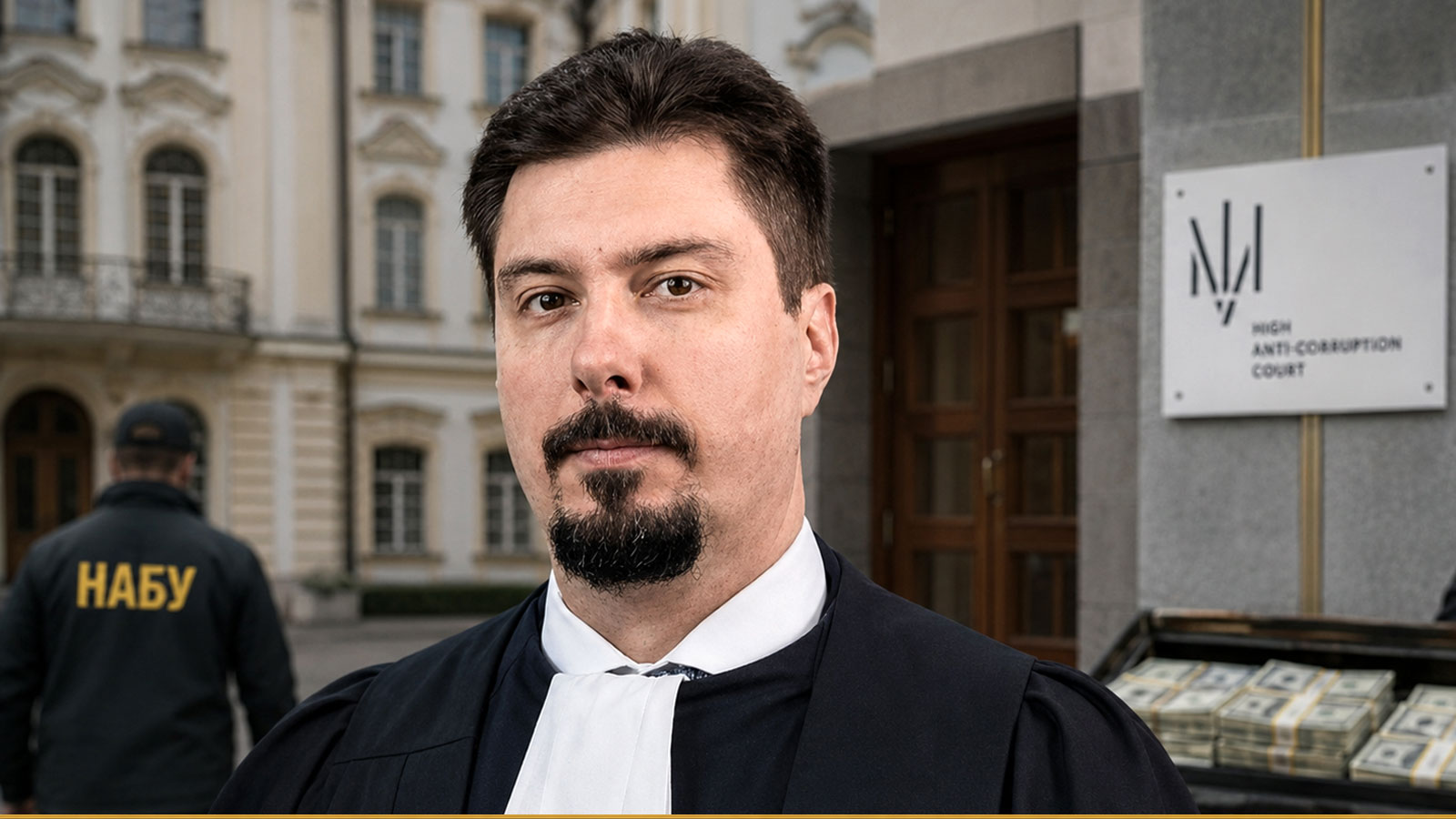
- On 8 June 2026, Ukraine’s High Anti-Corruption Court approved a guilty-plea agreement with former Supreme Court Chairman Vsevolod Kniaziev.
- The court found him guilty under Article 368(4) for accepting an especially large improper benefit.
- He was sentenced to five years in prison and barred for three years from positions in judicial and law-enforcement bodies.
- The court ordered confiscation of specified property and cash, including a house and apartment in Mykolaiv, UAH 32,000, €1,700 and US$201,000.
- Under the agreement, Kniaziev was also required to transfer US$1,104,600 to support Ukraine’s Armed Forces.
EXECUTIVE FINDING
On 8 June 2026, Ukraine’s High Anti-Corruption Court approved a guilty-plea agreement with former Supreme Court Chairman Vsevolod Kniaziev.
The court found him guilty under Article 368(4) for accepting an especially large improper benefit.
He was sentenced to five years in prison and barred for three years from positions in judicial and law-enforcement bodies.
The court ordered confiscation of specified property and cash, including a house and apartment in Mykolaiv, UAH 32,000, €1,700 and US$201,000.
Under the agreement, Kniaziev was also required to transfer US$1,104,600 to support Ukraine’s Armed Forces.
The case began in May 2023 when NABU and SAPO exposed a US$2.7 million bribery scheme involving the leadership of the Supreme Court.
Investigators said the payment was connected to a Grand Chamber ruling concerning shares in the Poltava Mining and Processing Plant and the interests of the Finance and Credit group associated with businessman Kostiantyn Zhevaho.
According to the prosecution, lawyer Oleh Horetskyi and notary Kyrylo Horburov acted as intermediaries.
The prosecution said Kniaziev knew of US$2 million within the overall US$2.7 million arrangement, with US$1.8 million intended for judges and the remainder retained or divided among intermediaries.
Kniaziev’s 2026 plea changed the legal status of the case.
Before June, he was a defendant contesting the charges.
After the plea, he had admitted guilt and agreed to provide incriminating testimony against others.
The scandal therefore moved from an individual bribery case into a wider court-capture investigation.
In 2026, NABU said the circle of suspects had expanded to three sitting Supreme Court judges and one retired judge suspected of receiving improper benefits in the same corporate dispute.
The central institutional problem is stark:
the court entrusted with final interpretation of law was itself allegedly being priced.
A BRIBE TO A LOWER-LEVEL OFFICIAL DISTORTS ONE DECISION. A BRIBE INSIDE THE SUPREME COURT CAN DISTORT THE MEANING OF LAW FOR AN ENTIRE COUNTRY.
The central Kleptik question is therefore:
HOW DOES A STATE DEFEND JUDICIAL INDEPENDENCE WHEN THE PERSON SELLING THE DECISION SITS AT THE TOP OF THE JUDICIARY?
THE FINDING
The case is no longer an allegation against Kniaziev.
He pleaded guilty.
The unresolved question is how far the scheme extended beyond him.
VSEVOLOD KNIAZIEV
Kniaziev was chairman of Ukraine’s Supreme Court when NABU exposed the scheme in May 2023.
His position made him one of the most powerful judges in the country.
THE POLTAVA MINING DISPUTE
The underlying case concerned corporate control and shares in the Poltava Mining and Processing Plant.
A Supreme Court decision could determine ownership of an asset worth vastly more than the bribe.
THE US$2.7 MILLION
Investigators described the overall bribe as US$2.7 million.
The guilty-plea record and prosecution distinguished Kniaziev’s knowledge of US$2 million from the larger intermediary scheme.
THE US$1.8 MILLION JUDICIAL SHARE
Prosecutors said US$1.8 million was intended for judges while intermediaries planned to keep part of the remainder.
This illustrates why gross bribe, recipient share and intermediary profit must be separated.
THE INTERMEDIARY LAWYER
Lawyer Oleh Horetskyi was accused of sourcing clients, collecting money, creating cover documents and using legal practice as the transaction platform.
THE NOTARY
Kyrylo Horburov was described by the prosecution as another intermediary in the cash chain.
His legal status differed from Kniaziev’s and should not be merged.
THE GRAND CHAMBER
The Grand Chamber handles some of the Supreme Court’s most consequential legal questions.
Influence over its outcome has system-wide significance.
CAUGHT RED-HANDED
NABU said the scheme was exposed while cash was being received and distributed.
Lawful search and seizure evidence became central to the prosecution.
THE ADDITIONAL US$500,000
NABU later reported seizure of another US$500,000 during a search at Kniaziev’s home.
Seized cash requires proof of source before it can be treated as bribe proceeds.
THE 2023 REMOVAL
The Supreme Court Plenum expressed no confidence in Kniaziev and removed him as chairman on 16 May 2023.
Institutional removal came before criminal adjudication.
THE 2024 TRIAL
NABU and SAPO referred Kniaziev’s case to HACC in March 2024.
Proceedings continued for more than two years before the 2026 plea.
THE PLEA AGREEMENT
Kniaziev admitted guilt and agreed to provide incriminating testimony against accomplices.
Cooperation transformed him from a contested defendant into a source for the wider case.
THE FIVE-YEAR SENTENCE
The HACC imposed five years’ imprisonment under the plea agreement.
THE PROPERTY CONFISCATION
The court confiscated specified property and cash.
The asset list is important because it creates a transparent judicial record of what was taken.
THE US$1.1046 MILLION DEFENSE CONTRIBUTION
The plea required a substantial payment to support the Armed Forces.
That condition is separate from punishment and confiscation.
PLEA ≠ FULL PUBLIC TRIAL
A plea agreement establishes guilt but can reduce the amount of evidence aired publicly.
The wider network must still be tested through separate cases.
THE THREE SITTING JUDGES
By 2026, NABU reported suspicion against three incumbent Supreme Court judges and one retired judge connected to the same bribery architecture.
Those suspects remain presumed innocent.
THE OLIGARCH QUESTION
Kostiantyn Zhevaho was separately accused of bribing the judicial leadership.
His legal case is distinct from Kniaziev’s guilty plea.
JUDICIAL CAPTURE
Court capture can be more valuable than an administrative permit because a final judgment can transfer ownership, erase liability or establish precedent.
THE LAWYER-GATEKEEPER PROBLEM
Lawyers can lawfully represent clients and negotiate settlements.
Using legal practice to structure bribe payments turns a professional gatekeeper into part of the corruption chain.
THE SUPREME COURT BRIBE MATRIX
| Node | Role alleged / established | Status |
|---|---|---|
| Kniaziev | Bribe recipient / judicial influence | GUILTY PLEA + CONVICTION |
| Horetskyi | Intermediary / collector | Separate plea agreement |
| Horburov | Intermediary alleged | Different procedural status |
| Zhevaho | Alleged bribe source / beneficiary | Separate case |
| Other judges | Suspected recipients | UNRESOLVED / PRESUMED INNOCENT |
THE EVIDENTIARY-STATUS MATRIX
| Issue | Status 8 Jun 2026 | Kleptik treatment |
|---|---|---|
| Kniaziev guilt | Plea approved | ESTABLISHED — GUILTY PLEA |
| US$2.7m scheme | NABU/SAPO case architecture | OFFICIAL INVESTIGATION + PLEA CONTEXT |
| US$1.8m intended for judges | Prosecution theory / evidence | OFFICIAL ALLEGATION |
| Other Supreme Court judges | Suspects | NOT CONVICTED |
| Zhevaho liability | Separate case | DO NOT INFER FROM KNIAZIEV PLEA |
CHRONOLOGY
15 May 2023
NABU and SAPO expose the Supreme Court bribery scheme.
16 May 2023
Kniaziev is removed as Supreme Court chairman.
18 May 2023
HACC orders pretrial detention with large bail alternative.
23 May 2023
NABU reports seizure of an additional US$500,000.
31 January 2024
Kniaziev is released after bail is paid.
4 March 2024
Case is referred to HACC for trial.
6 August 2024
Kniaziev is dismissed as a Supreme Court judge.
12 December 2024
Supreme Court upholds his dismissal.
8 June 2026
HACC approves guilty plea, convicts Kniaziev and imposes five-year sentence.
DOCUMENTARY RECORD
HACC — 8 JUNE 2026
The court’s official release establishes the guilty plea, five-year sentence, office ban, confiscated property and US$1.1046m Armed Forces payment.
NABU / SAPO
Official investigation records describe the US$2.7m bribe scheme and wider Supreme Court network.
HACC DECIDED / TRANSPARENCY INTERNATIONAL UKRAINE
The case record reconstructs the intermediary architecture, timeline and later expansion to additional judges.
WHAT KNIAZIEV ADMITTED
Kniaziev admitted guilt in accepting an especially large improper benefit and agreed to cooperate against others.
WHAT REMAINS UNRESOLVED
The alleged roles of other judges, the alleged bribe source and the full distribution of US$2.7m remain subject to separate proceedings.
WHAT THIS DOSSIER DOES NOT ESTABLISH
It does not state that every Grand Chamber judge was bribed.
It does not treat every lawyer or notary in the case as guilty.
It does not infer Zhevaho’s guilt from Kniaziev’s plea.
RIGHT OF REPLY
Any publication should reflect Kniaziev’s guilty plea and cooperation terms accurately.
Zhevaho, other judges and intermediaries should be described by their individual legal status.
Any broader claim of systemic Supreme Court capture should distinguish proven conduct from expanding investigation.
UNANSWERED QUESTIONS
1. THE FULL US$2.7M
Who was intended to receive every dollar?
2. THE US$700K GAP
How much did intermediaries plan to retain?
3. OTHER JUDGES
Which judicial acts are attributed to the three sitting judges later suspected?
4. THE RULING
What exact legal issue in the Poltava Mining case generated the bribe value?
5. COVER CONTRACTS
What documents were created to disguise the payments?
6. SAFE DEPOSIT
Which bank safe-deposit facilities stored cash?
7. CASH SOURCE
How was the bribe funded and withdrawn?
8. PHONE EVIDENCE
What communications tied the payments to the judicial outcome?
9. THE US$500K
What source did Kniaziev give for the additional cash seized at home?
10. ASSETS
What lawful income funded the confiscated real estate and cash?
11. CASE ASSIGNMENT
Could Kniaziev influence panel composition or scheduling?
12. GRAND CHAMBER
How many judges knew of or participated in the alleged scheme?
13. LAW FIRM
Which legal entities were used by intermediaries?
14. CLIENT DUE DILIGENCE
Did any financial institution flag the cash movements?
15. ZHEVAHO
What evidence connects the alleged payer to the intermediary chain?
16. COOPERATION
What testimony has Kniaziev agreed to provide?
17. SENTENCE DISCOUNT
How materially did cooperation reduce punishment?
18. JUDICIAL REFORM
What conflict and integrity controls changed after May 2023?
19. CASE ALLOCATION
Can algorithmic court allocation reduce bribery risk?
20. THE CENTRAL QUESTION
Was the US$2.7m scheme one corrupt judicial transaction — or evidence that access to the top court had become a privately brokered market?
KLEPTIK INTELLIGENCE ASSESSMENT
ASSESSMENT: ESTABLISHED — GUILTY PLEA
Kniaziev admitted guilt and was convicted on 8 June 2026.
ASSESSMENT: ESTABLISHED — SENTENCE
Five years’ imprisonment and three-year office ban imposed.
ASSESSMENT: ESTABLISHED — CONFISCATION
Specified property and cash were confiscated.
ASSESSMENT: OFFICIAL ALLEGATION
The wider judicial network remained under investigation.
ASSESSMENT: HIGH CONFIDENCE
The case demonstrates the exceptional economic value of corrupt influence over a supreme court.
ASSESSMENT: OPEN
How many additional judicial participants knowingly joined the scheme remained unresolved.
THE KLEPTIK VIEW
A corrupt judge does not merely sell a decision.
He sells certainty.
For a businessman facing a dispute over a major industrial asset, certainty can be worth millions.
That is why judicial bribery is so corrosive.
It converts law from a public rule into a private service.
FOLLOW THE CLIENT.
FOLLOW THE CASH.
FOLLOW WHO COULD DELIVER THE JUDGMENT.
KLEPTIK METHODOLOGY
This dossier is dated 8 June 2026 and frozen to that date.
GUILTY PLEA
Conduct admitted by Kniaziev and accepted by HACC.
OFFICIAL ALLEGATION
Conduct attributed to other suspects by NABU/SAPO but not yet adjudicated.
CONFISCATION
Property ordered taken under the plea judgment.
Kleptik separates Kniaziev’s admitted guilt from the unresolved liability of Zhevaho, other judges and intermediaries.
EVIDENTIARY LABELS
ESTABLISHED — GUILTY PLEA
Admitted and adjudicated conduct.
ESTABLISHED — SENTENCE
Penalty imposed.
ESTABLISHED — CONFISCATION
Property confiscated.
OFFICIAL ALLEGATION
NABU/SAPO claim not yet adjudicated.
JUDICIAL-CAPTURE INDICATOR
Fact relevant to corruption of court decision-making.
KLEPTIK ASSESSMENT
Analytical conclusion.
DOCUMENT STATUS
KLTK-2026-053
Subject: Vsevolod Kniaziev / Supreme Court of Ukraine / US$2.7 Million Bribe / Judicial Corruption
Archive date: 8 June 2026
Status at archive date: guilty plea approved; five-year sentence and confiscation imposed; wider Supreme Court bribery investigation ongoing
Historical treatment: Fixed to report date
© KLEPTIK — Investigations into Power, Money and the Systems Designed to Hide Both