THE PRESIDENT, THE DICTATOR AND THE CAMPAIGN PACT

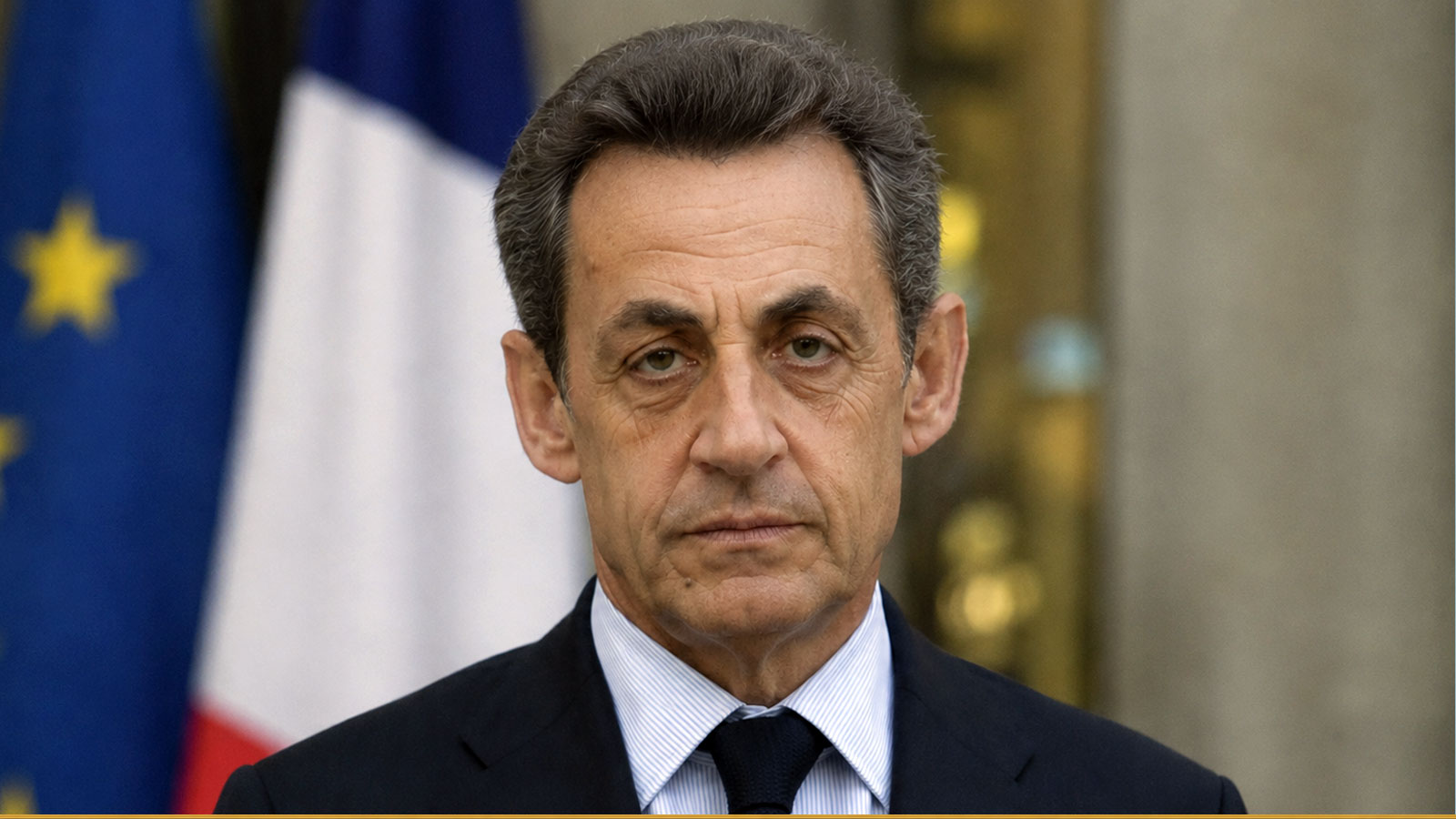
- The court sentenced him to five years in prison, imposed a €100,000 fine and ordered five years of ineligibility and associated civic restrictions.
- The prison sentence was accompanied by a deferred detention order and provisional execution, meaning the incarceration measure was to take effect despite an appeal.
- The court described the conduct as exceptionally serious because it involved preparing corruption at the highest level of the French State.
- But the judgment was narrower than the political shorthand surrounding the case.
- He was acquitted of concealment of embezzled Libyan public funds.
EXECUTIVE FINDING
On 25 September 2025, the Paris Criminal Court convicted former French President Nicolas Sarkozy of criminal conspiracy in the long-running case concerning suspected Libyan financing of his successful 2007 presidential campaign.
The court sentenced him to five years in prison, imposed a €100,000 fine and ordered five years of ineligibility and associated civic restrictions.
The prison sentence was accompanied by a deferred detention order and provisional execution, meaning the incarceration measure was to take effect despite an appeal.
The court described the conduct as exceptionally serious because it involved preparing corruption at the highest level of the French State.
But the judgment was narrower than the political shorthand surrounding the case.
Sarkozy was acquitted of passive corruption.
He was acquitted of concealment of embezzled Libyan public funds.
He was acquitted of illegal campaign financing.
The court said the evidence did not demonstrate that Libyan money was actually used to finance the 2007 campaign.
Instead, the court found that Sarkozy, while Interior Minister and presidential candidate, joined a criminal conspiracy with close associates whose purpose was to prepare a corrupt arrangement with senior figures in Muammar Gaddafi’s regime.
The court relied heavily on the 2005 meetings involving Sarkozy’s chief of staff Claude Guéant, political ally Brice Hortefeux, intermediary Ziad Takieddine and Abdallah Senoussi, Gaddafi’s intelligence chief and brother-in-law.
Senoussi had been convicted in France over the 1989 bombing of UTA Flight 772.
The court concluded that the conspiracy aimed to obtain Libyan financial support for Sarkozy’s presidential ambitions in exchange for future assistance to Libya, including attention to Senoussi’s legal position and broader diplomatic normalisation.
The court found that the corrupt project was prepared even though the broader prosecution theory — that millions of Libyan euros were ultimately injected into the campaign — was not proven beyond the required standard.
This distinction makes the case unusually important.
The crime was the architecture of the pact.
Not the successful completion of the payment.
THE COURT DID NOT FIND THAT LIBYA BOUGHT THE 2007 ELECTION. IT FOUND THAT SENIOR FRENCH POLITICAL ACTORS PREPARED A SYSTEM IN WHICH LIBYAN MONEY COULD HAVE BOUGHT ACCESS TO THE PRESIDENCY.
The central Kleptik question is therefore:
HOW FAR CAN FOREIGN-INFLUENCE CORRUPTION GO BEFORE MONEY ACTUALLY CHANGES HANDS — AND WHEN DOES PREPARING THE DEAL BECOME THE CRIME?
THE FINDING
The Sarkozy-Libya judgment is not a conventional bribery verdict.
It is a conspiracy verdict.
That means the criminal focus moved upstream.
Before the payment.
before campaign books.
before a completed quid pro quo.
The court punished the organised preparation of corruption.
PRESIDENTIAL AMBITION
↓
FOREIGN REGIME ACCESS
↓
POLITICAL INTERMEDIARIES
↓
SECRET / SENSITIVE MEETINGS
↓
PROMISED FUTURE ASSISTANCE
↓
SOUGHT CAMPAIGN FINANCE
↓
CRIMINAL CONSPIRACY
NICOLAS SARKOZY
Sarkozy served as Interior Minister before winning the 2007 presidential election and becoming President of France.
At the time of the conduct examined in the Libya case he was simultaneously a senior minister, leader of the UMP and an active presidential contender.
THE LIBYAN REGIME
Muammar Gaddafi’s Libya was emerging from international isolation in the mid-2000s.
Tripoli wanted diplomatic rehabilitation, commercial opportunities and relief from sanctions-era stigma.
THE FOREIGN-STATE VALUE EXCHANGE
A presidential candidate wants money.
A regime wants access.
Foreign political financing becomes corruption when the financial support is exchanged for future official action.
THE 2005 CONTACTS
The court focused on a sequence of contacts in 2005 between Sarkozy’s close political circle and senior Libyan figures.
These meetings became the backbone of the conspiracy finding.
CLAUDE GUÉANT
Claude Guéant was Sarkozy’s chief of staff and later one of his most senior presidential advisers.
The court convicted Guéant on multiple offences and sentenced him to six years in prison and a €250,000 fine.
GUÉANT’S ROLE
The court treated Guéant’s secret contact with Libyan actors, including Abdallah Senoussi, as central evidence that the political circle was exploring a corrupt arrangement.
BRICE HORTEFEUX
Brice Hortefeux was a close Sarkozy ally and minister.
He was convicted of criminal conspiracy and sentenced to two years in prison, capable of adjustment under electronic monitoring, plus a €50,000 fine and public-office restrictions.
THE HORTFEUX MEETING
The court examined Hortefeux’s meeting with Senoussi and rejected explanations it found implausible.
The meeting mattered because it connected another senior political ally directly to the Libyan side.
ZIAD TAKIEDDINE
Ziad Takieddine was a Franco-Lebanese intermediary who had relationships in France and the Middle East.
He became one of the most important accusers and alleged facilitators in the case.
TAKIEDDINE’S DEATH
Takieddine died on 23 September 2025, two days before the judgment.
The court therefore recorded extinction of the criminal action against him.
THE INTERMEDIARY FUNCTION
Foreign political corruption often requires someone who can move between systems.
Minister.
foreign intelligence chief.
banker.
businessman.
candidate.
The intermediary connects people who should not be negotiating directly.
ABDALLAH SENOUSSI
Abdallah Senoussi was a central intelligence figure in Gaddafi’s Libya and Gaddafi’s brother-in-law.
He had been sentenced in absentia by a French court to life imprisonment for the UTA Flight 772 bombing.
WHY SENOUSSI MATTERED
Any French political engagement concerning Senoussi’s legal situation was extraordinarily sensitive.
The court treated discussions around his status as part of the potential exchange with the Libyan regime.
THE UTA 772 SHADOW
The involvement of a man convicted in France over a terrorist attack against French and other civilians dramatically raised the public-integrity stakes of any covert bargain.
THE CORRUPTION PACT THEORY
Prosecutors alleged a bargain:
Libyan financial support for Sarkozy’s presidential campaign in exchange for diplomatic and legal assistance after election.
WHAT THE COURT ACCEPTED
The court accepted that a corrupt project was being prepared through coordinated conduct among Sarkozy and close associates.
WHAT THE COURT DID NOT ACCEPT
The court did not find sufficient evidence that the full alleged corruption pact was effectively implemented or that Libyan funds were proven to have financed the campaign.
THE CRIMINAL CONSPIRACY OFFENCE
Under French law, association de malfaiteurs can punish participation in an organised group preparing serious offences.
Completion of the ultimate offence is not always required.
PREPARATION AS LIABILITY
The legal lesson is significant.
The State can intervene before the bribe is completed if evidence proves organised preparation.
THE FIVE-YEAR SENTENCE
Sarkozy received five years of imprisonment.
The court said the seriousness of the conduct made a non-custodial sentence inadequate.
THE €100,000 FINE
The court imposed a €100,000 fine in addition to imprisonment and civic restrictions.
THE FIVE-YEAR INELIGIBILITY
The judgment imposed a five-year period of ineligibility and civic restrictions.
Political corruption can therefore affect both liberty and future democratic participation.
THE DEFERRED DETENTION ORDER
The court ordered detention with deferred effect so practical arrangements could be made.
The measure carried provisional execution.
PROVISIONAL EXECUTION
An appeal ordinarily reopens the case.
The provisional-execution measure meant the detention order was not automatically suspended by appeal.
FIRST INSTANCE
The conviction was a first-instance judgment.
Sarkozy immediately announced that he would appeal.
Kleptik therefore does not describe the Libya conviction as final.
FOREIGN REGIME
↓
INTERMEDIARY
↓
CANDIDATE’S INNER CIRCLE
↓
PROMISE / EXPECTATION
↓
FUTURE OFFICIAL ACTION
↓
SOUGHT FINANCIAL SUPPORT
THE ACQUITTAL ON PASSIVE CORRUPTION
Sarkozy was acquitted of passive corruption.
This matters because the court did not find the completed corrupt exchange proved on that count.
THE ACQUITTAL ON LIBYAN PUBLIC FUNDS
He was also acquitted of concealment of embezzled Libyan public funds.
The court did not establish that he knowingly handled or concealed specific misappropriated Libyan State funds.
THE ACQUITTAL ON ILLEGAL CAMPAIGN FINANCE
He was acquitted of illegal campaign financing in the Libya case.
That is the strongest reason not to write that the 2007 campaign was judicially proven to have been financed by Gaddafi.
NO PROOF OF LIBYAN MONEY IN THE CAMPAIGN
The court said the evidence did not demonstrate that money leaving Libya was ultimately used in Sarkozy’s presidential campaign.
THE PROSECUTION’S BROADER THEORY
Prosecutors had argued that millions of euros moved through intermediaries and covert structures into the campaign ecosystem.
The court narrowed the theory substantially.
THE MOUSSA KOUSSA DOCUMENT
A controversial document published years earlier purported to record Libyan approval of campaign support.
The court considered the document unreliable and reportedly concluded it was most likely forged.
DOCUMENT AUTHENTICITY
A sensational document can launch an investigation.
It should never substitute for corroborated bank, witness and transaction evidence.
THE TESTIMONY PROBLEM
Libyan witnesses gave accounts about money supposedly paid.
The court found many accounts imprecise or inconsistent on amounts and routes.
WITNESS MEMORY
High-level political-finance cases often span decades.
Memory degrades.
participants die.
documents disappear.
Forensic banking evidence becomes more important with time.
THE €500,000 GUÉANT PAYMENT
The wider case included a €500,000 payment received by Claude Guéant in connection with a claimed sale of paintings.
The court convicted Guéant on offences that included aggravated money laundering and corruption-related conduct.
THE PAINTING-SALE EXPLANATION
A claimed art sale can be legitimate.
Where artwork, buyer identity, valuation and payment path do not reconcile, the transaction becomes a source-of-funds red flag.
ART AS VALUE TRANSFER
Art can transfer large value with limited public pricing transparency.
That makes provenance and valuation critical in corruption cases.
ALEXANDRE DJOUHRI
Businessman Alexandre Djouhri was convicted on several counts and sentenced to six years in prison, a €3 million fine and a long business-management ban.
THE DJOUHRI ROLE
Djouhri represented another intermediary layer between political figures, Libyan interests, businessmen and financial structures.
WAHIB NACER
Banker Wahib Nacer was convicted and sentenced to four years in prison and a €2 million fine.
The court described his role as central in financial structuring.
THE BANKER NODE
A political pact becomes financially actionable only when someone can move, disguise or legitimise funds.
Bankers and financial intermediaries are therefore critical corruption-risk nodes.
BECHIR SALEH
Bechir Saleh, a former senior Libyan official, was among those convicted in the first-instance judgment.
His role sat on the Libyan side of the political-financial network.
ERIC WOERTH
Eric Woerth, the 2007 campaign treasurer, was acquitted.
That acquittal was important to the court’s rejection of the illegal campaign-financing count against Sarkozy.
THE €35,000 QUESTION
The case examined unreported amounts associated with campaign finances.
The court concluded the evidence did not prove those sums were Libyan in origin.
SUSPICION ≠ PROOF
A judge can consider an explanation implausible and still acquit because the prosecution has not proved criminal origin beyond the required standard.
THE EIGHT CONVICTIONS
Eight defendants were convicted on 25 September 2025.
The case therefore established criminal conduct across multiple nodes even while rejecting parts of the prosecution’s broadest theory.
MIXED VERDICT
The strongest corruption judgments are often mixed.
Conviction on one architecture.
acquittal on another.
That is a sign to report the judgment precisely rather than ideologically.
THE 400-PAGE JUDGMENT
The judgment ran hundreds of pages and distinguished witness credibility, financial evidence, intermediary conduct and legal characterisation across many defendants.
THE 'EXCEPTIONAL SERIOUSNESS' FINDING
The court described Sarkozy’s conduct as exceptionally serious because it threatened public trust in those who represent citizens and in the institutions of the Republic.
TRUST AS PUBLIC ASSET
Political corruption steals more than money.
It consumes confidence that public office is exercised in the national interest.
THE FOREIGN-SOVEREIGNTY RISK
A candidate who seeks secret funding from a foreign regime creates a potential future conflict between national interest and private electoral debt.
ELECTORAL DEBT
If foreign money helps a candidate win, the donor may later expect diplomatic, legal, commercial or security benefit.
The risk persists even if no written contract exists.
THE CANDIDATE / MINISTER OVERLAP
Sarkozy was not only a candidate.
He was Interior Minister.
That meant the political campaign operated alongside current State power.
CURRENT OFFICE AS COLLATERAL
A serving minister can signal credibility to a foreign counterpart in a way an ordinary candidate cannot.
Official status therefore increases the value of political promises.
THE SENOUSSI LEGAL FILE
The potential treatment of Senoussi’s French conviction became part of the court’s understanding of what Libya might have wanted in return.
DIPLOMATIC NORMALISATION
Libya also sought broader rehabilitation in Europe after years of sanctions and isolation.
A future French president could materially influence that process.
STATE-TO-STATE CORRUPTION
The unusual feature is scale.
The alleged counterpart was not a private company seeking a permit.
It was a foreign regime seeking geopolitical benefit.
CORRUPTION AT THE HIGHEST LEVEL
The court’s language captured the essence of the case:
preparing corruption at the highest possible level.
THE ABSENCE OF PERSONAL ENRICHMENT
Sarkozy argued that he had not personally enriched himself.
The court said the intended advantage could be electoral and political rather than a direct increase in personal assets.
POLITICAL BENEFIT AS VALUE
Winning the presidency is not cash.
It is an enormous personal and political advantage.
Corruption law can recognise non-cash objectives.
THE CAMPAIGN ADVANTAGE
The court viewed sought foreign financing as potentially enabling Sarkozy to gain electoral advantage and secure the presidency.
ELECTIONS AS ASSETS
Political corruption often targets intangible value.
Votes.
influence.
office.
access.
These benefits can be more valuable than money.
THE APPEAL
Sarkozy announced an immediate appeal and called the ruling unjust.
He maintained his innocence.
THE PNF APPEAL CONTEXT
At the archive date, subsequent prosecutorial appeal decisions had not yet been formalised.
They belong after 25 September and are excluded from this dossier’s legal status.
ARCHIVE-DATE DISCIPLINE
The later October incarceration arrangements and 2026 appellate trial do not belong inside the 25 September 2025 evidentiary freeze.
THE POLITICAL-REACTION PROBLEM
Immediate enforcement against major political figures triggers debate about judicial power and democratic legitimacy.
That debate should be separated from the question of what the trial court actually found.
LAWFARE CLAIMS
Supporters may describe prosecution as political warfare.
Opponents may describe it as overdue accountability.
Kleptik’s job is to identify the legal status and evidence without adopting either slogan.
THE JUDICIAL-INDEPENDENCE TEST
A healthy system must be able to prosecute former presidents.
It must also apply procedural protections rigorously because political consequences are enormous.
THE APPEAL AS SAFEGUARD
First-instance conviction does not end judicial testing.
Appeal exists precisely because high-stakes judgments can be re-examined.
THE FOREIGN-FUNDING FIREWALL
Democracies should require campaign donors, beneficial owners, intermediaries and funding origins to be transparent enough that foreign-State money cannot hide inside private financial structures.
THE INTERMEDIARY FIREWALL
Political parties should conduct enhanced due diligence when major financial support arrives through businessmen or intermediaries with foreign-government relationships.
THE MINISTERIAL-CONTACT LOG
Senior ministers and campaign principals should document unofficial contacts with foreign-regime intermediaries during election periods.
THE FOREIGN-STATE CONTACT RULE
Campaign representatives meeting foreign intelligence officials should trigger automatic legal and ethics review.
THE CAMPAIGN BANKING RULE
Campaign accounts should reconcile cash, loans, donations and major spending with source verification.
Unknown cash is a structural vulnerability.
THE ART-SALE RULE
High-value art transactions involving senior political aides should require provenance, appraisal, buyer identity and payment-source documentation.
THE HISTORICAL DELAY
The alleged conduct began two decades before the 2025 judgment.
Long delays weaken evidence and public confidence.
WHY IT TOOK SO LONG
Foreign jurisdictions.
intermediaries.
conflicting witnesses.
document authenticity.
financial secrecy.
appeals.
Grand corruption cases accumulate procedural time.
THE DEATH OF WITNESSES
Takieddine’s death immediately before judgment illustrates the risk of delayed justice in long-running transnational cases.
THE LIBYAN STATE COLLAPSE
The 2011 collapse of Gaddafi’s regime destroyed records, dispersed officials and complicated evidence collection.
Political upheaval can permanently fragment a corruption evidentiary trail.
THE 2011 WAR PARADOX
Sarkozy later became one of the principal Western leaders advocating military intervention in Libya.
That geopolitical history creates intense public suspicion but does not by itself prove the 2005 conspiracy or any later motive.
DO NOT RETROFIT GEOPOLITICS
Later French policy toward Libya should not be treated as proof of a prior corruption arrangement without evidence connecting the decisions.
THE REGIME-CHANGE NARRATIVE
Claims that the 2011 intervention was undertaken to destroy evidence or silence Gaddafi require separate proof.
They are not established by the 2025 judgment.
THE CENTRAL EVIDENTIARY LESSON
The court accepted meetings and organised conduct as proof of criminal preparation while rejecting the claim that the money itself had been proven inside the campaign.
UPSTREAM ENFORCEMENT
This case demonstrates why anti-corruption law can target preparatory networks before the final bribe is executed.
THE LIBYA CASE LEGAL-STATUS MATRIX
| Allegation / offence | 25 Sep 2025 result | Kleptik treatment |
|---|---|---|
| Criminal conspiracy to prepare corruption | Sarkozy convicted | ESTABLISHED — FIRST-INSTANCE CONVICTION |
| Passive corruption | Sarkozy acquitted | ESTABLISHED — ACQUITTAL |
| Concealment of embezzled Libyan public funds | Sarkozy acquitted | ESTABLISHED — ACQUITTAL |
| Illegal campaign financing | Sarkozy acquitted | ESTABLISHED — ACQUITTAL |
| Libyan money actually used in 2007 campaign | Not proven by court | DO NOT STATE AS FACT |
| Appeal | Announced | OPEN |
THE FOREIGN-INFLUENCE ARCHITECTURE MATRIX
- Node
- Possible value
- Case significance
- Candidate / minister
- Future State power
- Sarkozy’s dual political role
- Foreign regime
- Diplomatic / legal rehabilitation
- Libyan strategic interest
- Intermediary
- Access + deniability
- Takieddine / Djouhri
- Political aide
- Negotiation / signalling
- Guéant / Hortefeux
- Banker / financier
- Payment infrastructure
- Financial-flow capability
- Campaign
- Electoral advantage
- Intended beneficiary of sought financing
CHRONOLOGY
1989
UTA Flight 772 is bombed; Abdallah Senoussi is later convicted in France in absentia.
2003–2004
Libya moves toward international rehabilitation after abandoning certain weapons programmes and settling terrorism-related disputes.
2005
Contacts intensify between Sarkozy’s political circle and senior Libyan figures, including meetings involving Guéant, Hortefeux, Takieddine and Senoussi.
2007
Sarkozy wins the French presidential election.
2007–2012
Sarkozy serves as President of France.
2011
France plays a leading role in the international intervention in Libya; Gaddafi’s regime collapses.
2012
Mediapart publishes a document purporting to describe Libyan approval of financing for Sarkozy’s 2007 campaign.
2013
French judicial investigation into suspected Libyan financing begins.
2016–2020
Investigators gather testimony, banking records and evidence concerning intermediaries and alleged financial flows.
2020
Ziad Takieddine publicly retracts parts of his earlier allegations; the PNF states that his prior judicial statements were formally recorded and had not been coerced.
2023
Prosecutors refer Sarkozy and multiple co-defendants for trial.
6 January 2025
The Paris trial begins.
27 March 2025
Prosecutors seek seven years’ imprisonment and a €300,000 fine against Sarkozy.
8 April 2025
The trial hearings conclude.
23 September 2025
Ziad Takieddine dies in Lebanon.
25 September 2025
Paris Criminal Court convicts Sarkozy of criminal conspiracy, acquits him on the other principal Libya financing counts and sentences him to five years’ imprisonment, €100,000 fine and five years’ ineligibility.
DOCUMENTARY RECORD
PARIS CRIMINAL COURT — 25 SEPTEMBER 2025
The judgment convicted Sarkozy of criminal conspiracy, acquitted him on passive corruption, concealment of embezzled Libyan funds and illegal campaign financing, and imposed five years’ imprisonment with deferred detention and provisional execution.
JUDGMENT EXCERPTS
Published excerpts record the court’s conclusion that Sarkozy’s conspiracy with Guéant, Hortefeux and Takieddine aimed to prepare corruption at the highest level and that the conduct was exceptionally serious.
PARQUET NATIONAL FINANCIER
The PNF prosecuted the case after a multi-year investigation involving alleged Libyan campaign financing, financial flows, intermediaries and foreign-official contacts.
CONTEMPORANEOUS REUTERS / LE MONDE REPORTING
Contemporaneous reporting confirms the five-year sentence, €100,000 fine, deferred incarceration, acquittals and the court’s finding that no direct proof established Libyan money entering the campaign.
WHAT THE COURT ESTABLISHED
Sarkozy participated in a criminal conspiracy aimed at preparing a corrupt arrangement connected to sought Libyan campaign support.
The conspiracy involved close associates and contacts with senior figures in the Gaddafi regime.
The conduct justified a five-year prison sentence and political restrictions at first instance.
WHAT THE COURT DID NOT ESTABLISH
It did not establish that Sarkozy committed passive corruption.
It did not establish that Sarkozy concealed embezzled Libyan public funds.
It did not establish illegal campaign financing in this Libya case.
It did not establish that Libyan money was actually used to fund the 2007 presidential campaign.
WHAT SARKOZY SAID
Sarkozy maintained that he was innocent and characterised the judgment as profoundly unjust.
He announced an appeal immediately after sentencing.
He said he would comply with judicial orders while continuing to contest the case.
WHAT THIS DOSSIER DOES NOT ESTABLISH
This dossier does not state that Muammar Gaddafi financed Sarkozy’s 2007 campaign as a proven fact.
It does not state that Sarkozy personally received Libyan cash.
It does not treat the 2011 Libya intervention as proof of a prior quid pro quo.
It does not treat every co-defendant as part of the same proven conduct where charges or outcomes differed.
It does not revive charges on which Sarkozy was acquitted.
It does not incorporate incarceration, later prosecutorial appeals or 2026 appellate developments after 25 September 2025.
RIGHT OF REPLY
Historical publication should prominently state Sarkozy’s acquittals and his denial of wrongdoing.
Any allegation concerning specific Libyan cash flows should be tied to evidence accepted by the court rather than repetition of disputed witness claims.
Any inference concerning the 2011 intervention, personal enrichment or later French policy toward Libya requires separate evidence and right-of-reply treatment.
UNANSWERED QUESTIONS
1. THE SOUGHT AMOUNT
What amount of campaign support did the French political circle actually seek from Libya?
2. THE PAYMENT ROUTE
What payment architecture was contemplated if the financing had proceeded?
3. THE LIBYAN DECISION-MAKERS
Which Libyan officials had authority to approve political funding?
4. SENOUSSI
What precisely was promised or suggested regarding Abdallah Senoussi’s French legal position?
5. DIPLOMATIC NORMALISATION
What other forms of French support were discussed with Libyan officials?
6. GUÉANT
What was the full economic source of the €500,000 painting-sale payment?
7. ART
Did the alleged paintings exist, and what independent valuation supported the transaction?
8. TAKIEDDINE
Which parts of Takieddine’s conflicting accounts were corroborated by independent evidence?
9. CASH
What unexplained campaign cash was identified and what evidence addressed its origin?
10. BANKING
Which banks processed suspicious Libyan-linked flows examined in the case?
11. DJOUHRI
What financial and political transactions connected Djouhri to both French and Libyan actors?
12. NACER
What financial structures did Wahib Nacer establish or facilitate?
13. CAMPAIGN BOOKS
How completely can the 2007 campaign’s cash and non-bank transactions be reconstructed?
14. FOREIGN INTELLIGENCE
Did French or allied intelligence agencies record the 2005 contacts contemporaneously?
15. MINISTERIAL RECORDS
What official travel, diplomatic or security records correspond to the secret meetings?
16. THE 2011 WAR
Is there any documentary evidence linking Libya-intervention decisions to the 2005 conspiracy?
17. THE APPEAL
Which factual and legal findings will Sarkozy challenge most aggressively on appeal?
18. THE ACQUITTALS
Will prosecutors seek to reopen the charges on which Sarkozy was acquitted?
19. FOREIGN-FUNDING LAW
Are French campaign controls strong enough to detect a similar foreign-state funding architecture today?
20. THE CENTRAL QUESTION
How should a democracy treat a foreign-financing scheme when the State can prove that the corrupt arrangement was organised and pursued — but cannot prove that the money ever reached the campaign?
KLEPTIK INTELLIGENCE ASSESSMENT
ASSESSMENT: ESTABLISHED — FIRST-INSTANCE CONVICTION
On 25 September 2025, Nicolas Sarkozy was convicted of criminal conspiracy connected to preparing a corrupt Libya campaign-finance arrangement.
ASSESSMENT: ESTABLISHED — SENTENCE
The court imposed five years’ imprisonment, a €100,000 fine and five years’ ineligibility / civic restrictions, with deferred detention and provisional execution.
ASSESSMENT: ESTABLISHED — ACQUITTAL
Sarkozy was acquitted of passive corruption, concealment of embezzled Libyan public funds and illegal campaign financing.
ASSESSMENT: ESTABLISHED — COURT FINDING
The court did not find proof that Libyan money was actually used in the 2007 presidential campaign.
ASSESSMENT: HIGH CONFIDENCE
The case demonstrates that foreign political corruption can exist at the preparatory stage before a completed bribe or proven campaign receipt.
ASSESSMENT: HIGH CONFIDENCE
Intermediaries, senior aides and foreign intelligence officials can create a deniable negotiation layer between candidate and foreign regime.
ASSESSMENT: HIGH CONFIDENCE
The acquittals materially narrow the political narrative: it is inaccurate to describe the judgment simply as proof that Gaddafi financed Sarkozy’s 2007 election.
ASSESSMENT: OPEN
The conviction remained subject to appeal on the archive date and therefore was not final.
THE KLEPTIK VIEW
The most important word in this case is not money.
It is preparation.
For years the public question was simple:
Did Gaddafi finance Sarkozy?
The 2025 court answered a more complicated question.
It did not prove that Libyan money financed the campaign.
It found that a political network prepared a corrupt system in which such financing was sought.
That difference is not a technicality.
It is the case.
A democracy cannot wait until a foreign regime’s money is sitting in the campaign account before corruption becomes dangerous.
The risk begins when officials and candidates negotiate what public power might be worth after election.
That is the market being created.
THE MONEY WAS NOT PROVEN.
THE PACT WAS.
And that is why the conviction matters.
Foreign influence does not begin at the bank.
It begins at the meeting.
the intermediary.
the promise.
the expectation that election victory will create a debt.
The bank transfer is only the final stage.
FOLLOW THE MEETING.
FOLLOW THE PROMISE.
THEN ASK WHAT THE FOREIGN REGIME EXPECTED AFTER ELECTION DAY.
KLEPTIK METHODOLOGY
This dossier is dated 25 September 2025 and is intentionally fixed to the legal and evidentiary position existing on the day of the first-instance judgment.
The principal sources are the Paris Criminal Court judgment as reflected in published decision excerpts and contemporaneous reporting, Parquet national financier records, and contemporaneous Reuters and Le Monde reporting on the verdict and co-defendant outcomes.
Kleptik distinguishes rigorously among first-instance conviction, acquittal, prosecution allegation, witness claim and analytical inference.
FIRST-INSTANCE CONVICTION
A guilt finding entered by the Paris Criminal Court and subject to appeal.
ACQUITTAL
A charge on which the court found the prosecution had not met the required standard; it must not be restated as proven conduct.
COURT FINDING
A factual or legal conclusion expressly adopted in the judgment.
PROSECUTION THEORY
A broader allegation advanced by prosecutors but not necessarily accepted in full by the court.
WITNESS CLAIM
An account by an intermediary or Libyan official requiring corroboration and credibility analysis.
For campaign-finance reporting, Kleptik does not state that Libyan money entered the campaign because the court did not prove that fact.
For corruption analysis, the criminal-conspiracy conviction is treated as upstream preparation of corruption rather than completed bribery.
For Libya-war analysis, no causal connection between the 2005 conspiracy and the 2011 intervention is asserted without separate evidence.
For co-defendants, each person is described according to their own verdict.
Later incarceration, appeals and 2026 appellate proceedings are excluded from the archive-date status.
EVIDENTIARY LABELS
ESTABLISHED — FIRST-INSTANCE CONVICTION
Conduct for which the Paris Criminal Court entered conviction on 25 September 2025.
ESTABLISHED — SENTENCE
Penalty imposed in the same first-instance judgment.
ESTABLISHED — ACQUITTAL
Charge rejected by the court.
ESTABLISHED — COURT FINDING
Specific conclusion expressly relied upon by the court.
PROSECUTION ALLEGATION
Theory advanced by prosecutors but not necessarily accepted by the court.
WITNESS CLAIM
Statement by an intermediary or foreign official requiring corroboration.
FOREIGN-INFLUENCE INDICATOR
Fact relevant to potential foreign leverage over a candidate or officeholder.
KLEPTIK VERIFIED
Fact independently corroborated through authoritative judicial or prosecutorial records and reliable contemporary reporting.
KLEPTIK ASSESSMENT
Analytical conclusion derived from identified evidence.
INVESTIGATIVE LEAD
Matter requiring additional banking, diplomatic, intelligence, campaign or appellate documentation.
DOCUMENT STATUS
KLTK-2025-049
Subject: Nicolas Sarkozy / France / Libya / Muammar Gaddafi / Campaign Finance / Criminal Conspiracy / Foreign Influence
Archive date: 25 September 2025
Status at archive date: First-instance criminal-conspiracy conviction; five-year prison sentence, €100,000 fine and five-year ineligibility / civic restrictions; acquitted of passive corruption, concealment of embezzled Libyan public funds and illegal campaign financing; appeal announced
Historical treatment: Fixed to report date
© KLEPTIK — Investigations into Power, Money and the Systems Designed to Hide Both