THE PRESIDENT AND THE GANG ECONOMY

- abused his influence to facilitate the trafficking of dangerous drugs, including cocaine, destined for the United States;
- The action was coordinated closely with the U.S. Drug Enforcement Administration.
- The sanctions prohibited, among other things:
- U.S. financial institutions from making loans or extending credit to Martelly;
- foreign-exchange transactions subject to U.S. jurisdiction in which he has an interest;
EXECUTIVE FINDING
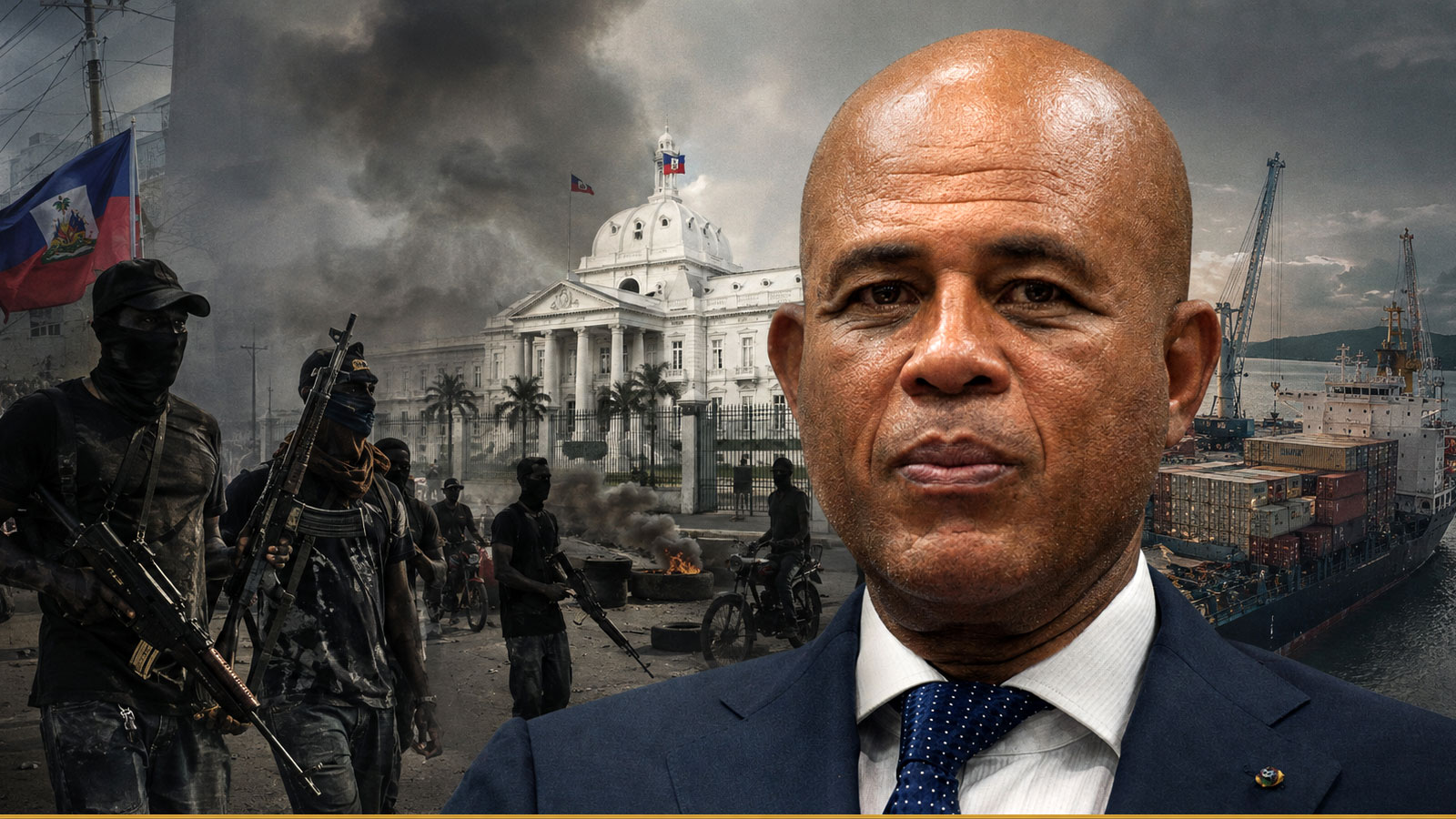
On 20 August 2024, the United States imposed sanctions on former Haitian President Michel Joseph Martelly, accusing one of Haiti’s most powerful former political figures of participating in the infrastructure surrounding international narcotics trafficking and armed gangs.
The U.S. Treasury Department said Martelly:
abused his influence to facilitate the trafficking of dangerous drugs, including cocaine, destined for the United States;
- engaged in laundering illicit drug proceeds
- worked with Haitian drug traffickers
- and
sponsored multiple Haiti-based gangs.
The action was coordinated closely with the U.S. Drug Enforcement Administration.
Treasury placed Martelly on the Non-SDN Menu-Based Sanctions List under Executive Order 14059, the U.S. sanctions programme targeting foreign persons involved in the global illicit drug trade.
The sanctions prohibited, among other things:
- U.S. financial institutions from making loans or extending credit to Martelly
- foreign-exchange transactions subject to U.S. jurisdiction in which he has an interest
- and
U.S. persons from investing in or purchasing significant amounts of his equity or debt interests.
This was not Martelly’s first international designation.
The Government of Canada had already sanctioned him on 17 November 2022, and U.S. Treasury expressly referenced that earlier action when announcing its own designation.
But the significance of the U.S. action extends well beyond one former president.
Treasury framed the case as part of a much larger problem:
the interaction between Haiti’s political and business elites, drug trafficking and the gangs whose territorial power has progressively weakened the Haitian state.
Treasury stated that many Haitian political and business elites had been involved in drug trafficking or linked to gangs responsible for destabilising violence.
The central Kleptik question is therefore not merely:
DID A FORMER PRESIDENT HAVE RELATIONSHIPS WITH DRUG TRAFFICKERS?
The more consequential question is:
HOW DOES POLITICAL POWER BECOME FINANCIAL AND OPERATIONAL INFRASTRUCTURE FOR A GANG ECONOMY?
Because gangs require more than guns.
They require:
- money
- political protection
- territory
- access to ports
- transport
- business relationships
- weapons
- banking or cash channels
and people capable of converting criminal revenue into usable economic power.
Where politicians, businessmen and gangs become interconnected, organised crime can move beyond bribing the state.
It can begin functioning through the state’s political networks.
THE FINDING
The Haitian crisis is often described as a gang problem.
That description is incomplete.
A gang controlling a neighbourhood can extort residents.
A gang linked to political and commercial elites can potentially influence:
- elections
- ports
- fuel distribution
- protests
- business activity
- transport routes
and government authority.
That is a different kind of organisation.
It is not merely street crime.
It is:
POLITICAL ORGANISED CRIME.
THE GANG-STATE MODEL
The relationship can operate in both directions.
POLITICIAN PROVIDES
Protection.
Access.
Weapons.
Money.
Political legitimacy.
Law-enforcement interference.
GANG PROVIDES
Territorial control.
Intimidation.
Election support.
Violence.
Protest disruption.
Protection of commercial routes.
The relationship can become transactional.
THE PATRONAGE OF VIOLENCE
A gang does not necessarily need to control the government formally.
It needs patrons.
Politicians may use armed groups to:
- control neighbourhoods
- intimidate rivals
- mobilise supporters
or enforce informal authority.
Business interests may use them to:
- protect cargo
- control transport
- suppress competitors
or secure territory.
The gang receives money and protection.
The patron receives coercive capacity.
MICHEL JOSEPH MARTELLY
POSITION
President of Haiti from 2011 to 2016.
Before politics, Martelly was a well-known musician, widely known by the stage name “Sweet Micky.”
His presidency made him one of Haiti’s highest-level politically exposed persons.
THE OFAC FINDING
Treasury stated directly that Martelly:
abused his influence to facilitate drug trafficking.
It further said he:
worked with Haitian drug traffickers;
laundered illicit drug proceeds;
and sponsored multiple gangs operating in Haiti.
These are serious government findings.
But their legal status must be understood correctly.
SANCTIONED DOES NOT MEAN CONVICTED
An OFAC designation is not a criminal conviction.
There is no jury verdict.
No criminal judgment.
No sentencing order.
Treasury acts through executive sanctions authorities based on the evidentiary and policy standards applicable to administrative designation.
Therefore Kleptik describes Martelly as:
SANCTIONED BY THE UNITED STATES FOR CONDUCT TREASURY ATTRIBUTED TO DRUG TRAFFICKING, MONEY LAUNDERING AND GANG SPONSORSHIP.
It should not say:
“convicted drug trafficker.”
That would be inaccurate.
THE EVIDENTIARY DISTINCTION
CRIMINAL CONVICTION
Proved in criminal court under applicable criminal standard.
SANCTIONS DESIGNATION
Administrative government action based on statutory or executive authority.
INTELLIGENCE ASSESSMENT
Government determination relying potentially upon financial intelligence, law-enforcement information, intelligence reporting or other evidence not necessarily made public.
The distinctions matter.
WHY SANCTIONS CAN MOVE BEFORE PROSECUTION
Sanctions and criminal prosecution solve different problems.
Criminal prosecution seeks:
conviction;
imprisonment;
forfeiture.
Sanctions seek:
- economic isolation
- financial disruption
- deterrence
and behavioural pressure.
A government may possess significant intelligence supporting sanctions without having:
- extraditable defendant
- admissible witnesses
- public evidence
or a prosecutable criminal case.
THE FINANCIAL WARFARE MODEL
Sanctions effectively tell the financial system:
DO NOT FINANCE THIS PERSON.
The purpose is to deny access to:
- credit
- foreign exchange
- investment
- banking relationships
and capital.
This can materially affect a politically connected individual even without criminal arrest.
WHY MARTELLY MATTERS
Martelly is not a gang leader.
That is precisely why the designation is important.
The alleged role was at a higher level.
Treasury did not simply say:
Martelly participated in street-level trafficking.
It said he abused influence to facilitate trafficking.
Influence is the commodity.
THE PEP ADVANTAGE
A former or current president may possess:
- political relationships
- contacts with police
- customs influence
- government intelligence
- business relationships
- diplomatic contacts
- party networks
and access to wealthy supporters.
Those resources can be extraordinarily valuable to organised crime.
NARCO-POLITICS
Kleptik defines:
NARCO-POLITICS
as the intersection of narcotics commerce and political power where drug-trafficking organisations rely upon political relationships for protection, access or operational advantage.
That does not require the politician physically handling cocaine.
The politician may provide:
- permission
- protection
- information
- appointments
- non-enforcement
or access.
DRUG TRAFFICKING AS LOGISTICS
Cocaine trafficking is not merely possession of narcotics.
At scale, it is a logistics business.
Source.
Transport.
Port.
Warehouse.
Route.
Protection.
Distribution.
Cash collection.
Money laundering.
Each stage can be disrupted by government.
Political influence therefore reduces logistical risk.
HAITI AS A TRANSIT JURISDICTION
Treasury described Haiti as a transit point for illicit drugs destined for the United States and said widespread gang activity and human-rights abuses created a permissive environment for trafficking.
Geography matters.
Haiti sits within Caribbean trafficking routes connecting:
South America;
the Caribbean;
and North American markets.
Weak state capacity can make transit routes more valuable.
THE TRANSIT-STATE PROBLEM
A transit country need not produce the drug.
Its economic value to traffickers comes from:
- location
- ports
- coastline
- air routes
- weak enforcement
- corruptible institutions
and networks.
Political protection can therefore be worth millions even where production occurs elsewhere.
THE COCAINE ROUTE
A simplified trafficking chain:
The territory in the middle is valuable because it provides distance between source and destination.
FOLLOW THE PORTS
Any serious investigation of Haiti’s trafficking economy should identify:
- commercial ports
- informal maritime landing points
- airports
- private aircraft
- shipping companies
- customs officials
- freight forwarders
- fuel operators
warehouses.
Narcotics trafficking is infrastructure dependent.
THE PORT-GANG CONNECTION
Haitian gangs have increasingly exerted influence over key transportation corridors and economic infrastructure.
The more territory gangs control, the more they can tax:
- cargo
- fuel
- transport
- businesses
and people.
This creates a criminal parallel state.
TAXATION WITHOUT GOVERNMENT
A gang controlling a road can impose:
toll.
A gang controlling port access can impose:
fee.
A gang controlling neighbourhood commerce can demand:
protection money.
These payments resemble taxes.
But the revenue funds armed private power rather than public services.
THE GANG ECONOMY
Gang revenue may include:
- kidnapping
- extortion
- drug trafficking
- weapons trafficking
- protection payments
- territorial taxation
and political sponsorship.
The most sophisticated groups diversify.
This transforms gangs into economic organisations.
FOLLOW THE GANG MONEY
For each gang:
Leadership.
Territory.
Revenue sources.
Weapons suppliers.
Political patrons.
Business patrons.
Bank accounts.
Money-service businesses.
Property.
Front companies.
Cash businesses.
Crypto exposure where relevant.
The political relationship is only one layer.
SPONSORSHIP
Treasury said Martelly sponsored multiple Haiti-based gangs.
The word sponsored is analytically important.
Sponsorship can potentially involve:
- money
- weapons
- political protection
- operational assistance
or other support.
Treasury’s public release did not disclose the complete evidentiary detail behind every relationship.
Therefore Kleptik should not invent specific forms of sponsorship without documentary support.
WHAT DOES “SPONSOR” MEAN?
The next investigation should determine:
- Which gangs?
- During what period?
- What support?
- Through whom?
- What intermediaries?
- What financial channels?
- What political objective?
Treasury’s designation provides a strong lead.
It does not publicly answer every question.
THE GANG-NAME GAP
One of the most important omissions from Treasury’s public announcement is the identity of the “multiple Haiti-based gangs” Martelly allegedly sponsored.
That gap itself creates a clear investigative target.
FOLLOW THE ASSOCIATES
A former president may not communicate directly with gang leadership.
Potential intermediaries can include:
- politicians
- businessmen
- security personnel
- party organisers
- local brokers
- community leaders
drug traffickers.
The relationship graph may contain several layers.
POLITICAL DENIABILITY
Distance creates deniability.
The further the layers, the harder the relationship becomes to prove.
That is why financial tracing matters.
THE MONEY-LAUNDERING FINDING
Treasury also stated Martelly engaged in laundering illicit drug proceeds.
This moves the allegation beyond political facilitation.
It suggests financial participation in dealing with the proceeds of trafficking.
Again:
Treasury did not publish the complete transaction history.
That is where Kleptik should investigate.
FOLLOW THE ASSETS
A money-laundering investigation should ask:
- What assets did Martelly own?
- Companies?
- Properties?
- Bank accounts?
- Investments?
- Vehicles?
- Entertainment businesses?
- Accounts outside Haiti?
- What legitimate income supported them?
The investigation must compare wealth against legitimate economic history.
SOURCE OF WEALTH
Martelly had a successful entertainment career before becoming president.
That matters.
Investigators cannot simply identify wealth and call it unexplained.
A legitimate wealth baseline must include:
- music income
- performances
- royalties
- businesses
- property
- presidential income
investment returns.
Only assets inconsistent with legitimate sources become meaningful leads.
THE PEP SOURCE-OF-WEALTH TEST
For each major asset:
Acquisition date.
Price.
Legal owner.
Beneficial owner.
Funding source.
Mortgage.
Seller.
Declared income.
If the economics are explainable, the investigation ends there.
If not, continue.
FOLLOW THE COMPANIES
Corporate structures can hold:
- property
- business revenue
- vehicles
- bank accounts
intellectual property.
A proper Martelly network map should identify companies linked through:
- direct ownership
- family
- directors
- addresses
business partners.
Association alone is not evidence of laundering.
Transaction evidence is required.
THE FAMILY RULE
PEP screening commonly includes close family because assets can legally sit with another household member.
Kleptik should not imply wrongdoing merely from family ownership.
The question is:
- Who funded the asset?
- Who controls it?
- Who benefits?
THE CANADA SANCTIONS
Canada sanctioned Martelly on 17 November 2022, almost two years before the U.S. action.
The U.S. Treasury specifically acknowledged that earlier designation.
That timing is significant.
It means concerns surrounding Martelly were not generated for the first time in August 2024.
Different allied governments had reached serious conclusions at different points.
MULTILATERAL SANCTIONS
Sanctions become more powerful when coordinated.
Person sanctioned by Country A.
↓
moves banking to Country B.
If Country B also sanctions:
escape route narrows.
This is why governments increasingly coordinate financial pressure against organised-crime patrons.
THE CANADIAN NETWORK APPROACH
Canada’s Haiti sanctions extended beyond gang leaders to former politicians and business elites accused of providing financial or operational support to gangs.
Congressional Research Service reporting described a broader patronage system linking Haitian political and economic elites to gangs.
That frames the problem structurally.
POLITICIAN–BUSINESS–GANG TRIANGLE
The key network is:
POLITICIAN
provides protection.
↕
BUSINESSMAN
provides financing / commerce.
↕
GANG
provides coercion.
When those relationships converge, formal state authority weakens.
THE PROTECTION ECONOMY
Businesses in gang-controlled areas may pay criminal groups simply to survive.
That complicates investigation.
A company paying a gang can be:
victim;
collaborator;
or sponsor.
The distinction depends on:
- coercion
- benefit
- intent
and relationship.
COERCION VERSUS COLLUSION
COERCION
Gang demands payment.
Business pays to avoid violence.
COLLUSION
Business funds gang to harm competitors or protect illicit activity.
The transaction may look identical.
Intent differs completely.
POLITICAL SPONSORSHIP
The same distinction applies to politicians.
A politician threatened by gang may be victim.
A politician who funds gang for coercive political services is patron.
Evidence must establish which.
Treasury’s Martelly designation states its conclusion.
Kleptik should still identify underlying evidence wherever possible.
THE HAITI PATRONAGE SYSTEM
CRS reporting has described long-standing ties between Haitian politicians and gangs, noting that gangs may provide political elites with:
- campaign support
- voter intimidation
- fundraising
- vandalism
and protest disruption.
These services effectively privatise political violence.
DEMOCRACY BY COERCION
If gangs determine:
- who campaigns
- who votes
- who can travel
- which businesses operate,
political competition ceases to be genuinely free.
Gang sponsorship therefore becomes an electoral integrity issue.
ELECTION FINANCE
A future Kleptik investigation should examine:
- campaign financing
- party financing
- security payments
- event organisers
- transport
cash distributions.
Formal campaign accounts may show only part of political spending.
INFORMAL POLITICAL FINANCE
Cash-based political systems create opacity.
Unreported campaign spending can finance:
- crowd mobilisation
- security
- transport
- local organisers
armed groups.
Following campaign cash may reveal relationships invisible in formal disclosures.
GANGS AS POLITICAL CONTRACTORS
A gang can function like an illegal contractor.
Political client requests:
control district.
Suppress protest.
Mobilise voters.
Gang supplies coercion.
Payment may be:
- cash
- weapons
- protection
- access
appointments.
This is corruption of democratic governance at its most basic level.
THE FORMER-PRESIDENT PROBLEM
Martelly left office in 2016.
But political influence does not necessarily disappear when office ends.
Former leaders can retain:
- party machinery
- business connections
- security networks
- public popularity
foreign relationships.
That makes former presidents continuing PEP risks.
LIFETIME PEP RISK
Financial institutions sometimes reduce PEP classification after an individual leaves office.
But risk should depend on continuing influence.
A former president with active political networks may remain more influential than a current junior minister.
FORMAL OFFICE VERSUS REAL POWER
Kleptik proposes:
EFFECTIVE POLITICAL POWER
rather than title alone.
Indicators include:
- party control
- candidate sponsorship
- business network
- government appointments
- security relationships
- foreign access
public following.
A former officeholder can remain politically dominant.
THE PHTK NETWORK
Martelly founded or was closely associated with Haiti’s Parti Haïtien Tèt Kale — PHTK, which became a major political force.
A complete political-network investigation should examine:
- party officials
- government appointments
- business allies
- security relationships
campaign financiers.
This dossier does not assume those relationships are criminal.
It identifies the political ecosystem.
THE SUCCESSION NETWORK
Martelly was succeeded by Jovenel Moïse, also associated with the PHTK political movement.
Moïse was assassinated in July 2021.
The period after his death saw further political collapse and gang expansion.
The relationship between political-party continuity and gang patronage should be investigated carefully, without assuming all actors shared the same relationships.
THE ASSASSINATION CONTEXT
Moïse’s assassination dramatically weakened an already fragile state.
But gang influence predated the assassination.
A serious historical investigation must distinguish:
pre-existing patronage networks;
post-assassination expansion;
and later criminal alliances.
STATE VACUUM
When institutions weaken:
This is a feedback loop.
THE GOVERNANCE DEATH SPIRAL
WEAK STATE
↓
Breaking the cycle requires targeting not only armed members but their financial and political sponsors.
WHY TREASURY TARGETS ELITES
Arresting street-level gang members does not necessarily destroy the network.
If political and financial patrons remain intact, they can:
- fund replacements
- buy weapons
- protect routes
maintain business.
Sanctions targeting elites aim at the top of the support chain.
FOLLOW THE SPONSOR, NOT ONLY THE GUNMAN
This should become a core Kleptik principle.
Every gang investigation should map:
- who pays?
- who supplies?
- who protects?
- who profits?
The gunman is often the most visible and least economically powerful node.
THE MONEY-LAUNDERING ARCHITECTURE
Drug proceeds typically move through several stages.
Political protection may operate at multiple points.
CASH-INTENSIVE BUSINESSES
Potential laundering channels in many jurisdictions include:
- nightlife
- restaurants
- construction
- import/export
- transport
real estate.
No industry should be accused without evidence.
The point is that cash-heavy sectors provide plausible revenue explanations.
TRADE-BASED MONEY LAUNDERING
Caribbean trafficking networks may also use trade.
Over-invoicing.
Under-invoicing.
Phantom goods.
False customs values.
The money appears connected to commerce rather than drugs.
Ports therefore matter to both trafficking and laundering.
FOLLOW THE CUSTOMS DATA
For suspect businesses:
import volume.
Declared value.
Supplier.
Country of origin.
Payments.
Physical capacity.
Trade data can expose impossible commercial patterns.
MONEY SERVICES
Remittance businesses and informal value-transfer systems can move money across borders.
Legitimate remittances are essential to Haiti’s economy.
Investigators must avoid conflating ordinary diaspora transfers with laundering.
Target transaction patterns, not industry.
DIASPORA FINANCE
Haiti relies heavily on remittances.
This creates enormous legitimate cross-border financial flow.
Criminal transfers can potentially hide inside it.
The correct response is better analytics, not blanket suspicion.
STRUCTURING
Large criminal proceeds can be broken into smaller transfers to avoid attention.
Multiple senders.
Multiple recipients.
Multiple locations.
Network analysis can identify common control.
THE MIAMI CONNECTION
OFAC listed Martelly with geographic associations including Miami, Florida, as well as locations in Haiti and the Dominican Republic.
This does not establish illegal activity in Miami.
It is relevant because U.S. residence or financial activity can bring sanctions enforcement much closer to a designated person’s assets and banking relationships.
SANCTIONS AND U.S. BANKING
The U.S. dollar remains central to global finance.
A targeted person’s ability to transact can therefore be impaired even beyond U.S. territory.
Banks worldwide often review OFAC designations because transactions may clear through U.S. financial infrastructure.
THE CORRESPONDENT-BANK EFFECT
That makes U.S. sanctions globally consequential.
MENU-BASED SANCTIONS
Martelly was added not to the full blocking SDN list but to OFAC’s Non-SDN Menu-Based Sanctions List.
Treasury imposed specific prohibitions involving:
credit;
foreign exchange;
and investment.
This distinction should be presented accurately.
NOT ALL SANCTIONS ARE ASSET FREEZES
A common reporting error is:
“U.S. froze all his assets.”
That was not the structure Treasury announced.
The measures were targeted menu-based prohibitions.
Precise sanctions terminology matters.
SANCTIONS DUE DILIGENCE
A bank or investor dealing with Martelly after designation should determine:
- Does the transaction involve prohibited credit?
- Foreign exchange?
- Significant equity or debt?
- Does a company he controls create indirect exposure?
Legal advice is required for specific transactions.
OWNERSHIP AND CONTROL
OFAC regimes may apply to entities through ownership rules or other programme-specific restrictions.
Kleptik should never assume an entity is sanctioned merely because Martelly is associated with it.
Ownership must be established and applicable sanctions rules analysed.
THE POLITICAL ELITE PROBLEM
Treasury’s statement did not treat Martelly as an isolated anomaly.
It said corrupt Haitian political elites had contributed significantly to the crisis and described long-standing links between elites, trafficking and gangs.
That suggests the appropriate unit of investigation is an elite network.
WHO ELSE?
A future Kleptik Haiti database should include:
- sanctioned politicians
- former senators
- former ministers
- business elites
- gang leaders
- companies
- ports
- weapons networks
drug cases.
Then map overlaps.
SANCTIONS ARE INVESTIGATIVE LEADS
Designation provides:
name.
Government assessment.
Date.
Legal basis.
But not necessarily the full evidentiary file.
Journalism should use sanctions as the beginning of investigation.
Not substitute for it.
BUILD THE UNDERLYING CASE
For Martelly:
- Which traffickers?
- Which gangs?
- Which companies?
- Which bank accounts?
- Which assets?
- Which transactions?
- Which communications?
- Which ports?
Those are the questions that turn an OFAC press release into a Kleptik dossier.
THE DRUG-TRAFFICKER NETWORK
Treasury said Martelly worked with Haitian drug traffickers.
Kleptik should identify individuals through:
- DEA cases
- federal indictments
- extraditions
- Haitian prosecutions
sanctions.
Then examine relationships.
THE EXTRADITION FILES
Haiti-related narcotics cases frequently end in U.S. federal courts because cocaine is destined for the United States.
Extradition records can reveal:
- participants
- routes
- aircraft
- boats
- payment methods
government protection.
This could expose the operational side behind Treasury’s intelligence assessment.
FOLLOW THE COCAINE CASES BACKWARD
Instead of beginning with Martelly:
begin with convicted traffickers.
Ask:
- Who protected them?
- Which politicians appear in testimony?
- Which police?
- Which port officials?
- Which businesses?
Working backward may reveal the political network more reliably.
THE WITNESS-RISK PROBLEM
Narco-political investigations depend heavily on cooperating witnesses.
Traffickers may seek sentence reductions.
Their testimony therefore requires corroboration.
Bank records.
Phone records.
Flight logs.
Customs records.
Property.
Messages.
Witness alone is not enough for strong reporting.
THE GANG-FINANCE FILE
For each sanctioned gang leader:
financial supporters.
business connections.
political connections.
weapons suppliers.
This should be matched against sanctioned elites.
Where the same intermediary appears in both datasets, a strong investigative lead emerges.
THE BUSINESS-ELITE LAYER
Canada and other international actors have also targeted Haitian business figures accused of supporting gangs.
This complicates the story.
Political violence can be financed not only by politicians but by commercial interests seeking:
protection;
market control;
or political leverage.
GANGS AS PRIVATE SECURITY
In areas where state security fails, businesses may rely upon armed groups for protection.
This can evolve from:
extortion
to
partnership.
The line can become dangerously blurred.
PORT CONTROL AND BUSINESS
A gang controlling access to:
- port
- road
- fuel terminal
can extract money from legitimate commerce.
Businesses may then develop continuing relationships with gang leadership.
The criminal economy becomes embedded inside the legal economy.
FUEL
Fuel access has repeatedly been a major factor in Haiti’s security crisis.
Control of fuel routes gives gangs extraordinary leverage over:
- transport
- electricity generation
- business
hospitals.
Economic infrastructure becomes political power.
THE GANG BALANCE SHEET
Gang assets:
territory.
weapons.
members.
political contacts.
Business assets:
cash.
companies.
vehicles.
property.
The most powerful gangs combine both.
GANGS AS SHADOW CONGLOMERATES
Some criminal organisations become diversified enterprises.
Extortion division.
Kidnapping division.
Drug route.
Political services.
Transport control.
They begin resembling conglomerates operating outside the law.
THE STATE-CAPTURE QUESTION
The ultimate risk is not corruption inside government.
It is:
STATE CAPTURE
where private or criminal networks become capable of determining public decisions systematically.
Haiti’s institutional collapse makes this question unavoidable.
CORRUPTION VERSUS STATE CAPTURE
CORRUPTION
Official abuses office for private benefit.
STATE CAPTURE
Private network shapes institutions themselves.
Appointment.
Law enforcement.
Contracts.
Elections.
Territory.
The second is far more dangerous.
WAS HAITI CAPTURED?
This dossier does not make that definitive finding.
But the overlap described by Treasury between:
- political elites
- drug traffickers
- gangs
- and business networks
creates indicators consistent with state-capture risk.
That warrants investigation.
THE INTERNATIONAL RESPONSE
The United States, Canada and United Nations have increasingly used sanctions against Haitian:
gang leaders;
politicians;
and economic elites.
The strategy reflects recognition that Haiti’s violence is financed and protected by networks above street level.
SANCTIONS VERSUS PROSECUTION
Sanctions disrupt.
Prosecution punishes.
Neither alone solves weak institutions.
The sustainable solution requires:
- police
- courts
- customs
- financial intelligence
- anti-corruption systems
- elections
and economic alternatives.
Otherwise networks regenerate.
FOLLOW THE ASSETS, THEN FOLLOW THE INSTITUTIONS
Asset tracing may identify:
money.
But institutional analysis explains:
how the network survived.
Both are necessary.
THE RIGHT-OF-REPLY PROBLEM
Sanctioned individuals often dispute designations.
Because OFAC’s underlying evidence may not all be public, investigative publications should make meaningful efforts to obtain the subject’s response.
Kleptik should clearly state whether Martelly denies Treasury’s conclusions.
A sanctions designation should not eliminate right of reply.
WHAT THE UNITED STATES SAYS
Treasury’s conclusion is explicit:
- Martelly abused his influence to facilitate cocaine trafficking
- laundered illicit drug proceeds
- worked with traffickers
and sponsored multiple gangs.
Treasury linked that conduct to the broader destabilising role played by corrupt political elites in Haiti.
WHAT CANADA DID
Canada had sanctioned Martelly on 17 November 2022 before the United States took equivalent public action.
CRS reporting described Canada’s action as connected with drug trafficking and gang financing.
The U.S. designation two years later substantially increased international financial pressure.
WHAT THIS DOSSIER DOES NOT ESTABLISH
This dossier does not establish that:
- Michel Martelly has been criminally convicted of drug trafficking
- he has been convicted of money laundering
- every member of the PHTK participated in gang activity
- every Haitian businessman interacting with political leaders finances gangs
- every Martelly-associated company contains illicit proceeds
- every gang in Haiti was sponsored by Martelly
- the United States publicly identified which gangs it says he sponsored
or every asset Martelly owns derives from crime.
The U.S. action is a sanctions designation.
Its evidentiary status is important.
RIGHT OF REPLY
Before publication, Kleptik should seek comment from:
- Michel Joseph Martelly
- legal representatives for Martelly
- PHTK where relevant to political-network analysis
- Government of Haiti
U.S. Department of the Treasury / OFAC
Government of Canada
For any named businessman, politician, company or family member identified in original Kleptik reporting, specific allegations and evidence should be provided for response before publication.
UNANSWERED QUESTIONS
Treasury’s sanctions designation is unusually serious.
Its public explanation remains concise.
The real investigation begins where the sanctions notice ends.
1. WHICH DRUG TRAFFICKERS?
Who are the Haitian traffickers Treasury says Martelly worked with?
2. WHICH GANGS?
Which “multiple Haiti-based gangs” did Treasury conclude he sponsored?
3. WHAT PERIOD?
Did the relationships occur during his presidency, after leaving office or both?
4. WHAT FORM OF SUPPORT?
- Money?
- Weapons?
- Political protection?
5. MONEY LAUNDERING
What specific illicit proceeds did Treasury trace?
6. BANK ACCOUNTS
Which institutions handled those funds?
7. COMPANIES
Which entities allegedly served as financial vehicles?
8. PROPERTY
Were real-estate assets involved?
9. U.S. NEXUS
What transactions or assets touched U.S. jurisdiction?
10. MIAMI
What is the nature of Martelly’s financial and property footprint in the United States?
11. DOMINICAN REPUBLIC
What commercial or financial relationships existed there?
12. PORTS
Which Haitian ports or maritime routes were used by associated traffickers?
13. CUSTOMS
Were government officials implicated in trafficking routes?
14. POLICE
Which law-enforcement relationships existed?
15. BUSINESS SPONSORS
Which economic elites financed the same gangs?
16. CAMPAIGN FINANCE
Did gang or trafficking money enter political campaigns?
17. PARTY NETWORK
How did PHTK-era political appointments intersect with sanctioned gang patrons?
18. CANADA
What evidence supported Canada’s earlier designation?
19. DEA
What investigative record underlies Treasury’s coordination with DEA?
20. THE CENTRAL QUESTION
Was Martelly’s alleged role a personal criminal relationship with traffickers—or part of a wider patronage architecture in which politics, business and gangs exchanged money, protection and coercive power?
That is the investigation Kleptik should pursue.
KLEPTIK INTELLIGENCE ASSESSMENT
ASSESSMENT: ESTABLISHED — U.S. SANCTIONS ACTION
On 20 August 2024, OFAC sanctioned Michel Martelly pursuant to Executive Order 14059 for conduct Treasury connected to the international illicit drug trade.
ASSESSMENT: OFFICIAL U.S. GOVERNMENT FINDING
Treasury stated that Martelly abused political influence to facilitate cocaine trafficking destined for the United States, laundered illicit drug proceeds, worked with Haitian traffickers and sponsored multiple gangs.
ASSESSMENT: ESTABLISHED — CANADIAN SANCTIONS
Martelly had already been sanctioned by Canada on 17 November 2022.
ASSESSMENT: HIGH CONFIDENCE
Haiti’s gang crisis cannot be understood solely by examining gang members.
Political and economic patronage networks are a material component of the security problem, a conclusion reflected in U.S., Canadian and congressional reporting.
ASSESSMENT: HIGH CONFIDENCE
A former president can remain a major PEP risk after leaving formal office where political, business and security influence remains substantial.
ASSESSMENT: HIGH CONFIDENCE
Gang financing should be analysed using the same beneficial-ownership logic used in financial crime:
identify who ultimately finances, controls, protects and profits from the armed network.
ASSESSMENT: HIGH CONFIDENCE
Sanctions are valuable investigative leads but do not substitute for transaction-level proof.
Treasury’s public designation does not disclose the complete evidentiary basis underlying every allegation against Martelly.
ASSESSMENT: MODERATE-TO-HIGH CONFIDENCE
The most important unanswered issue is whether the Martelly findings form part of a broader systemic political-business-gang architecture rather than isolated bilateral relationships.
The wider international sanctions campaign against Haitian political and economic elites makes that question reasonable, but original evidence remains necessary for each connection.
ASSESSMENT: NOT ESTABLISHED
No U.S. criminal conviction against Martelly for the conduct described by Treasury existed as of the archive date.
Kleptik should never convert the sanctions designation into a criminal-conviction claim.
THE KLEPTIK VIEW
Haiti’s gangs are visible.
Their patrons are not.
The gunman controls a road.
The gang leader controls a neighbourhood.
But the person financing the weapons, protecting the route or influencing the police may never appear at the checkpoint.
That is why Haiti cannot be investigated only from the street upward.
It must also be investigated from the presidential palace, boardroom and bank account downward.
Treasury’s designation of Michel Martelly is extraordinary not because another Haitian figure was sanctioned.
It is extraordinary because Martelly once occupied the highest office in the country.
The allegation is therefore not that organised crime corrupted someone at the edge of the state.
It is that political influence at the very top became useful to narcotics traffickers and armed groups.
That transforms the meaning of the gang crisis.
If a gang is financed by kidnapping and extortion alone, it is a criminal organisation.
If it is financed or protected by politicians and businessmen, it becomes something more dangerous:
A POLITICAL-ECONOMIC NETWORK WITH GUNS.
And that network can supply services.
To politicians:
intimidation.
Election muscle.
Territorial control.
To businesses:
protection.
Competitor suppression.
Access.
To traffickers:
routes.
Security.
Silence.
To the gang:
money.
Weapons.
Political protection.
The relationship becomes mutually reinforcing.
This is why simply arresting gang members cannot dismantle the system.
The gunman is replaceable.
The financial and political infrastructure is not.
The most important line in Treasury’s announcement is therefore not “cocaine.”
It is:
ABUSED HIS INFLUENCE.
Influence is the asset.
A former president does not need to move a kilogram personally.
Political influence can help the kilogram move.
A businessman does not need to carry a rifle.
Money can buy the person who does.
A bank account does not need to contain the word “gang.”
It only needs to move value to the person supplying the gang.
That is why Kleptik should treat Haiti as a network investigation.
Not:
Martelly.
Not:
one gang.
Not:
one drug route.
But:
POLITICIANS ↔ BUSINESSMEN ↔ TRAFFICKERS ↔ GANGS ↔ FINANCIAL SYSTEM.
Each arrow is a transaction.
Money.
Protection.
Information.
Violence.
Commercial advantage.
Once those arrows are mapped, the visible chaos begins to acquire structure.
Sanctions give us the names governments believe matter.
Investigative journalism has to explain the relationships.
Because Haiti’s crisis is often described as a country where gangs have overwhelmed politics.
The more disturbing possibility is the reverse:
POLITICS MAY HAVE HELPED BUILD THE GANGS THAT LATER OVERWHELMED THE STATE.
That is the question that belongs at the centre of Kleptik’s Caribbean investigations.
DON’T JUST FOLLOW THE GUNMAN.
FOLLOW WHO PAYS HIM.
FOLLOW WHO PROTECTS HIM.
FOLLOW WHO PROFITS WHEN HE CONTROLS THE STREET.
KLEPTIK METHODOLOGY
This dossier is dated 20 August 2024 and is intentionally fixed to the legal and evidentiary position existing on that date.
The principal evidentiary basis is:
the U.S. Department of the Treasury’s 20 August 2024 OFAC sanctions designation;
the corresponding OFAC listing notice;
the earlier Canadian sanctions record as referenced by U.S. Treasury and congressional reporting;
and
public institutional reporting concerning political and economic patronage of Haitian gangs.
Kleptik distinguishes carefully between:
- criminal conviction
- criminal charge
- sanctions designation
- official government finding
- intelligence assessment
- and
Kleptik analysis.
A sanctions designation is not described as a criminal conviction.
Where Treasury states that a sanctioned person engaged in specific conduct, Kleptik attributes that conclusion to Treasury unless independently verified from additional primary evidence.
For political-gang investigations, Kleptik examines four independent relationship categories:
FINANCIAL
Money, property, companies, payments.
POLITICAL
Appointments, party roles, campaign activity, official protection.
CRIMINAL
Drug trafficking, weapons, kidnapping, extortion.
OPERATIONAL
Territory, ports, transport routes, security.
A relationship in one category does not automatically establish a relationship in the others.
For gang sponsorship claims, Kleptik should seek:
- bank records
- messages
- witness testimony
- law-enforcement filings
- weapons records
- company payments
and other corroborating evidence.
For PEP asset analysis, wealth must be measured against legitimate prior income.
A wealthy former politician is not suspicious merely because they are wealthy.
For business-gang relationships, the possibility of extortion must be distinguished from voluntary support.
Payment under coercion is not equivalent to sponsorship.
For U.S. sanctions analysis, Kleptik should identify the precise sanctions programme and prohibitions rather than using generic terminology such as “assets frozen” where the legal action imposed menu-based restrictions.
For family, party or business associates, proximity to a sanctioned person is not evidence of wrongdoing.
Individual evidence is required.
All named subjects facing criticism beyond official findings should receive a meaningful opportunity to respond.
EVIDENTIARY LABELS
ESTABLISHED — SANCTIONS DESIGNATION
Person formally designated by a competent sanctions authority.
OFFICIAL GOVERNMENT FINDING
Conduct publicly attributed to an individual by Treasury, Canada or another competent government authority.
CRIMINAL CONVICTION
Reserved only for adjudicated criminal liability.
GANG-SPONSORSHIP INDICATOR
Evidence potentially connecting a person or entity to material support for an armed group.
PEP INFLUENCE INDICATOR
Political access or authority potentially relevant to organised-crime facilitation.
NARCO-POLITICAL INDICATOR
Evidence potentially connecting political influence with narcotics trafficking.
FINANCIAL-NETWORK INDICATOR
Asset, company or payment potentially relevant to illicit proceeds.
KLEPTIK VERIFIED
Fact independently corroborated through primary documentary evidence.
KLEPTIK ASSESSMENT
Analytical conclusion drawn from identified evidence.
INVESTIGATIVE LEAD
Matter requiring further financial, corporate, criminal or political verification.
UNVERIFIED
Information insufficiently corroborated for factual publication.
DOCUMENT STATUS
KLTK-2024-019
Subject: Michel Martelly / Haiti / Drug Trafficking / Gang Financing / Political Influence
Archive date: 20 August 2024
Status at archive date: U.S. OFAC sanctions designation in force; prior Canadian sanctions in force
Historical treatment: Fixed to report date
© KLEPTIK — Investigations into Power, Money and the Systems Designed to Hide Both