THE LAWYER WHO MOVED $400 MILLION

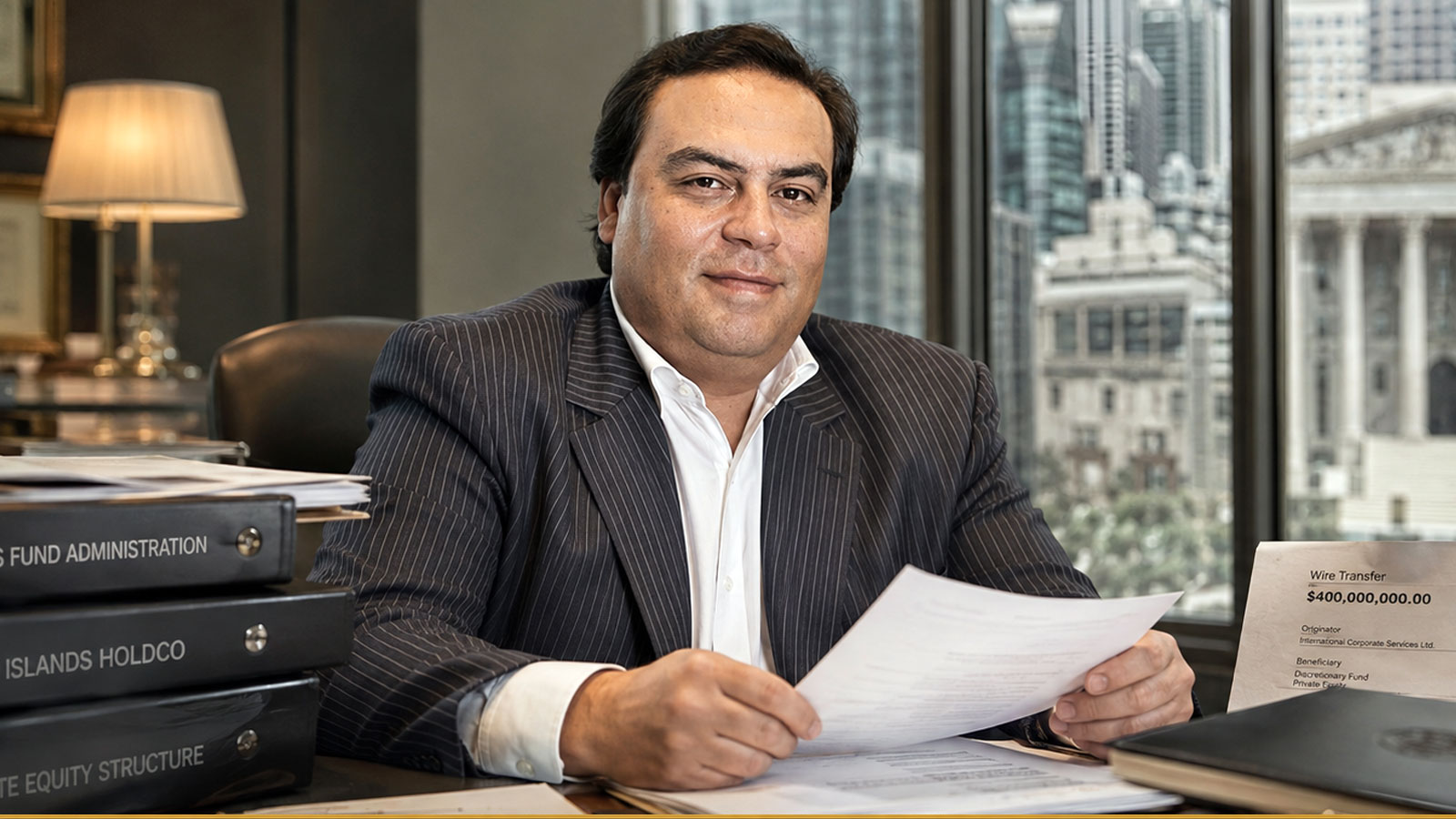
- On 25 January 2024, former international law-firm partner Mark S.
- Scott was sentenced in Manhattan federal court to 10 years in prison for laundering approximately $400 million in proceeds from the OneCoin fraud scheme.
- Scott had already been convicted on all counts after a three-week jury trial in November 2019.
- The sentencing brought into focus one of the most important financial-crime questions raised by OneCoin:
- He was not selling packages to retail investors.
EXECUTIVE FINDING
On 25 January 2024, former international law-firm partner Mark S. Scott was sentenced in Manhattan federal court to 10 years in prison for laundering approximately $400 million in proceeds from the OneCoin fraud scheme.
Scott had already been convicted on all counts after a three-week jury trial in November 2019.
The sentencing brought into focus one of the most important financial-crime questions raised by OneCoin:
HOW DOES FRAUD MONEY ACQUIRE A LEGITIMATE FINANCIAL IDENTITY?
Scott was not a cryptocurrency promoter.
He was not the founder of OneCoin.
He was not selling packages to retail investors.
He was a sophisticated corporate lawyer.
Between June 2015 and September 2016, he worked as an equity partner at Locke Lord LLP, a major international law firm. According to federal prosecutors, Scott used his legal expertise to establish a series of purported private-equity investment funds in the British Virgin Islands known as the Fenero Funds.
The funds gave hundreds of millions of dollars a new description.
Money originating from OneCoin was represented to financial institutions as investment capital belonging to wealthy European families.
It was then layered through Fenero Fund accounts maintained in the Cayman Islands and Republic of Ireland before being transferred onward to OneCoin founder Ruja Ignatova and related entities, appearing by then as investments flowing outward from legitimate-looking private-equity funds.
The underlying money had not changed.
Its story had.
Scott was paid more than $50 million for his role. Prosecutors said he used the proceeds to acquire luxury watches, a Ferrari, multiple Porsches, a 57-foot Sunseeker yacht and multimillion-dollar seaside properties in Cape Cod.
The court ordered him to forfeit:
- $392,940,000
- several bank accounts
- a yacht
- two Porsche automobiles
- and
four real-estate properties.
This was not simply the story of a lawyer who committed money laundering.
It demonstrates something more consequential:
Professional legitimacy itself can become a laundering instrument.
A shell company created by an unknown promoter attracts questions.
A private-equity fund designed by an experienced international lawyer arrives surrounded by:
- formation documents
- subscription agreements
- legal terminology
- banking relationships
- corporate directors
- investment explanations
and professional credibility.
The structure does more than move money.
It helps explain the money.
THE FINDING
Money laundering is frequently described as hiding money.
That description is incomplete.
Sophisticated laundering often does not make money disappear.
It makes money explainable.
Consider two transactions.
TRANSACTION A
The transaction immediately attracts attention.
Now consider:
TRANSACTION B
The second transaction resembles normal international finance.
The problem arises if the purported:
- investor
- investment
- fund rationale
- or economic purpose
is false.
That is why professional laundering is so powerful.
It does not necessarily conceal the wire transfer.
It conceals the meaning of the wire transfer.
THE PROFESSIONAL LAYER
OneCoin had already solved its first major problem:
how to acquire money.
Millions of participants around the world purchased fraudulent cryptocurrency packages, generating billions of dollars.
But mass fraud creates another problem.
Large balances attract scrutiny.
Banks ask questions.
Regulators notice.
Victims complain.
Accounts close.
The organisation needs mechanisms capable of moving very large amounts without every transfer retaining an obvious connection to the fraud.
This is where professional infrastructure becomes critical.
A professional can potentially provide:
- corporate entities
- investment funds
- banking introductions
- contracts
- legal opinions
- trust arrangements
- transaction documentation
and institutional credibility.
None of those services is inherently improper.
They form the architecture of legitimate international finance.
That is precisely what makes their abuse so effective.
MARK S. SCOTT
PROFESSIONAL PROFILE
Scott was an experienced corporate lawyer and equity partner at Locke Lord LLP between June 2015 and September 2016.
Prosecutors said he was introduced to Ruja Ignatova in September 2015.
By early 2016, he had begun creating the Fenero Funds.
His professional status matters.
A bank receiving a complex transaction from an unknown company may hesitate.
A bank dealing with a structure assembled by senior legal professionals may perceive a different level of legitimacy.
The professional does not merely know the law.
The professional may act as a trust signal to other institutions.
REPUTATIONAL INTERMEDIATION
Kleptik calls this:
REPUTATIONAL INTERMEDIATION
The professional intermediary supplies more than technical services.
He supplies institutional confidence.
The chain can look like:
The lawyer’s reputation has effectively entered the transaction.
That reputation can reduce institutional suspicion.
THE FENERO FUNDS
Beginning in early 2016, prosecutors said Scott created a series of purported private-equity investment funds in the British Virgin Islands known collectively as the Fenero Funds.
Their stated appearance was important.
Private-equity funds ordinarily exist to collect capital from investors and deploy that capital into investments.
The basic legitimate architecture is:
Nothing about that structure is suspicious.
Scott’s conviction established that his Fenero structures were instead used as laundering vehicles.
THE FALSE INVESTOR STORY
Prosecutors said incoming transfers of approximately $400 million were represented as investments from wealthy European families.
In reality, according to the evidence accepted by the jury, the funds represented proceeds from OneCoin.
This distinction is central.
A bank evaluating an investment fund will naturally ask:
- Who are the investors?
- What is the source of their wealth?
- What is the purpose of the fund?
- Where is the capital coming from?
If the answer is:
wealthy European families investing legitimate private wealth,
the risk analysis looks one way.
If the actual answer is:
proceeds from a multibillion-dollar fraudulent MLM scheme,
the analysis changes completely.
The laundering mechanism therefore depended on false beneficial economic identity.
LEGAL OWNER VERSUS ECONOMIC SOURCE
AML systems routinely focus on beneficial ownership.
Who owns the company?
That is essential.
But the Fenero structure shows why another question matters equally:
WHO ECONOMICALLY OWNS THE MONEY?
A fund may legally hold the account.
That does not mean the fund generated the wealth.
Investigators must work backward.
Only then does the true origin become visible.
LAYERING
After the money entered the Fenero Funds, prosecutors said it moved through multiple bank accounts in the Cayman Islands and Ireland.
The funds were then transferred back to Ignatova and other OneCoin-associated entities, but the outgoing transfers were described as investments from the funds.
This is classic layering.
The objective is to increase distance between:
criminal origin
and
final recipient.
THE LAYERING MODEL
At the beginning:
fraud proceeds.
At the end:
investment proceeds.
The money has not economically transformed.
The documentary narrative has.
WHY LAYERING WORKS
Every additional entity or account creates another question investigators must answer.
Transaction 1:
Where did it come from?
Transaction 2:
Why did Fund A send to Account B?
Transaction 3:
Who owns Entity C?
Transaction 4:
Why did Company D invest in Company E?
One transfer is easy to understand.
Twenty transfers across several jurisdictions create friction.
The criminal value of complexity is therefore not complete invisibility.
It is investigative cost.
OFFSHORE JURISDICTIONS
The Fenero structure involved:
British Virgin Islands — fund formation.
Cayman Islands — banking.
Ireland — banking.
Potentially additional jurisdictions through related transfers and financial institutions.
No one of these jurisdictions is inherently indicative of criminality.
All are used extensively for legitimate international finance.
The risk arises from the combination:
- multiple jurisdictions
- large cross-border flows
- opaque economic origin
and false investment narratives.
THE JURISDICTION STACK
Kleptik should distinguish between an offshore company and what we call a:
JURISDICTION STACK
A jurisdiction stack uses several countries for different functions.
For example:
BVI
legal entity.
↓
CAYMAN
bank account.
↓
IRELAND
bank account.
↓
BULGARIA
fraud origin.
↓
UNITED STATES
professional intermediary / prosecution.
Each jurisdiction sees a portion of the transaction.
The laundering value lies partly in the fragmentation.
NO SINGLE BANK SEES EVERYTHING
Consider Bank A in Cayman.
It sees:
Fenero Fund incoming capital.
Bank B in Ireland sees:
a transfer from another regulated financial institution.
A later bank sees:
an investment originating from a fund.
Unless institutions possess the underlying origin information, each layer may appear progressively more legitimate.
This is why correspondent banking and inter-institutional trust can become laundering vulnerabilities.
THE PROFESSIONAL-CREDIBILITY CASCADE
A complex transaction may carry several legitimacy signals:
Each institution may assume another participant performed adequate due diligence.
That creates:
THE CREDIBILITY CASCADE
Everyone sees sophisticated professionals.
No one independently reconstructs the source.
THE BANK LIES
Federal prosecutors said Scott and his co-conspirators lied to banks and financial institutions around the world, including U.S. banks, to induce them to transfer OneCoin proceeds and evade AML controls.
This matters because laundering often depends upon a simple weakness:
Financial institutions cannot verify every factual representation independently.
They depend on customers.
Lawyers.
Fund administrators.
Auditors.
Other banks.
The entire compliance architecture assumes some level of truthful disclosure.
False information attacks that assumption directly.
THE KYC PACKAGE
A bank reviewing an investment fund may receive:
- certificate of incorporation
- memorandum and articles
- register of directors
- shareholder information
- subscription documents
- investment strategy
- legal correspondence
- source-of-funds declaration
and beneficial-owner information.
If every document is formally complete but the central economic narrative is false, the KYC package becomes a compliance costume.
This is why documents must be tested against reality.
THE KLEPTIK VERIFICATION TEST
For any private fund receiving unusually large cross-border capital:
INVESTOR
Does the investor actually exist?
WEALTH
Could the investor plausibly possess the stated wealth?
BANKING
Did funds originate from an account consistent with that investor?
HISTORY
Does the investor have an investment history?
PURPOSE
Why this fund?
RELATIONSHIP
How did investor and manager meet?
TIMING
Was the investment made immediately after suspicious proceeds were generated?
REDEMPTION
Where did the money go afterward?
COMMUNICATIONS
Do emails support the official investment narrative?
A signed subscription agreement should be the beginning of verification.
Not the end.
$400 MILLION IS NOT NORMAL NOISE
Transaction monitoring often suffers from volume.
Banks process enormous numbers of transactions.
But $400 million is not transactional background noise.
An amount of that scale should generate extensive documentation.
The key questions should include:
- Who created the wealth?
- What business generated it?
- Why is it entering this fund?
- Why through these jurisdictions?
- What economic asset will be purchased?
- Why are the funds being transferred onward?
An investment narrative must make commercial sense at scale.
THE DOCUMENT-TO-DOLLAR TEST
Kleptik applied the same principle in the Ericsson dossier.
Large transactions should leave large documentary footprints.
For $400 million of legitimate family investment wealth, one would expect substantial records concerning:
- wealth creation
- tax history
- banking history
- investment mandates
- family offices
- advisers
- subscription negotiations
and ownership.
If the paperwork consists mainly of documents created to facilitate the transaction itself, investigators should distinguish:
transaction documentation
from
wealth evidence.
They are not the same.
THE LAWYER AS GATEKEEPER
Lawyers are often called financial-system gatekeepers.
The term reflects their ability to facilitate access to:
- companies
- trusts
- funds
- property
- banks
- escrow
- investment structures
and complex transactions.
But the gatekeeper concept contains a contradiction.
The same knowledge that allows a lawyer to prevent financial crime can potentially help a client evade controls.
That is why professional ethics and independent judgment matter.
KNOWLEDGE IS THE DIVIDING LINE
Most lawyers structuring offshore funds commit no wrongdoing.
Most international transactions are legitimate.
The relevant distinction is knowledge and intent.
A lawyer who unknowingly creates a vehicle later misused by a client is not equivalent to a lawyer who knowingly creates a structure to disguise criminal proceeds.
Scott’s conviction establishes the latter with respect to his conduct.
A jury found him guilty of:
conspiracy to commit money laundering
and
conspiracy to commit bank fraud.
That makes this dossier materially different from one built around allegations against an uncharged adviser.
THE $50 MILLION FEE
Prosecutors said Scott was paid more than $50 million for laundering the OneCoin proceeds.
This is one of the most revealing numbers in the case.
It means the professional-enabler layer itself was extraordinarily profitable.
If approximately $400 million was laundered and the professional facilitator received more than $50 million, the fee represented a significant percentage of the capital moved.
That is not a conventional legal fee.
It is an economic interest in the success of the structure.
THE “50 BY 50” OBJECTIVE
Prosecutors said Scott boasted about earning “50 by 50”—more than $50 million by age 50.
That phrase became an important part of the government’s portrayal of motive.
It transforms professional compensation into an investigative question:
Was the adviser paid for:
- legal work
- investment performance
- transaction execution
or willingness to assume criminal risk?
The structure of compensation can reveal motive.
SUCCESS FEES AND RISK
High success-based payments to professional intermediaries deserve enhanced review.
A conventional law firm might charge:
- hourly fees
- fixed fees
- retainers
or transaction fees.
A very large percentage-style reward creates different incentives.
The professional may now benefit directly from:
transaction completion;
volume;
or asset movement.
That can weaken independence.
FROM LEGAL ADVISER TO ECONOMIC PARTICIPANT
The key distinction is:
ADVISER
gets paid for advice.
ECONOMIC PARTICIPANT
gets paid based on success of the underlying operation.
The more compensation depends upon transaction success, the more the adviser may begin thinking like a principal.
That does not make success fees inherently improper.
It changes the conflict profile.
FOLLOW THE $50 MILLION
The Scott case provides an unusually visible example of laundering proceeds turning into personal luxury assets.
Prosecutors said Scott used his compensation to buy:
- a 57-foot Sunseeker yacht
- a Ferrari
- multiple Porsches
- luxury watches worth hundreds of thousands of dollars
- and
three multimillion-dollar seaside homes in Cape Cod.
This represents the final stage of financial crime:
INTEGRATION
The proceeds have moved from digital fraud into physical wealth.
THE ASSET-CONVERSION CHAIN
- CARS
- WATCHES
- REAL ESTATE
At this point the proceeds have left the abstract world of bank entries.
They have become durable assets.
That creates an opportunity for forfeiture.
REAL ESTATE AS INTEGRATION
Property is especially useful for storing wealth.
It can:
- absorb millions
- appreciate
- produce rental income
- secure borrowing
and remain valuable for decades.
But real estate also creates a paper trail.
Purchase agreement.
Title.
Mortgage.
Closing statement.
Insurance.
Tax record.
Transfer record.
That makes it a natural target for asset tracing.
THE YACHT
Luxury vessels share similar characteristics.
They can hold significant value.
They can move internationally.
Ownership can sometimes be held through companies.
Registration may occur in a jurisdiction different from the owner’s residence.
The investigator should therefore trace:
- registered owner
- beneficial owner
- purchase price
- purchase funds
- flag state
- financing
- operating company
and subsequent disposition.
THE WATCHES
Luxury watches are particularly interesting laundering and asset-concealment instruments because they are:
- portable
- high value
- internationally tradable
and physically compact.
A collection worth hundreds of thousands of dollars can cross a border far more easily than equivalent real estate.
Again, ownership of luxury watches is not suspicious.
The investigative significance lies in the source of funds.
FORFEITURE
At sentencing, Scott was ordered to forfeit a $392,940,000 money judgment, together with several bank accounts, his yacht, two Porsches and four real-estate properties.
Forfeiture is financially important because imprisonment alone does not reverse economic crime.
A ten-year sentence punishes the offender.
Forfeiture attempts to remove the economic benefit.
THE CRIME-PROFIT EQUATION
Without asset recovery, a theoretical offender might calculate:
criminal profit
minus
risk of imprisonment.
Where assets remain available to family or associates, criminal economics may still appear attractive.
Forfeiture changes the equation:
- PROFIT
- minus
- SEIZURE
- minus
- FORFEITURE
- minus
- LEGAL COST
- minus
- IMPRISONMENT
The objective is to make crime economically irrational.
THE $392.94 MILLION JUDGMENT
The forfeiture judgment approximated the scale of the laundering conduct.
That is important.
Financial-crime enforcement increasingly aims not only to penalise but to disgorge the criminal economy.
The next question is practical:
How much can actually be collected?
A forfeiture order is not the same as recovered cash.
Investigators should distinguish:
- court-ordered forfeiture
- assets identified
- assets seized
- assets liquidated
- and
money ultimately available for victims.
THE ASSET-RECOVERY GAP
Suppose court orders:
$393 million.
But recoverable assets total:
$80 million.
The judgment is enormous.
Victim recovery remains limited.
That difference is the:
ASSET-RECOVERY GAP
Kleptik should measure it across major fraud cases.
THE ONECOIN CONTEXT
Scott’s laundering operation cannot be understood separately from OneCoin.
OneCoin had attracted billions from victims through a fake cryptocurrency marketed using a global MLM network.
By Scott’s sentencing date, the criminal record included:
- Greenwood’s guilty plea and 20-year sentence
- Scott’s conviction
- Irina Dilkinska’s guilty plea
and the continuing fugitive status of Ruja Ignatova.
But this dossier focuses on a separate layer:
WHAT HAPPENS TO FRAUD MONEY AFTER THE SALES TEAM COLLECTS IT?
FRAUD VERSUS LAUNDERING
These offences solve different operational problems.
FRAUDSTER
Creates false belief.
Victim transfers money.
LAUNDERER
Creates false provenance.
Financial institution transfers money.
The fraudster persuades the victim.
The launderer persuades the financial system.
That distinction explains why professional enablers can become so valuable.
THE TWO AUDIENCES
OneCoin had two audiences.
AUDIENCE 1 — INVESTORS
Needed to believe OneCoin had value.
AUDIENCE 2 — FINANCIAL INSTITUTIONS
Needed to believe OneCoin proceeds had legitimate origin.
Different narratives were required.
Promoters addressed Audience 1.
Professional structures addressed Audience 2.
THE B&N CONSULT CONNECTION
The broader OneCoin prosecution also alleged that Irina Dilkinska used B&N Consult EEOD to disguise millions of dollars as purported investments into Scott’s funds.
Prosecutors said the company was falsely represented as providing consulting services and generating approximately €200 million during 2015–2016.
By January 2024, Dilkinska had already pleaded guilty, making the connection between OneCoin’s internal legal/compliance function and Scott’s laundering architecture even more significant.
THE FALSE-COMPANY REVENUE PROBLEM
A company supposedly generating €200 million should have a substantial operational footprint.
Staff.
Customers.
Contracts.
Tax records.
Invoices.
Infrastructure.
If those indicators are absent, investigators should ask whether claimed corporate revenue is merely being used to explain incoming money.
This is a recurring laundering mechanism:
FABRICATED BUSINESS ACTIVITY
The company exists.
The bank account exists.
The revenue does not.
SOURCE OF WEALTH FABRICATION
Source-of-wealth checks can also be deceived through layered corporate narratives.
Person claims:
wealth derived from Company A.
Company A claims:
revenue from consulting.
Bank sees:
audited-looking documentation.
But investigators must ask:
- Who were the customers?
- Did they exist?
- What services were delivered?
- Where did their money originate?
Source of wealth cannot simply be another assertion.
It must be independently supportable.
THE OFFSHORE-FUND PROBLEM
International investment funds are particularly difficult for outsiders to understand.
A legitimate fund may have:
- general partner
- limited partners
- administrator
- custodian
- investment manager
- auditor
- bank
- law firm
- registered agent
and portfolio companies.
That complexity is necessary for many legitimate structures.
But it also creates opportunities for concealment.
Each participant may assume another participant verified the underlying information.
RESPONSIBILITY FRAGMENTATION
Consider:
Lawyer says:
The bank performs AML.
Bank says:
The administrator verified investors.
Administrator says:
The manager supplied documents.
Manager says:
The lawyer structured the entity.
Everyone performed a narrow function.
No one owns the whole risk.
This is:
RESPONSIBILITY FRAGMENTATION
One of the most important recurring themes in financial crime.
THE FUND-ADMINISTRATOR QUESTION
A future Kleptik investigation should identify all administrators and other professional service providers associated with the Fenero structures.
For each:
- What information did they receive?
- Who identified the investors?
- What source-of-wealth evidence existed?
- Were unusual transfers challenged?
- Were suspicious activity reports filed where required?
- Did any institution exit the relationship?
Association does not establish wrongdoing.
The point is to reconstruct the control environment.
THE BANKING QUESTION
Prosecutors said Scott and co-conspirators lied to financial institutions to move OneCoin proceeds and avoid AML procedures.
This makes the banks both victims of deception and critical investigative nodes.
For every bank:
Account-opening date.
Account holder.
Stated business purpose.
Expected volume.
Actual volume.
Source of funds.
Compliance alerts.
Requests for information.
Account closure date.
Destination of remaining balances.
This timeline can show whether risk increased gradually or appeared immediately.
FOLLOW THE ACCOUNT CLOSURES
When a laundering network loses banking access, the next account often reveals the evasion strategy.
This migration pattern can be highly probative.
It may show that participants were not merely using multiple banks for ordinary diversification.
They were seeking replacement access after scrutiny.
THE CORRESPONDENT-BANK QUESTION
International payments often pass through correspondent banks.
That means a bank in one jurisdiction may process dollar transactions for an institution in another.
The correspondent may know:
sending bank;
receiving bank;
payment details.
It may not know the full underlying customer relationship.
This creates another information gap.
Large international laundering schemes exploit such gaps.
THE U.S. NEXUS
Even though the Fenero funds were formed in the BVI and used accounts in Cayman and Ireland, the U.S. ultimately prosecuted Scott.
His position as a U.S. lawyer and use of financial institutions touching U.S. jurisdiction helped expose the limitations of offshore distance.
This is another recurring Kleptik principle:
OFFSHORE DOES NOT MEAN OUTSIDE THE REACH OF LAW.
It means another jurisdiction must often be connected.
LAW FIRM VERSUS LAWYER
Scott’s conduct should not be casually attributed to his former law firm as a whole.
He happened to be an equity partner at Locke Lord.
His conviction concerns his individual criminal conduct.
A serious investigative report must distinguish:
- individual professional
- firm
- partners
- staff
- clients
and institutional knowledge.
Unless evidence demonstrates broader knowledge or participation, the law firm should not be described as participating in the laundering scheme merely because Scott worked there.
PROFESSIONAL BRAND CONTAMINATION
The reputational consequences nevertheless demonstrate another risk.
A major professional-services brand can be damaged by one partner because customers and financial institutions may rely on the firm’s reputation.
This makes professional firms themselves responsible for strong:
- client intake
- matter review
- conflict checks
- AML controls where applicable
- partner oversight
and unusual-fee review.
The more prestigious the brand, the more valuable that brand can become to a dishonest insider.
THE PARTNER-AUTONOMY PROBLEM
Senior professional partners frequently possess substantial independence.
They originate clients.
Generate revenue.
Manage relationships.
Influence staff.
That autonomy can create control challenges.
The firm must be able to ask even a powerful rainmaker:
- Who is this client?
- Where did the money come from?
- Why is the fee so large?
- Why are we establishing these entities?
- What is the commercial rationale?
If seniority exempts someone from scrutiny, governance has failed.
FEE AS A RED FLAG
More than $50 million in compensation should itself generate questions.
Professional firms should examine:
- fee relative to hours
- fee relative to normal transaction economics
- success dependency
- payment source
- payment destination
and whether the amount creates an economic interest in the client’s activity.
Unusual compensation can be a risk indicator long before criminal conduct is proven.
THE CLIENT-BUSINESS TEST
A lawyer does not need to verify every client’s entire business.
But when structuring hundreds of millions of dollars, the economic purpose should make sense.
- What is OneCoin?
- How does it generate revenue?
- What assets support it?
- Why does it need BVI private-equity funds?
- Who are the investors?
- Why are proceeds being routed through Cayman and Ireland?
Why are purported fund investments returning to entities associated with OneCoin leadership?
These are transaction-level questions.
CIRCULAR MONEY
A particularly important red flag is circularity.
Money begins with Organisation X.
It moves through Fund Y.
Then it returns to Organisation X or its affiliates disguised as something else.
The economic question becomes:
What independent business occurred inside the circle?
If the answer is none, the structure may exist principally to change the description of the funds.
THE CIRCULARITY TEST
SOURCE
OneCoin.
↓
INTERMEDIARY
Fenero.
↓
DESTINATION
OneCoin-related parties.
If money begins and ends inside the same economic network, the investigator should ask why the intermediate fund was necessary.
Sometimes there is a legitimate investment reason.
Sometimes the purpose is layering.
Scott’s conviction established the latter in his case.
THE PRIVATE-EQUITY DISGUISE
Private equity offered several useful features for laundering:
- large legitimate transaction sizes
- cross-border investor pools
- complex documentation
- long investment horizons
- limited public visibility
and professional intermediaries.
Again, legitimate private equity is not suspicious.
The Fenero case shows how the vocabulary and architecture of private equity can be appropriated to disguise unrelated economic activity.
THE LANGUAGE OF LEGITIMACY
Words matter.
“Fraud proceeds” becomes:
capital contribution.
“Transfer to founder” becomes:
investment.
“Shell company” becomes:
special-purpose vehicle.
“Layering” becomes:
fund administration.
Terminology can create psychological legitimacy.
Investigators must strip the transaction back to economic reality.
ECONOMIC SUBSTANCE
The central forensic question is:
WHAT CHANGED ECONOMICALLY?
If:
- $100 million leaves fraud operation,
- passes through three funds,
- and returns to the same beneficial network,
- has an investment occurred?
- Or has only the paperwork changed?
Economic-substance analysis ignores labels and examines:
- risk transferred
- ownership changed
- independent counterparty introduced
- genuine asset acquired
commercial return expected.
If none exists, the legal form may be misleading.
CHRONOLOGY
2014
OneCoin begins operations from Sofia, Bulgaria.
September 2015
Scott is introduced to OneCoin co-founder Ruja Ignatova.
Early 2016
Scott forms the Fenero Funds in the British Virgin Islands.
2016
Approximately $400 million in OneCoin proceeds begins moving into the Fenero structures, represented as investment money from wealthy European families.
2016 onward
Funds are layered through bank accounts in the Cayman Islands and Ireland before being transferred onward to Ignatova and OneCoin-related entities.
September 2016
Scott’s tenure as an equity partner at Locke Lord ends.
October 2017
Ruja Ignatova disappears after travelling from Sofia to Athens.
2018
Scott is arrested and prosecuted in the United States.
21 November 2019
A Manhattan federal jury convicts Scott of conspiracy to commit money laundering and conspiracy to commit bank fraud following a three-week trial.
2023
Related OneCoin proceedings continue, including the guilty plea of former Head of Legal and Compliance Irina Dilkinska.
25 January 2024
Scott is sentenced to 10 years in federal prison and ordered to forfeit approximately $392.94 million and specified assets.
DOCUMENTARY RECORD
2019 JURY CONVICTION
The November 2019 DOJ record establishes the trial verdict and describes the Fenero architecture, the approximately $400 million laundered, the use of Cayman and Irish banking, and false representations made to financial institutions.
2024 SENTENCING RECORD
The 25 January 2024 sentencing announcement establishes:
- the ten-year prison term
- Scott’s compensation exceeding $50 million
- his luxury-asset purchases
- and
the $392.94 million forfeiture judgment.
ONECOIN PROSECUTION RECORD
Related DOJ records establish OneCoin’s multibillion-dollar fraud architecture and the use of purported investment funds to launder its proceeds.
WHAT THE AUTHORITIES SAY
Federal prosecutors say Scott used his expertise as an experienced corporate lawyer to create fraudulent investment funds and disguise approximately $400 million of OneCoin fraud proceeds.
They say he represented the money as legitimate wealth belonging to wealthy European families, layered it through international accounts, and returned it to OneCoin’s leadership under the appearance of fund investments.
Unlike many professional-enabler cases, Scott’s criminal liability is not an allegation.
A jury convicted him.
The court sentenced him.
That evidentiary posture allows Kleptik to describe the laundering architecture as established conduct relating to Scott.
THE DEFENCE POSITION
Scott contested the government’s case and maintained his innocence through the criminal proceedings.
By the archive date, however, a jury verdict had established criminal liability and the district court had imposed sentence.
Kleptik should distinguish an unresolved allegation from a convicted defendant’s continuing disagreement with the verdict.
The latter does not erase the operative judgment.
WHAT THIS DOSSIER DOES NOT ESTABLISH
This dossier does not establish that:
- Locke Lord LLP participated in Scott’s money-laundering crimes
- every lawyer who advised a OneCoin-related entity acted improperly
- every BVI private-equity fund is high risk
- Cayman or Irish banks knowingly laundered OneCoin funds
every professional service provider connected to the Fenero Funds knew the true source of the money;
offshore investment structures are inherently suspicious;
private-equity funds are generally used for laundering;
or every large professional fee implies criminality.
Scott’s conviction is specific to his conduct.
Other individuals or institutions require independent evidence.
RIGHT OF REPLY
Before publication, Kleptik should seek comment where practical from:
Mark Scott and legal counsel
Locke Lord LLP regarding any discussion of institutional controls
relevant Fenero Fund administrators or corporate-service providers identified through primary records
financial institutions in Cayman, Ireland or elsewhere where Kleptik intends to report specific control failures
Ruja Ignatova through known legal representatives, if any
Irina Dilkinska and counsel where her role intersects with the Fenero structure
Any institution that appears in the transaction chain should be given the opportunity to distinguish:
- ordinary service provision
- deception by the customer
- identified red flags
and action subsequently taken.
UNANSWERED QUESTIONS
Scott’s conviction establishes the central laundering scheme.
It does not fully illuminate the institutional ecosystem around it.
1. FENERO OWNERSHIP
Who legally and beneficially controlled every Fenero vehicle?
2. FUND GOVERNANCE
Who served as directors, managers, administrators and authorised signatories?
3. REGISTERED AGENTS
Which BVI corporate-service providers established and maintained the entities?
4. SUBSCRIPTION DOCUMENTS
Who were the purported “wealthy European families”?
5. WEALTH EVIDENCE
What source-of-wealth documents were provided to banks?
6. CAYMAN BANKING
Which accounts received the largest OneCoin transfers?
7. IRELAND
How did Irish banking relationships fit into the layering sequence?
8. CORRESPONDENT BANKS
Which U.S. or international institutions processed the transfers?
9. ALERTS
Which banks questioned or rejected transactions?
10. ACCOUNT MIGRATION
Where did funds move after scrutiny increased?
11. ADMINISTRATORS
What did fund administrators know about the investor base?
12. AUDITORS
Were any financial statements prepared?
13. LAW FIRM CONTROLS
What internal client-intake and matter-approval processes applied to Scott’s work?
14. THE $50 MILLION
What was the complete path from OneCoin proceeds to Scott’s compensation?
15. ASSET PURCHASES
Which entities or accounts paid for the yacht, cars, watches and real estate?
16. RECOVERY
What portion of the $392.94 million forfeiture judgment is actually recoverable?
17. OTHER PROFESSIONALS
Which additional lawyers, accountants, administrators or corporate agents interacted with the structures?
18. FALSE INVESTOR IDENTITIES
How were the supposed European-family investments documented internally?
19. DILKINSKA
How did OneCoin’s internal legal/compliance function interact operationally with Scott?
20. THE SYSTEMIC QUESTION
How many financial institutions accepted the legitimacy of the funds partly because professional intermediaries gave the structure institutional credibility?
That question reaches far beyond OneCoin.
KLEPTIK INTELLIGENCE ASSESSMENT
ASSESSMENT: ESTABLISHED
Mark Scott laundered approximately $400 million in OneCoin fraud proceeds through purported investment funds.
His 2019 jury conviction and 2024 sentencing establish this conduct.
ASSESSMENT: ESTABLISHED
The laundering architecture involved BVI Fenero Funds and bank accounts in the Cayman Islands and Ireland, with incoming proceeds falsely described as investments from wealthy European families.
ASSESSMENT: ESTABLISHED
Scott received more than $50 million for his money-laundering services and converted part of that compensation into luxury assets including cars, property, watches and a yacht.
ASSESSMENT: HIGH CONFIDENCE
Professional credibility materially increased the laundering utility of the structure.
The use of sophisticated private-equity vehicles and international banking made the transactions appear more conventionally financial than direct transfers from OneCoin leadership.
ASSESSMENT: HIGH CONFIDENCE
The key laundering function was not simply movement of funds but recharacterisation of their economic origin.
Fraud proceeds entered as purported legitimate investment capital and left as purported fund investments.
ASSESSMENT: HIGH CONFIDENCE
Complex cross-border structures can fragment responsibility among lawyers, banks, administrators and corporate-service providers in ways that make ownership of the overall financial-crime risk unclear.
ASSESSMENT: OPEN
The degree to which every institution interacting with the Fenero structure detected, suspected or failed to detect the underlying OneCoin connection cannot be established from Scott’s conviction alone.
Institution-specific evidence is required.
THE KLEPTIK VIEW
Mark Scott did not create OneCoin.
He did something the fraud needed just as badly.
He created a story for its money.
Victims transferred billions because they believed OneCoin was a cryptocurrency with value.
Banks faced a different question.
Why is hundreds of millions of dollars moving?
That question requires an institutional answer.
Not a motivational speech.
Not an MLM presentation.
A financial explanation.
Investor capital.
Private-equity funds.
European family wealth.
International investments.
Those words belong to legitimate finance.
That was their value.
The Fenero Funds demonstrate why the most sophisticated money laundering does not always try to make transactions invisible.
Sometimes it does the opposite.
It makes them look respectable.
A fund appears.
A lawyer appears.
A bank appears.
Subscription documents appear.
Another bank appears.
An investment appears.
Every layer adds legitimacy.
But if investigators strip away the legal labels and ask one basic question—
WHERE DID THE MONEY ORIGINALLY COME FROM?
—the architecture begins to collapse.
It came from OneCoin.
That is why professional enablers matter.
The scammer creates the money.
The professional may create the provenance.
And provenance is what allows criminal proceeds to travel through institutions designed to reject criminal money.
Scott’s case also exposes a weakness in conventional due diligence.
Financial institutions ask:
- Who is the investor?
- Who owns the company?
- What is the source of wealth?
But these questions work only if the answers are independently tested.
A sophisticated legal document can contain a sophisticated lie.
A professionally formed fund can have no legitimate investors.
A transaction can be perfectly documented and economically fraudulent.
The lesson is therefore not that lawyers are dangerous.
Nor that offshore funds are suspicious.
Nor that private equity is a laundering mechanism.
The lesson is more precise:
PROFESSIONAL FORM DOES NOT PROVE ECONOMIC SUBSTANCE.
When hundreds of millions move through a structure, investigators must ignore the prestige surrounding the transaction long enough to ask:
- Who earned the money?
- From what business?
- Why did it enter this fund?
- What real investment occurred?
- Why did it ultimately return to the same economic network?
- And who was paid to make the transaction possible?
Because sometimes the most valuable person in a fraud is not the person who convinces victims to send the money.
It is the person who convinces the financial system to accept what happens next.
FRAUD CREATES THE MONEY.
LAUNDERING CREATES THE EXPLANATION.
KLEPTIK METHODOLOGY
This dossier is dated 25 January 2024 and is fixed to the legal and evidentiary position existing on that date.
The principal evidentiary basis consists of:
- the 2019 jury conviction of Mark Scott
- the 25 January 2024 federal sentencing record
- and
related U.S. Department of Justice materials concerning OneCoin and the Fenero laundering architecture.
Because Scott was convicted at trial, Kleptik describes conduct established by the jury verdict as adjudicated conduct rather than merely prosecutorial allegation.
The methodology nevertheless distinguishes Scott’s liability from that of other persons and institutions appearing around the transactions.
A professional-service provider is not classified as an enabler merely because it:
- formed an entity
- maintained a registered office
- processed a transaction
- provided legal work
- administered a fund
- held an account
or appeared in corporate records.
For unconvicted professionals, Kleptik requires evidence concerning:
- knowledge
- intent
- misrepresentation
- control
- unusual financial benefit
or conscious avoidance of material red flags.
Offshore structures are analysed under the same evidentiary standard as domestic structures.
Jurisdiction alone is not treated as a corruption indicator.
Fund analysis should reconstruct:
- formation
- ownership
- management
- administration
- investor subscriptions
- bank accounts
- inbound capital
- portfolio transactions
- outbound transfers
and final beneficiaries.
Money flows should be reconstructed from primary records wherever available, including:
- bank statements
- SWIFT records
- court exhibits
- subscription agreements
- corporate registries
- accounting records
- real-estate closings
- vehicle records
- vessel registries
and forfeiture orders.
Kleptik distinguishes:
LEGAL FORM
from
ECONOMIC SUBSTANCE.
A transaction called an investment is not treated as an actual investment merely because legal documents use that word.
Investigators should identify:
- what asset was acquired
- what risk was assumed
- what independent counterparty existed
and what commercial return was expected.
Where a transaction is circular, the report should show the complete cycle rather than describe isolated transfers.
Where financial institutions may themselves have been deceived, that possibility should be stated clearly.
Failure to detect laundering is not equivalent to knowing participation in laundering.
Any bank, law firm, fund administrator, registered agent or other professional institution facing material criticism should receive a specific right-of-reply request identifying:
- the relevant entity
- the relevant transaction
- the documentary basis
and the precise control question raised.
EVIDENTIARY LABELS
ESTABLISHED — JURY VERDICT
Conduct found beyond the criminal standard by a jury.
ESTABLISHED — SENTENCING RECORD
Fact contained in the operative sentencing and forfeiture record.
PROFESSIONAL-ENABLER CONVICTION
Criminal liability established for professional conduct used to facilitate financial crime.
RELATED PROFESSIONAL
Professional or institution appearing in the transaction architecture without an implication of wrongdoing absent additional evidence.
OFFSHORE-STRUCTURE INDICATOR
Cross-border legal arrangement requiring economic-substance analysis; not inherently suspicious.
SOURCE-OF-WEALTH ANOMALY
Claimed wealth profile inconsistent with available evidence or requiring independent verification.
CIRCULARITY INDICATOR
Funds leave and subsequently return to the same economic network through intermediary entities.
KLEPTIK VERIFIED
Fact independently corroborated from primary records.
KLEPTIK ASSESSMENT
Analytical conclusion derived from established evidence.
INVESTIGATIVE LEAD
Matter requiring further documentary or transaction-level investigation.
UNVERIFIED
Information that cannot presently be corroborated sufficiently for factual publication.
DOCUMENT STATUS
KLTK-2024-009
Subject: Mark S. Scott / OneCoin / Fenero Funds / Professional Money Laundering
Archive date: 25 January 2024
Status at archive date: Convicted and sentenced; forfeiture ordered
Historical treatment: Fixed to report date
© KLEPTIK — Investigations into Power, Money and the Systems Designed to Hide Both