THE JUSTICE MINISTER, THE PRISON AND THE WAR VICTIMS’ $19.9 MILLION

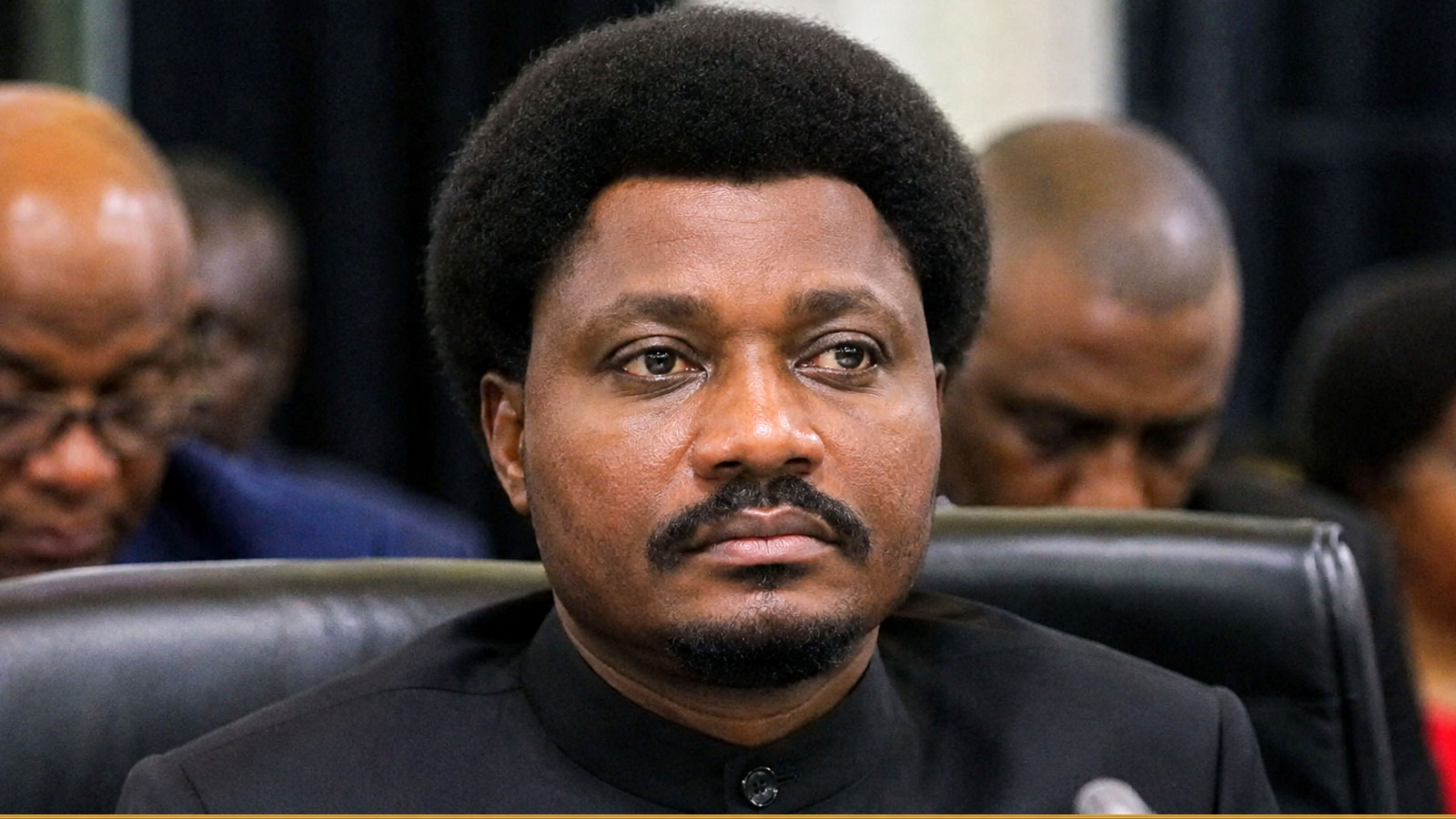
- On 2 September 2025, the Democratic Republic of Congo’s Court of Cassation convicted former Justice Minister Constant Mutamba of embezzlement of public funds.
- The case centred on approximately US$19.9 million transferred to Zion Construction for a proposed prison in Kisangani.
- The funds came from a Ministry of Justice account connected to FRIVAO, the mechanism handling compensation and rehabilitation linked to victims of the armed conflict in Kisangani.
- The court sentenced Mutamba to three years of forced labour and imposed additional political and public-office restrictions.
- The core controversy was not a suitcase of cash disappearing into a minister’s private account.
EXECUTIVE FINDING
On 2 September 2025, the Democratic Republic of Congo’s Court of Cassation convicted former Justice Minister Constant Mutamba of embezzlement of public funds.
The case centred on approximately US$19.9 million transferred to Zion Construction for a proposed prison in Kisangani.
The funds came from a Ministry of Justice account connected to FRIVAO, the mechanism handling compensation and rehabilitation linked to victims of the armed conflict in Kisangani.
The court sentenced Mutamba to three years of forced labour and imposed additional political and public-office restrictions.
It also ordered restoration of the funds.
The core controversy was not a suitcase of cash disappearing into a minister’s private account.
It was the use of ministerial authority to move an extraordinary amount of protected public money into the account of a contractor under a direct-award procedure before crucial procurement approvals had been completed.
Prosecutors said the transaction bypassed ordinary procurement safeguards, sidelined institutions that should have participated in the process and benefited a company they argued lacked the capacity and documentation expected for a project of that size.
The court concluded that the elements of embezzlement were established.
Mutamba denied stealing money personally and described the case as politically motivated.
That defence matters because the legal theory was not simply that he pocketed US$19.9 million.
The case was about causing public funds to be diverted from their protected purpose through an irregular procurement structure.
THE MONEY DID NOT NEED TO ENTER THE MINISTER’S POCKET FOR THE STATE TO LOSE CONTROL OF IT.
The central Kleptik question is:
WHEN A MINISTER CAN MOVE WAR-VICTIM FUNDS INTO A CONTRACTOR’S ACCOUNT BEFORE PROCUREMENT CONTROLS ARE COMPLETE, IS THE PRIMARY FAILURE THEFT — OR THE COLLAPSE OF THE SYSTEM DESIGNED TO PREVENT IT?
THE FINDING
The Mutamba case is a procurement-control case disguised as an embezzlement headline.
The money moved through a bank.
The transfer was documented.
The intended project — a new prison — was public.
The corruption risk arose from who had authority to move the funds, whether the contractor was properly qualified, whether the direct-award process was lawful and whether approvals existed before the transfer.
WAR-VICTIM / REPARATION FUNDS
↓
MINISTRY OF JUSTICE CONTROL
↓
DIRECT-AWARD PRISON CONTRACT
↓
ZION CONSTRUCTION ACCOUNT
↓
US$19.9M TRANSFER
↓
PROCUREMENT CONTROLS NOT COMPLETE
↓
COURT-CONFIRMED EMBEZZLEMENT
CONSTANT MUTAMBA
Constant Mutamba served as Minister of Justice and Keeper of the Seals in the government of President Félix Tshisekedi.
He had cultivated a public profile around judicial reform and anti-corruption.
That made the eventual prosecution unusually politically charged.
THE KISANGANI PRISON PROJECT
The disputed project concerned construction of a new prison in Kisangani in Tshopo Province.
A prison is a legitimate public infrastructure need.
That legitimacy is precisely why procurement controls matter.
Public-purpose language cannot substitute for lawful contracting.
FRIVAO
The money was linked to the Fund for Reparation and Compensation of Victims of Uganda’s unlawful activities in the DRC, commonly referred to as FRIVAO.
The underlying reparation money had particular moral and legal sensitivity because it arose from compensation connected to victims of armed conflict in Kisangani.
THE ORIGIN OF THE MONEY
The funds ultimately traced to reparations paid by Uganda to the Democratic Republic of Congo following international litigation over armed conflict and unlawful activities.
That gave the money a protected public-purpose character far beyond an ordinary capital-budget allocation.
VICTIM MONEY
Money intended to compensate victims carries a special fiduciary burden.
It should not be treated as a flexible treasury pool.
Any diversion into unrelated or inadequately controlled spending requires extraordinary justification.
THE CONTRACT VALUE CONFUSION
Public reporting around the case referenced several figures, including approximately US$39.8 million, US$29 million and the US$19.9 million actually transferred.
Those amounts reflected different stages of procurement authorisation, contract pricing and payment.
Kleptik does not collapse them into one number.
THE US$39.877 MILLION SPECIAL AUTHORIZATION
Prosecutorial material cited a special authorisation to use a direct-award procedure based on a figure of approximately US$39.877 million.
The authorisation was conditional on submission of the contract for further review and a no-objection opinion.
THE US$29 MILLION CONTRACT
The contract later signed with Zion Construction was reported at approximately US$29 million excluding certain taxes.
The difference between authorisation basis and signed contract became one of the procedural concerns raised during the case.
THE US$19.9 MILLION TRANSFER
The decisive financial event was the transfer of US$19.9 million into Zion Construction’s Rawbank account.
The transfer occurred before the procurement process had received all of the approvals prosecutors said were required.
THE ONE-DAY ACCOUNT SIGNAL
Reporting on the prosecutorial record said Zion Construction opened the relevant bank account shortly before the transfer.
A newly opened account receiving nearly US$20 million for a major State project is an obvious enhanced-risk event for both procurement and financial controls.
DIRECT AWARD
The procurement used a gré-à-gré, or direct-award, procedure.
Direct awards are not inherently corrupt.
They reduce competition and therefore require stronger justification, documentation and oversight.
THE EMERGENCY JUSTIFICATION
Mutamba defended the use of direct procurement partly through urgency and security considerations.
The court rejected the asserted urgency as sufficient justification in the circumstances reflected in the judgment.
NO-OBJECTION
The procurement-control authority’s no-objection opinion was a critical procedural gate.
Prosecutors argued the transfer occurred before that gate was satisfied.
THE PRIME-MINISTER APPROVAL QUESTION
The prosecution also raised the absence of required higher-level approval before funds were moved.
The case therefore involved multiple control layers, not one missing signature.
THE SECRETARIAT-GENERAL QUESTION
Prosecutors argued that parts of the Justice Ministry’s ordinary administrative machinery were sidelined.
Bypassing internal administration can make a minister personally dominant over a transaction that should have institutional ownership.
MINISTERIAL DISCRETION
A minister has political authority.
That is not the same as unilateral authority to disregard procurement law.
Public office creates discretion inside rules, not above them.
ZION CONSTRUCTION
Zion Construction was the contractor selected for the prison project.
The prosecution questioned its legal, operational and financial capacity.
The company’s actual corporate and technical capacity became one of the central factual issues.
CONTRACTOR CAPACITY
For a project worth tens of millions of dollars, procurement files should establish staffing, technical capability, financial strength, prior performance and guarantees.
An inadequately documented contractor is a red flag even before money moves.
THE BANK-GUARANTEE QUESTION
Prosecutors said Zion lacked a bank guarantee expected for a transaction of this scale.
Performance security exists because government needs recourse if a contractor fails after receiving money.
THE SITE / STAFF QUESTION
The prosecution also attacked whether the company had a meaningful operating presence and adequate staff.
Those claims were part of the case against the credibility of the procurement choice.
MINISTERIAL DECISION
↓
DIRECT AWARD
↓
CONTRACTOR SELECTED
↓
ACCOUNT OPENED
↓
US$19.9M PAID
↓
PERFORMANCE / APPROVAL QUESTIONS
↓
PUBLIC MONEY EXPOSED
THE COURT’S THEORY
The Court of Cassation found the offence of embezzlement of public funds established against Mutamba.
The court’s decision focused on the diversion of public money through the transaction structure rather than requiring proof that Mutamba personally withdrew the full amount in cash.
EMBEZZLEMENT WITHOUT PERSONAL CASH
Public-funds offences can involve causing money to be unlawfully redirected to another person or entity.
Personal bank enrichment is one form of theft.
Abusive disposition of State money is another.
THE ZION-BENEFIT THEORY
Court and prosecution reporting described the case as involving an intent to confer an unlawful benefit on Zion Construction.
That distinction is important because the recipient of the transferred funds was the contractor, not Mutamba personally.
THE DEFENCE: 'I TOOK NOTHING'
Mutamba repeatedly said he had not stolen a dollar from the State.
That defence addressed personal appropriation.
The court nevertheless found unlawful diversion of public funds.
PERSONAL ENRICHMENT ≠ ONLY FORM OF EMBEZZLEMENT
The lesson is straightforward.
A minister can misuse State funds by directing them improperly even if another entity receives the money.
THE PROCUREMENT CHAIN
Project need.
budget source.
procurement method.
contractor qualification.
contract review.
approval.
security.
payment.
Every step exists to prevent one person from controlling the entire transaction.
THE CONTROL-SEQUENCE RULE
Approval before payment.
Not payment before approval.
That sequencing is one of the simplest and most important public-finance controls.
PAY FIRST, REGULARISE LATER
Once State money reaches a contractor, later procurement approval becomes less meaningful.
The bargaining position has already shifted.
THE BANK’S POSITION
Rawbank held the account into which the funds were transferred.
The public record later showed the funds could be reversed after the judgment.
Kleptik does not infer bank wrongdoing merely from the bank’s role as custodian.
THE BANK-CONTROL QUESTION
A bank receiving a nearly US$20 million public-sector payment into a contractor account can see transaction size, account age and counterparties.
Whether those facts triggered internal review is not public and should not be guessed.
THE RETURN OF THE FUNDS
The court ordered restoration of the money.
Subsequent prosecutorial action directed Rawbank to return US$19.9 million from the Zion Construction account to the Justice Ministry / FRIVAO account.
That later execution falls just after the archive date, so this dossier treats the court’s restitution order as established on 2 September and the actual bank reversal as a follow-up event for a later update.
HISTORICAL FREEZE
Because this dossier is fixed to 2 September 2025, events after the judgment are not used to rewrite the status on the archive date.
That includes later execution steps and detention details.
THE THREE-YEAR SENTENCE
The Court of Cassation imposed three years of forced labour.
The prosecution had sought a heavier sentence.
The judgment also deprived Mutamba of conditional release.
THE FIVE-YEAR POLITICAL BAN
The court barred Mutamba from voting and standing for election for five years after completion of the sentence.
It also excluded him from public and parastatal office.
CRIMINAL LIABILITY + POLITICAL DISQUALIFICATION
Public-funds corruption damages more than the treasury.
It attacks the legitimacy of public office.
Political disqualification addresses that institutional harm.
THE RESIGNATION
Mutamba resigned as justice minister in June 2025 after Parliament authorised prosecution.
He maintained his innocence.
PARLIAMENTARY AUTHORIZATION
Because he was a sitting minister, the prosecutorial process required parliamentary steps before trial.
The National Assembly authorised proceedings in late May and June 2025.
THE ANTI-CORRUPTION PARADOX
Mutamba had publicly championed stronger punishment for corruption.
His own prosecution therefore became politically symbolic.
That symbolism should not substitute for the evidence, but it shaped public reaction.
THE SUPPORTER PROTESTS
Supporters protested around the trial and verdict.
The political tension demonstrates why high-profile anti-corruption cases require especially transparent judicial reasoning.
THE SELECTIVE-JUSTICE ARGUMENT
Mutamba and supporters described the proceedings as political.
Civil-society commentary after conviction also called for equal enforcement against other corruption cases.
Selective enforcement concerns do not negate a conviction, but they affect institutional credibility.
THE 'WHY THIS CASE?' QUESTION
Anti-corruption systems are judged not only by whether one defendant is guilty.
They are judged by whether comparable cases receive comparable treatment.
THE VICTIM-FUND GOVERNANCE FAILURE
The strongest governance question may sit above Mutamba.
Why could one ministry redirect such a large amount from a victim-linked fund into a construction project so quickly?
EARMARKED MONEY
Earmarking is supposed to constrain discretion.
If protected victim funds can be reassigned without a transparent governance process, the earmark is weak.
THE BOARD / FUND OVERSIGHT QUESTION
What body approved use of FRIVAO-linked funds for the prison project?
What legal authority supported the transfer?
Those questions are distinct from contractor procurement.
TWO CONTROL SYSTEMS FAILED
Fund-governance control.
procurement control.
The case appears to involve both.
THE PRISON-BUDGET QUESTION
If the prison was a legitimate Justice Ministry priority, why was it not funded through ordinary capital budgeting?
Using victim-reparation money for infrastructure demands a clear legal basis.
THE WAR-VICTIM MORAL HAZARD
Victims may wait years for compensation.
Government officials may see idle or accumulated funds as available liquidity.
That creates a moral hazard unless legal segregation is strong.
CASH-RICH SPECIAL FUNDS
Special funds often attract corruption risk because they sit outside ordinary annual budgeting.
Large balances can become politically tempting.
THE PROCUREMENT-VALUE RATIO
A US$19.9 million initial payment against a roughly US$29 million contract represents a very large front-loaded share.
Front-loading increases State exposure if performance security is weak.
THE 80-PERCENT STRUCTURE
Prosecutorial materials described a payment schedule with a very large first tranche.
Large advances require strong guarantees, milestone controls and proof of mobilisation.
ADVANCE PAYMENT RISK
Government pays before receiving equivalent value.
Contractor gains leverage.
If the project fails, recovery becomes the State’s problem.
PERFORMANCE SECURITY
Advance payments should normally be protected through bank guarantees, escrow or other security.
The prosecution’s concern about the absence of a guarantee goes directly to this risk.
THE PUBLIC-PROCUREMENT PRINCIPLE
Competition is not bureaucracy for its own sake.
It tests price.
capacity.
alternatives.
conflicts.
Direct awards remove those signals.
WHEN DIRECT AWARD IS JUSTIFIED
True emergency.
unique supplier.
security necessity.
technical exclusivity.
Even then, justification should be written and independently reviewed.
THE 'URGENCY' ABUSE PATTERN
Urgency is one of the easiest procurement exceptions to abuse.
Every urgent contract should therefore produce evidence explaining why normal competition could not be used.
THE CONTRACTOR-BENEFICIAL-OWNERSHIP QUESTION
- Who ultimately owned Zion Construction?
- Who financed it?
- What relationships existed with decision-makers?
Public reporting did not fully answer every beneficial-ownership question.
THE COMPANY-AGE QUESTION
New or recently activated entities can win public contracts legitimately.
The younger the company and the larger the contract, the stronger the capacity evidence should be.
THE CONTRACTOR-DUE-DILIGENCE FILE
Registration.
beneficial ownership.
tax standing.
technical history.
staff.
equipment.
bank references.
litigation.
This file should exist before award.
THE PRICE-REASONABLENESS TEST
Was US$29 million a competitive or independently verified price for the proposed prison?
Without a tender, government needs another mechanism to establish value for money.
THE QUANTITY-SURVEYOR QUESTION
A major prison project should have independently tested bills of quantities and engineering estimates.
If price validation occurred, the records should be available for review.
THE PROJECT-SCOPE QUESTION
The reported design involved a multi-storey prison facility.
Scope changes can explain price changes, but they should be documented before money moves.
THE 39-TO-29-MILLION SHIFT
Court reporting criticised movement from a roughly US$39 million authorisation basis to a roughly US$29 million contract structure.
The key issue is not that a lower price is suspicious.
It is whether the approval process corresponded to the contract actually signed.
APPROVAL MUST MATCH THE DEAL
Government cannot obtain approval for Transaction A and then execute materially different Transaction B without determining whether new approval is required.
THE PAYMENT INSTRUCTION
The minister’s authority to instruct payment was central to the case.
In a strong system, one official should not be able to create, approve and pay the same transaction without independent controls.
SEGREGATION OF DUTIES
Sponsor project.
approve procurement.
verify contractor.
certify payment.
These functions should be distributed.
THE JUSTICE-MINISTRY IRONY
The institution responsible for law and justice became the setting for a procurement case tested by the highest criminal court.
Institutional mission does not immunise an agency from corruption risk.
THE REPUTATIONAL COST
A justice ministry accused of mishandling victim funds can damage confidence in both anti-corruption enforcement and victim compensation.
THE VICTIMS’ PERSPECTIVE
For victims, the technical distinction between procurement irregularity and embezzlement is secondary.
The primary question is whether money intended to remedy past harm remained protected.
THE REPARATIONS GOVERNANCE STANDARD
Victim compensation funds should have independent governance, ring-fenced accounts, published allocations and audit trails.
Discretionary ministerial access should be minimal.
THE PUBLIC-ACCOUNTABILITY DASHBOARD
For special funds, government should publish inflows, commitments, beneficiaries, project transfers and remaining balance.
Opacity creates opportunity.
THE DRC ANTI-CORRUPTION CONTEXT
The Democratic Republic of Congo has long faced serious public-finance and corruption challenges.
A single conviction does not prove systemic reform.
It does show that even a sitting justice minister can be prosecuted and convicted.
THE RULE-OF-LAW TEST
The stronger test is consistency.
Are politically connected defendants across parties and institutions treated by the same evidentiary standard?
THE PROCUREMENT-CONTROL MATRIX
| Control point | Expected safeguard | Risk identified in the case |
|---|---|---|
| Funding source | Clear legal authority for use | Victim-linked funds redirected to prison project |
| Procurement method | Competition or justified exception | Direct award / urgency disputed |
| Contractor capacity | Technical + financial due diligence | Capacity and documentation challenged |
| Approval | No-objection / higher authorization before award | Key approvals incomplete or disputed |
| Payment | Milestone + security before large advance | US$19.9m transferred upfront |
THE EVIDENTIARY-STATUS MATRIX
- Issue
- Status on 2 Sep 2025
- Kleptik treatment
- Mutamba embezzlement offence
- Court of Cassation conviction
- ESTABLISHED — CONVICTION
- US$19.9m transfer
- Documented / court case
- ESTABLISHED CASE FACT
- Zion capacity criticisms
- Prosecution / trial findings
- COURT / PROSECUTION RECORD
- Mutamba personal cash enrichment
- Not required / denied
- DO NOT OVERSTATE
- Political-motivation claim
- Defence position
- SUBJECT POSITION
- Actual post-verdict bank reversal
- After archive date
- EXCLUDED FROM ARCHIVE STATUS
CHRONOLOGY
2000
Ugandan and Rwandan forces fight in Kisangani during the Six-Day War, causing extensive civilian harm.
2022 onward
Uganda begins paying reparations to the Democratic Republic of Congo following international litigation over its unlawful activities on Congolese territory.
2024
Constant Mutamba becomes Minister of Justice and Keeper of the Seals.
Early 2025
The Justice Ministry develops a plan for a new prison in Kisangani using a direct-award procurement structure.
14 April 2025
A direct-award prison construction contract is signed between the Justice Ministry and Zion Construction, according to prosecutorial materials.
15 April 2025
The contractor account later used for the transaction is opened, according to the prosecution record reported during the case.
16 April 2025
Approximately US$19.9 million is transferred to Zion Construction.
May 2025
Questions over the prison contract and use of FRIVAO-linked funds become public and reach the National Assembly.
29 May 2025
The National Assembly authorises investigation/prosecution steps against Mutamba.
June 2025
Mutamba resigns while denying theft and wrongdoing.
23 July 2025
The Court of Cassation begins substantive examination of the case.
13 August 2025
The prosecution seeks a ten-year forced-labour sentence.
2 September 2025
The Court of Cassation convicts Mutamba of embezzlement of public funds and sentences him to three years of forced labour, with political and public-office restrictions and restitution.
DOCUMENTARY RECORD
COURT OF CASSATION / ACP — 2 SEPTEMBER 2025
The official national news-agency record reports the conviction for embezzlement of public funds, three-year forced-labour sentence, five-year voting and electoral restrictions after sentence, exclusion from public office and restitution order.
PARLIAMENTARY AUTHORIZATION — MAY 2025
The National Assembly authorised prosecutorial steps after reviewing allegations involving the prison project and public funds.
PROSECUTORIAL PROCUREMENT RECORD
The prosecution described use of a direct-award procedure, incomplete no-objection steps, questions over contractor capacity and the US$19.9 million transfer.
RADIO OKAPI / COURT PROCEEDINGS
Radio Okapi documented the trial’s central dispute over whether the transfer to Zion Construction constituted unlawful diversion and reported Mutamba’s defence.
WHAT THE COURT FOUND
The Court of Cassation found the offence of embezzlement of public funds established against Constant Mutamba.
It imposed three years of forced labour and additional civil and political restrictions.
It ordered restitution of the diverted funds.
WHAT MUTAMBA SAID
Mutamba denied stealing State money and maintained that he had not personally taken the funds.
He and supporters portrayed the case as politically motivated.
Those arguments did not prevent conviction.
WHAT THIS DOSSIER DOES NOT ESTABLISH
This dossier does not state that Mutamba personally received US$19.9 million into a private account.
It does not state that every person associated with Zion Construction committed a crime.
It does not infer wrongdoing by Rawbank merely because it held the contractor account.
It does not treat every direct-award public contract as corrupt.
It does not collapse the roughly US$39.8 million authorisation figure, US$29 million contract figure and US$19.9 million transfer into one amount.
It does not incorporate the actual execution of the restitution transfer after 2 September 2025.
RIGHT OF REPLY
Historical publication should reproduce Mutamba’s denial that he personally stole the money.
Zion Construction and its representatives should be offered an opportunity to address capacity, corporate-status and contract-performance questions.
Rawbank should not be criticised without transaction-specific evidence concerning its legal or compliance duties.
FRIVAO and the Justice Ministry should be asked to explain the legal authority for using victim-linked funds for the prison project.
UNANSWERED QUESTIONS
1. FUND AUTHORITY
What exact law or governance decision authorised FRIVAO-linked money to finance a prison?
2. VICTIM CONSENT
Were victim representatives consulted before the funds were repurposed?
3. THE US$39.877M FIGURE
Why was the special procurement authorisation based on a higher figure than the contract ultimately signed?
4. THE US$29M CONTRACT
What scope and bill of quantities supported the signed contract price?
5. THE US$19.9M ADVANCE
Why was such a large percentage paid before visible construction performance?
6. THE ACCOUNT
When exactly was Zion’s Rawbank account opened and what KYC information was provided?
7. BENEFICIAL OWNERSHIP
Who ultimately owned and controlled Zion Construction at contract award?
8. TECHNICAL CAPACITY
What prisons or major public projects had Zion completed previously?
9. PERSONNEL
How many engineers, project managers and employees did Zion have?
10. BANK GUARANTEE
Why was payment made without the performance-security package alleged by prosecutors to be missing?
11. NO-OBJECTION
What precisely remained outstanding from the procurement-control authority on payment date?
12. PRIME-MINISTER APPROVAL
Was higher-level approval legally required for the final transaction as executed?
13. INTERNAL JUSTICE CONTROLS
Which ministry officials reviewed and certified the payment?
14. FRIVAO GOVERNANCE
Who controlled the account and who else could block the transfer?
15. RAWBANK
What enhanced review, if any, occurred before the nearly US$20 million credit?
16. PROJECT STATUS
How much physical construction, if any, had occurred by the verdict date?
17. PRICE REASONABLENESS
Was the project independently costed against comparable prison construction?
18. OTHER LIABILITY
Will any contractor executives, procurement officials or fund managers face separate proceedings?
19. RESTITUTION
Was the full US$19.9 million ultimately recovered with interest and without loss?
20. THE CENTRAL QUESTION
How did money intended to compensate war victims become available for a major construction advance before the public-procurement system had finished deciding whether the deal was lawful?
KLEPTIK INTELLIGENCE ASSESSMENT
ASSESSMENT: ESTABLISHED — CONVICTION
On 2 September 2025, the DRC Court of Cassation convicted Constant Mutamba of embezzlement of public funds.
ASSESSMENT: ESTABLISHED — SENTENCE
The court imposed three years of forced labour and additional restrictions on voting, candidacy and public office.
ASSESSMENT: ESTABLISHED — TRANSFER
The case centred on approximately US$19.9 million transferred to Zion Construction for the Kisangani prison project.
ASSESSMENT: ESTABLISHED — RESTITUTION ORDER
The court ordered restoration of the diverted public funds.
ASSESSMENT: HIGH CONFIDENCE
The case represents a procurement-control failure as much as a theft case: protected funds, direct award, contractor capacity, approval sequencing and advance payment all intersected.
ASSESSMENT: HIGH CONFIDENCE
The absence of personal cash receipt does not eliminate embezzlement risk where a public official unlawfully directs State funds to another entity.
ASSESSMENT: HIGH CONFIDENCE
Victim-reparation funds require stronger governance than ordinary budget money because diversion damages both public finances and the remedial rights of victims.
ASSESSMENT: OPEN
The full liability of contractor representatives, other officials and gatekeepers remained unresolved on the archive date.
THE KLEPTIK VIEW
The easiest corruption story to understand is cash in a pocket.
This one is harder.
The money moved openly.
From a government account.
To a company account.
For a public building.
Everything had a label.
Justice Ministry.
prison.
contractor.
construction.
That is exactly why procurement corruption can survive.
The form looks public.
The problem sits in the sequence.
- Was the money legally available for this purpose?
- Was direct award justified?
- Was the contractor real and capable?
- Were approvals complete?
- Was the advance protected?
If the answer to those questions is no, a documented bank transfer can still be a diversion of public money.
And here the source of the money makes the failure sharper.
These were funds tied to victims.
People harmed by war.
Reparations exist because the State owes them a remedy.
That money should have been among the hardest public funds to repurpose.
THE MONEY WAS EARMARKED.
THE CONTROLS WERE SUPPOSED TO BE THE LOCK.
The lesson is not that prisons should not be built.
It is that good purposes do not excuse bad process.
A minister cannot convert urgency into ownership of the procurement chain.
And a State cannot protect public money by relying on the integrity of one officeholder.
The system must be designed so one person cannot move the money alone.
FOLLOW THE FUND.
FOLLOW THE APPROVAL.
FOLLOW THE MONEY BEFORE THE FIRST BRICK IS LAID.
KLEPTIK METHODOLOGY
This dossier is dated 2 September 2025 and is intentionally fixed to the legal and evidentiary position existing on that date.
The principal sources are the Court of Cassation verdict as reported by the Agence Congolaise de Presse, parliamentary and prosecutorial records concerning authorisation of proceedings, Radio Okapi reporting from the trial, and reporting reproducing the prosecution’s procurement allegations and defence positions.
Kleptik distinguishes among final court findings on the verdict date, prosecution allegations concerning procurement details, defence positions and later execution events.
COURT-CONFIRMED CONDUCT
Conduct found by the Court of Cassation in the conviction.
PROSECUTION PROCUREMENT ALLEGATION
Claim concerning contractor capacity, approval sequence, direct-award procedure or account history advanced during prosecution and not independently expanded beyond the record.
SUBJECT POSITION
Mutamba’s denial of personal theft and political-motivation argument.
POST-ARCHIVE EXECUTION
Later steps implementing restitution or detention excluded from the status of this 2 September 2025 dossier.
For public-fund analysis, Kleptik separates funding authority, procurement legality, contractor capacity, payment authorisation and final use.
For amount reporting, the US$39.877 million procurement-authorisation figure, approximately US$29 million contract figure and US$19.9 million transfer are treated separately.
For bank analysis, account custody is not evidence of complicity.
For victim funds, the legal purpose and governance framework of the fund must be verified before treating expenditure as permissible.
EVIDENTIARY LABELS
ESTABLISHED — CONVICTION
Conduct established by the DRC Court of Cassation on 2 September 2025.
ESTABLISHED — SENTENCE
Penalty imposed in the same judgment.
ESTABLISHED — RESTITUTION ORDER
Judicial order to restore diverted public funds.
PROSECUTION ALLEGATION
Procurement or contractor fact asserted by prosecutors where the public verdict summary does not independently provide the complete underlying record.
SUBJECT POSITION
Mutamba’s denial or explanation.
PROCUREMENT-INTEGRITY INDICATOR
Control failure involving direct award, approval, advance payment or contractor capacity.
VICTIM-FUND INDICATOR
Issue concerning funds tied to compensation or reparation for conflict victims.
KLEPTIK VERIFIED
Fact independently corroborated through authoritative official or court-linked records.
KLEPTIK ASSESSMENT
Analytical conclusion derived from identified evidence.
INVESTIGATIVE LEAD
Matter requiring further banking, corporate, procurement or fund-governance verification.
DOCUMENT STATUS
KLTK-2025-037
Subject: Constant Mutamba / DRC Justice Ministry / FRIVAO / Zion Construction / Kisangani Prison / Public Funds
Archive date: 2 September 2025
Status at archive date: Convicted by Court of Cassation of embezzlement of public funds; three-year forced-labour sentence; political and public-office restrictions; restitution ordered
Historical treatment: Fixed to report date
© KLEPTIK — Investigations into Power, Money and the Systems Designed to Hide Both