THE HOSPITALS DEAL

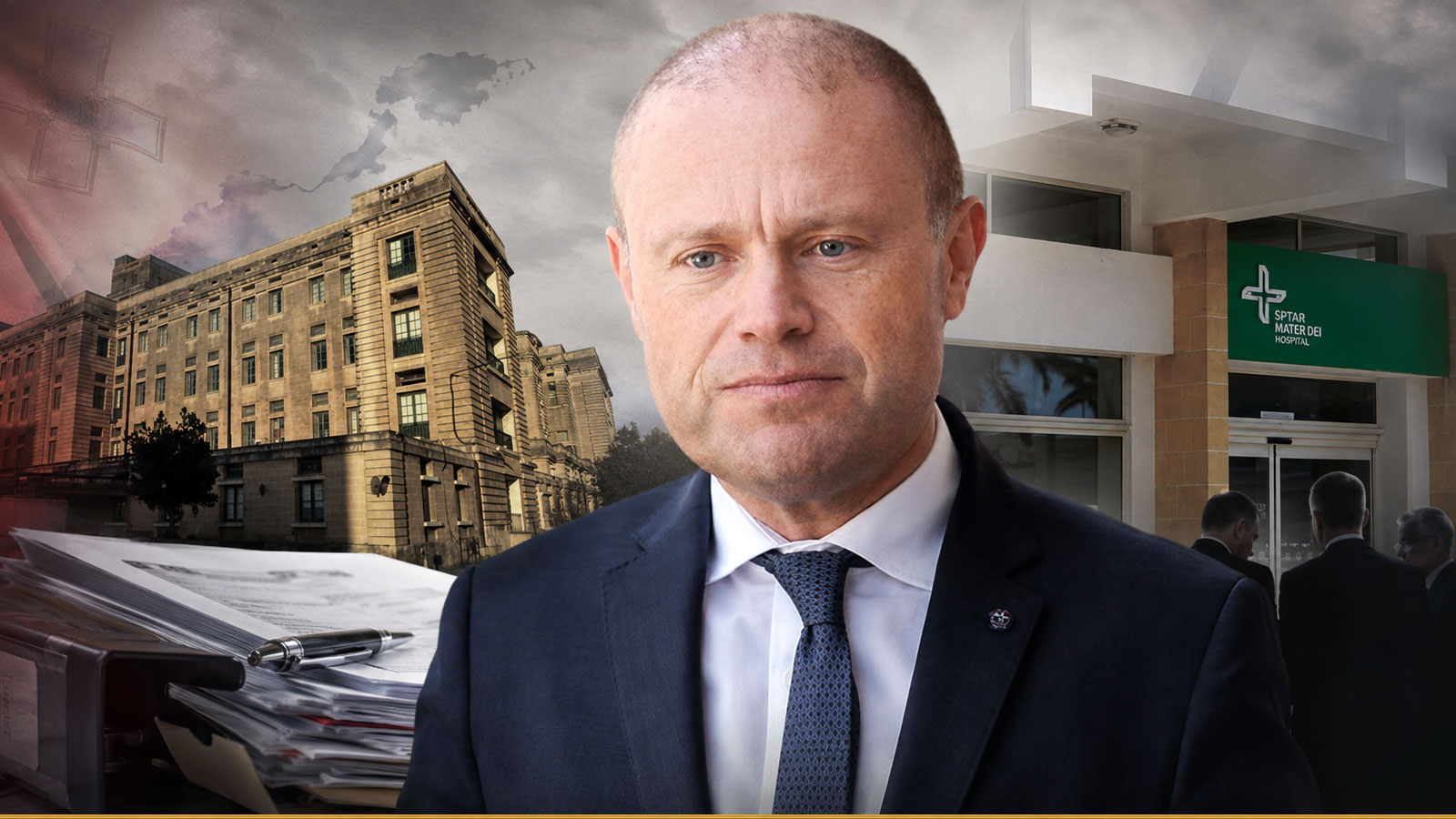
- Muscat pleaded not guilty to charges that included money laundering, accepting bribes, corruption in public office, and other offences arising from the hospitals concession.
- Former minister Konrad Mizzi and former chief of staff Keith Schembri were among other senior political figures charged in the same wider proceedings.
- The transaction was valued over its intended life in the billions of euros.
- Reuters described the 30-year concession as having a value of approximately €4 billion.
- Vitals had limited experience running hospitals.
EXECUTIVE FINDING
On 28 May 2024, former Maltese Prime Minister Joseph Muscat appeared in court facing criminal charges arising from one of the most controversial public-private transactions in modern Maltese history: the transfer of three state hospitals to private operators.
Muscat pleaded not guilty to charges that included money laundering, accepting bribes, corruption in public office, and other offences arising from the hospitals concession.
Former minister Konrad Mizzi and former chief of staff Keith Schembri were among other senior political figures charged in the same wider proceedings.
The criminal cases followed a four-year magisterial inquiry into the 2015 concession under which St Luke’s Hospital, Karin Grech Rehabilitation Hospital and Gozo General Hospital were transferred to Vitals Global Healthcare — VGH under a long-term public-private arrangement.
The transaction was valued over its intended life in the billions of euros.
Reuters described the 30-year concession as having a value of approximately €4 billion.
Vitals had limited experience running hospitals.
The concession was subsequently transferred to Steward Health Care.
The public project eventually collapsed into litigation.
In 2023, a Maltese court annulled the concession after finding fraud in the transaction.
The decision was later confirmed on appeal, where the higher court referred to collusion surrounding the deal.
By May 2024, the matter had moved from controversial procurement to failed public-private partnership to civil fraud findings to criminal prosecution of some of Malta’s most senior former political figures.
The criminal inquiry ultimately implicated a network extending well beyond ministers.
It included government advisers, accountants, lawyers, medical-supply businesses, hospital operators, corporate entities, and people associated with Vitals and Steward.
HOW CAN A GOVERNMENT TRANSFER CRITICAL PUBLIC INFRASTRUCTURE WORTH BILLIONS TO A PRIVATE GROUP WITHOUT THE PUBLIC FULLY UNDERSTANDING WHO ULTIMATELY STANDS BEHIND THE TRANSACTION, HOW THE MONEY WILL MOVE AND WHETHER THE PRIVATE OPERATOR CAN ACTUALLY DELIVER?
THE FINDING
Hospitals are unusual corruption targets.
They are not merely government buildings.
They contain land, medical equipment, operating budgets, government payments, staff, procurement systems, and politically sensitive public services.
A hospital concession therefore combines PUBLIC ASSET with LONG-TERM GOVERNMENT CASH FLOW.
That combination can be extraordinarily valuable.
THE CONCESSION MODEL
A conventional public-private partnership can work like this:
GOVERNMENT
- ↓
- owns hospital
- ↓
PRIVATE OPERATOR RECEIVES CONCESSION
- ↓
- operator invests capital
- ↓
- operator improves infrastructure
- ↓
GOVERNMENT MAKES AGREED PAYMENTS
↓
PUBLIC RECEIVES IMPROVED SERVICE
The model is legitimate.
- The risk begins when the private operator lacks capital
- ownership is unclear
- promised investment does not arrive
- government payments continue
or contracts create private value without corresponding public delivery.
THE MALTA MODEL
The hospitals concession involved St Luke’s Hospital, Karin Grech Hospital and Gozo General Hospital, transferred into a long-term concession to Vitals Global Healthcare, and later to Steward Health Care.
The project’s failure alone does not establish corruption.
The subsequent court findings and criminal charges make the governance questions much more serious.
THE €4 BILLION SCALE
The 30-year arrangement was reported as having a value of approximately €4 billion.
That number changes the appropriate due-diligence standard.
For a multibillion-euro transfer of public-health infrastructure, the government should know who owns the operator, who finances it, what hospital experience it possesses, what equity capital has been committed, which banks support it, what guarantees exist, what happens if it fails, who can sell the concession, how government payments are calculated, and who owns the medical suppliers.
Every answer should be independently verifiable.
WHO WAS VITALS GLOBAL HEALTHCARE?
Vitals received control over major Maltese public-health assets despite having limited operating history.
A company does not become capable of operating three public hospitals merely because it has been incorporated.
CORPORATE EXISTENCE VERSUS OPERATIONAL CAPACITY
A bidder may have a certificate of incorporation, directors, shareholders and a bank account.
Those prove the company exists.
They do not prove it can operate hospitals, finance reconstruction, employ thousands, manage medical procurement or sustain long-term healthcare services.
THE CAPACITY TEST
Before awarding a major concession, government should verify healthcare operating history, audited financial statements, available capital, credit facilities, management experience, comparable projects, clinical governance, insurance, technical staff and beneficial ownership.
Anything less leaves government relying primarily on promises.
THE PUBLIC-ASSET TRANSFER
Government procurement is usually about buying something.
A concession is more complex.
The state transfers rights, control, cash flow, sometimes land, and sometimes infrastructure.
The private operator receives an asset capable of generating revenue or contractual payments.
The government therefore needs to value what it is giving away, not merely what it expects to receive.
THE CONCESSION VALUE EQUATION
Public value transferred = land + hospital infrastructure + exclusive operating rights + government payment commitments + future revenue opportunity.
Against this must be measured private capital committed + upgrades promised + operating obligations + performance risk assumed.
If those sides are badly mismatched, the public may have transferred more value than it received.
THE PUBLIC-VALUE MATRIX
JOSEPH MUSCAT
POSITION
Prime Minister of Malta from 2013 until 2020.
He was therefore the country’s highest-level PEP during the award and early operation of the hospitals concession.
CRIMINAL STATUS AS OF 28 MAY 2024
Muscat was charged with offences including money laundering, accepting bribes and corruption in public office.
He pleaded not guilty.
This dossier therefore describes those allegations as CRIMINAL CHARGES — NOT CONVICTIONS.
KONRAD MIZZI
Mizzi, a former minister who played a significant role in Malta’s energy and healthcare policy during the relevant period, faced similar corruption and bribery-related charges.
He denied wrongdoing.
KEITH SCHEMBRI
Schembri served as Muscat’s chief of staff.
He faced charges including solicitation of bribes, abuse of office and related financial offences arising from the hospitals investigation.
Again: charged, not convicted as of the archive date.
THE INNER-CIRCLE RISK
The simultaneous appearance of prime minister, minister and chief of staff inside one corruption proceeding creates an institutional question.
When several people at the centre of executive government are implicated in one major transaction, ordinary internal political oversight may become ineffective.
CABINET CONCENTRATION
PRIME MINISTER
↓
MINISTER
↓
CHIEF OF STAFF
↓
PUBLIC CONCESSION
If the same political centre controls policy, negotiation, approval and information, who independently challenges the deal?
THE COURT ANNULMENT
The concession was eventually declared null by Malta’s courts.
A 2023 judgment found fraud.
An appellate judgment upheld the cancellation and referred to collusion in connection with the transaction.
That civil outcome is materially different from the criminal proceedings.
CIVIL FRAUD VERSUS CRIMINAL CORRUPTION
A civil case can determine whether a transaction should be annulled and whether an agreement was fraudulent.
A criminal case asks whether specific individuals committed offences such as bribery, laundering or fraud.
A fraudulent contract does not automatically prove criminal guilt against every person involved.
THE PUBLIC MONEY
Malta reportedly paid substantial amounts under the concession over its life.
Opposition litigation later sought recovery of hundreds of millions of euros in taxpayer funds associated with the failed deal, including a civil action seeking approximately €400 million.
The claim itself should not be confused with a final quantified judicial loss.
But the number demonstrates the financial scale of the controversy.
FOLLOW EVERY PUBLIC EURO
GOVERNMENT PAYMENT
↓
↓
RELATED COMPANY
↓
dividend / loan / transfer
Only then can investigators determine where public healthcare money ultimately went.
THE TECHNOLINE CONNECTION
One aspect of the criminal proceedings concerned medical-equipment company Technoline Ltd.
Prosecutors alleged that Technoline had been acquired fraudulently using concession funds routed through structures connected with Steward.
This is significant because it suggests the concession may have generated an ecosystem of related commercial opportunities beyond simply operating hospitals.
CONCESSION MONEY → SUPPLIER OWNERSHIP
GOVERNMENT PAYS HOSPITAL CONCESSION
- ↓
- concession operator receives public funds
- ↓
- public funds finance acquisition of supplier
- ↓
SUPPLIER SELLS INTO CONCESSION ECOSYSTEM
The same pool of public money may finance both sides of the transaction.
VERTICAL INTEGRATION VERSUS SELF-DEALING
Vertical integration can be commercially efficient.
Operator owns supplier; supplier reduces cost.
But it can also create self-dealing risk.
The questions are whether supplier acquisition was transparent, price was fair, ownership disclosed, and related-party transactions independently approved.
PROFESSIONAL ENABLERS
The criminal cases also reached professional advisers, including lawyers, accountants, auditors, corporate advisers and associated companies.
That expands the story from political corruption to TRANSACTION INFRASTRUCTURE.
A multibillion public concession requires legal contracts, corporate entities, financial models, accounts, audits, tax structuring, banking and procurement advice.
Political actors cannot build that architecture alone.
Professional credibility helps transform a controversial transaction into something institutions can process.
THE STEWARD TRANSFER
Vitals later transferred the concession to Steward Health Care.
This raises one of the most important governance questions in any public-private partnership:
CAN THE WINNER SELL THE PUBLIC CONTRACT?
If yes: to whom, under what conditions, and with whose approval?
A government may have selected Vendor A based on specific credentials.
If Vendor A transfers the concession to Vendor B, the state must determine whether Vendor B meets equivalent standards.
CONCESSION FLIPPING
COMPANY WITH LIMITED EXPERIENCE WINS CONCESSION
- ↓
- concession becomes valuable
- ↓
- company transfers or sells it
- ↓
NEW OPERATOR STEPS IN
If the original winner’s principal economic objective was to obtain and transfer the concession rather than operate it, public procurement may have been used to create a tradable private asset.
WHO PROFITED FROM THE TRANSFER?
Kleptik should identify purchase price, payments, debt assumptions, share transfers, advisers, beneficial owners and any side agreements.
If private parties earned substantial profits from transferring a concession they had not fully delivered, that becomes an important public-interest question.
THE €30 MILLION FREEZING ORDERS
Maltese reporting stated prosecutors sought freezing orders of approximately €30 million each against Muscat, Mizzi and Schembri, alongside other substantial freezing requests against several individuals and companies.
A freezing request is not forfeiture.
It preserves assets while criminal proceedings continue.
WHY FREEZE EARLY?
Financial-crime cases can take years.
Without restraint, property may be sold, money moved, companies dissolved or crypto transferred.
A freeze protects potential recovery.
THE MONEY-LAUNDERING CHARGES
Muscat and others faced money-laundering allegations arising from the hospitals investigation.
The prosecution must establish the required connection between criminal proceeds and financial transactions designed or used to conceal or handle them.
Kleptik should not label every payment surrounding the concession as laundering.
THE MAGISTERIAL INQUIRY
The criminal charges followed a four-year judicial inquiry launched after a complaint by civil-society organisation Repubblika in 2019.
The inquiry reportedly produced enormous volumes of evidence.
THE 78 BOXES
During subsequent court proceedings, a police inspector testified that police had not independently reviewed 78 boxes of evidence from the inquiry before charges were filed but relied on the magistrate’s process-verbal.
This became a major defence issue.
THE INVESTIGATION-PROCESS QUESTION
A strong corruption prosecution needs not only strong evidence.
It needs a defensible process.
Questions include who reviewed evidence, who questioned suspects, who decided charges, and whether evidence was independently assessed.
The legitimacy of the process matters because political defendants will challenge procedure as well as substance.
MUSCAT’S POSITION
Muscat has strongly denied the charges and described the proceedings as politically motivated.
He pleaded not guilty on 28 May 2024.
His defence has also challenged aspects of the magisterial inquiry and investigation process.
Those positions should be reproduced accurately.
THE RULE-OF-LAW TEST
A politically explosive corruption prosecution requires two simultaneous commitments:
Investigate powerful people.
Protect defendants’ rights.
If either disappears, public trust suffers.
THE DAPHNE CONTEXT
The hospitals case occurred against a backdrop of intense national debate over corruption, institutions and political accountability in Malta.
Investigative journalist Daphne Caruana Galizia had scrutinised corruption allegations surrounding political and business elites before her assassination in 2017.
The hospitals criminal charges against Muscat should not be conflated with the murder case.
Muscat and Schembri were not linked by the cited Reuters report to the murder itself.
INVESTIGATIVE JOURNALISM AS GOVERNANCE CONTROL
The Malta story demonstrates why media matters.
Journalists can identify ownership, contracts, payments and conflicts before prosecutors do.
The state may investigate later.
The public-information trail often begins earlier.
PUBLIC CONTRACTS NEED PUBLIC DATA
A €4 billion concession should be independently understandable without leaks.
Government should disclose the contract, amendments, payments, ownership, milestones, performance and termination rights.
Without that, citizens cannot evaluate whether the deal is working.
THE PPP BLACK BOX
Public-private partnerships can become unusually opaque because private companies claim commercial confidentiality, government claims negotiating sensitivity, and banks claim client confidentiality.
The public may therefore have less visibility over a public hospital after privatisation than before.
PRIVATISATION DOES NOT PRIVATISE ACCOUNTABILITY
If taxpayer money funds the service, public accountability remains.
The legal entity may be private.
The economic function is public.
THE HEALTHCARE PROCUREMENT RISK
Hospitals continuously buy medicines, equipment, IT, maintenance, laboratory services and construction.
A concessionaire therefore controls downstream procurement worth potentially hundreds of millions.
That creates enormous related-party risk.
THE SUPPLIER NETWORK
For Vitals / Steward, map medical suppliers, construction, IT, consultants, real estate and equipment.
Then identify beneficial ownership.
THE CYClOTRON PROJECT
Court proceedings reported allegations concerning a proposed cyclotron, specialised equipment used to produce medical isotopes.
Prosecutors alleged various people associated with the project functioned as frontmen while another businessman was the real promoter.
This remained part of the prosecution case and had not been adjudicated.
THE FRONTMAN PROBLEM
A frontman creates false ownership appearance.
LEGAL OWNER
↓
ACTUAL CONTROLLER HIDDEN
This is beneficial-ownership risk.
FOLLOW THE LOANS
Related-party lending can disguise value transfers.
CONCESSION OPERATOR
- ↓
- lends money to supplier acquisition vehicle
- ↓
SUPPLIER BECOMES RELATED PARTY
↓
public money then pays supplier
The circularity can be difficult to detect unless all companies are consolidated.
THE CONSOLIDATED-GROUP TEST
Public authorities should look through legal entities and ask which companies share owners, directors, funding, offices or bank accounts.
The legal structure may be fragmented.
The economic group may be unified.
THE GOVERNMENT PAYMENT TIMELINE
Kleptik should compile year-by-year payments to Vitals, payments to Steward, capital commitments, supplier payments, penalties, government advances and total public exposure.
That creates the financial spine of the dossier.
PROMISES VERSUS DELIVERY
For each contractual obligation — new hospital, renovation, beds, medical tourism, equipment, investment amount, deadline — ask whether it was delivered, delayed or not delivered.
THE PERFORMANCE GAP
PROMISED INVESTMENT minus ACTUAL VERIFIED INVESTMENT equals PERFORMANCE GAP.
The larger the gap, the more government should explain why payments continued.
POLITICAL RESPONSIBILITY VERSUS CRIMINAL LIABILITY
A failed PPP may create political responsibility even where no criminal offence is proven.
Poor judgment is not bribery.
Negligence is not necessarily fraud.
The criminal court must decide individual guilt separately.
THE FEARNE / SCICLUNA CASES
The wider inquiry also resulted in charges against senior figures including former deputy prime minister Chris Fearne and former finance minister / central bank governor Edward Scicluna on fraud and misappropriation-related allegations.
Their procedural position differed from Muscat’s and should be handled separately.
No guilt should be inferred merely because they were charged in the same broad inquiry.
THE NETWORK IS BIGGER THAN ONE ADMINISTRATION
When nineteen or more individuals and multiple companies face proceedings from one public transaction, investigators should stop thinking in terms of one bribe.
The relevant object becomes THE TRANSACTION ECOSYSTEM.
THE ECOSYSTEM MODEL
GOVERNMENT
- ↓
- concession
- ↓
VITALS / STEWARD
- ↓
- public payments
- ↓
SUPPLIERS / ADVISERS
- ↓
- loans / fees / acquisitions
- ↓
INDIVIDUAL BENEFICIARIES
The criminal investigation seeks to determine which flows were legitimate and which were corrupt.
THE OFFSHORE DIMENSION
Malta itself is a major international corporate and financial-services jurisdiction.
The hospital concession therefore sits inside a broader European offshore-services ecosystem involving company formation, tax structures, professional advisers and cross-border ownership.
Offshore structure is not evidence of wrongdoing.
It increases the importance of beneficial-ownership transparency.
PROCUREMENT AML
Kleptik proposes treating major public concessions almost like regulated financial relationships.
Before awarding: KYC the bidder, identify UBO, source of funds, PEP exposure, sanctions, litigation, capability.
After award: transaction monitoring, related parties, ownership changes and unusual payments.
That is procurement AML.
LONG-TERM CONTRACTS NEED CONTINUOUS KYC
A 30-year concession can outlive governments, companies, shareholders and directors.
Therefore due diligence cannot occur only at award.
Annual refresh.
Ownership change.
New debt.
New suppliers.
New PEP links.
This is continuous procurement monitoring.
ASSET RECOVERY
Potential recovery avenues include civil damages, contract restitution, criminal confiscation, professional liability and insurance.
Recovery is separate from prosecution.
Even a conviction does not automatically reimburse taxpayers.
THE PUBLIC-RECOVERY RATIO
MONEY RECOVERED ÷ PUBLIC MONEY LOST.
This should become a Kleptik metric for failed public contracts.
Punishment tells us whether someone went to jail.
Recovery tells us whether taxpayers got anything back.
THE MALTA GOVERNANCE QUESTION
The hospitals case is ultimately a test of institutions.
- Could Parliament see enough?
- Could auditors intervene?
- Could police investigate independently?
- Could courts reverse the transaction?
- Could prosecutors charge former leaders?
Different stages produced different answers.
The courts ultimately did annul the deal.
The criminal proceedings then tested individual accountability.
- Transaction element
- Private-side value
- Public-interest test
- Hospital concession
- Long-term operating rights
- Was value independently benchmarked?
- Government payments
- Predictable public cash flow
- Were payments tied to verified performance?
- Related suppliers
- Downstream commercial revenue
- Were ownership and pricing independently tested?
- Change of control
- Ability to transfer concession value
- Did the new operator undergo full re-diligence?
UNANSWERED QUESTIONS
The criminal inquiry created a massive evidentiary record. The public still lacks a complete transaction map.
1. VITALS OWNERSHIP
Who ultimately owned and economically controlled Vitals at concession award?
2. FUNDING
What committed capital existed when Vitals won?
3. BID DUE DILIGENCE
What financial and healthcare capability did government verify?
4. COMPETING BIDDERS
Who else sought the concession?
5. PROJECT PROMOTERS
Who first designed and promoted the structure?
6. SIDE AGREEMENTS
Were agreements executed outside the principal concession documents?
7. GOVERNMENT PAYMENTS
Exactly how much public money was paid to Vitals and Steward by year?
8. CAPITAL INVESTMENT
How much was actually reinvested into the three hospitals?
9. RELATED PARTIES
Which suppliers were owned by concession insiders or associated persons?
10. TECHNOLINE
How was Technoline acquired and funded?
11. CYCLOTRON
Who was the genuine economic promoter of the cyclotron project?
12. CONCESSION TRANSFER
What consideration was paid when Vitals transferred the concession to Steward?
13. BENEFICIARIES
Who profited from that transfer?
14. CONSULTING PAYMENTS
What services supported payments to politically exposed or politically connected individuals?
15. BANKING
Which banks processed the key flows?
16. AUDITORS
What did auditors know about related-party structures?
17. FREEZING ORDERS
Which assets were restrained and why?
18. PUBLIC RECOVERY
How much taxpayer money can ultimately be recovered?
19. INSTITUTIONAL FAILURE
Which government control should have stopped the deal earlier?
20. THE CENTRAL QUESTION
Was Malta’s hospitals concession primarily a failed PPP that became corrupt around the edges — or was the transaction designed from the beginning to transfer public assets and public money into a network whose true economic beneficiaries were concealed?
KLEPTIK INTELLIGENCE ASSESSMENT
ASSESSMENT: ESTABLISHED
Malta awarded a long-term concession over three public hospitals to Vitals Global Healthcare, and the concession was subsequently transferred to Steward Health Care.
ASSESSMENT: ESTABLISHED — CIVIL JUDGMENT
Maltese courts annulled the concession after finding fraud, with the appellate process also referring to collusion.
ASSESSMENT: ESTABLISHED — CRIMINAL PROCESS
Joseph Muscat and multiple other former officials, advisers and companies were criminally charged following the conclusion of a four-year magisterial inquiry.
ASSESSMENT: UNRESOLVED CRIMINAL ALLEGATION
Muscat faced charges including money laundering and bribery-related offences and pleaded not guilty.
ASSESSMENT: HIGH CONFIDENCE
The concession demonstrates the elevated corruption risk associated with transferring long-term control over essential public infrastructure to a newly formed or relatively inexperienced private consortium.
ASSESSMENT: HIGH CONFIDENCE
Beneficial ownership, related-party supplier relationships and concession-transfer rights should be treated as core public-procurement controls, not secondary corporate details.
ASSESSMENT: HIGH CONFIDENCE
The appearance of lawyers, accountants, auditors, medical suppliers and corporate entities throughout the criminal inquiry demonstrates that major public corruption investigations must examine professional infrastructure as well as political decision-makers.
ASSESSMENT: HIGH CONFIDENCE
The public-private nature of the deal created accountability gaps because commercially private entities were spending or receiving large amounts of public money.
ASSESSMENT: MODERATE-TO-HIGH CONFIDENCE
The strongest Kleptik follow-up would be a forensic reconstruction of every euro transferred from the Maltese government into the concession ecosystem and every major related-party payment leaving it.
ASSESSMENT: OPEN
The criminal liability of Muscat and the other defendants remained unresolved as of 28 May 2024. Civil findings concerning the concession should not be substituted for criminal verdicts against individuals.
THE KLEPTIK VIEW
The Malta hospitals scandal is what happens when government corruption becomes structurally sophisticated.
There is no need for a minister to walk out of the treasury carrying public money.
The government can simply sign a contract.
The contract itself transfers value.
Hospitals.
Land.
Operating rights.
Future government payments.
Procurement power.
A 30-year economic relationship.
Once signed, the private operator possesses something extraordinarily valuable: A GOVERNMENT-CREATED ASSET.
That is why the original due diligence matters so much.
- Who is Vitals?
- Who owns it?
- Where is the capital?
- Who has run hospitals before?
- Who stands behind the company?
- What happens if it fails?
- What happens if it sells the concession?
Those questions should have had simple, independently verifiable answers before billions in public exposure were created.
Instead, the arrangement eventually collapsed.
The courts annulled it.
The concession moved from Vitals to Steward.
Hundreds of millions in public spending became politically contested.
And a four-year inquiry eventually produced criminal charges against a former prime minister, former ministers, a former chief of staff, professional advisers, companies and others.
That does not prove the prosecution case.
But it establishes something else beyond serious dispute: THE TRANSACTION FAILED EVERY GOVERNANCE STRESS TEST.
Commercially. Politically. Judicially. Institutionally.
The most important lesson is not uniquely Maltese.
Governments around the world increasingly use public-private partnerships because they promise private capital, private expertise and faster delivery.
But privatisation can also create a dangerous illusion: that because the operator is private, ordinary public transparency no longer applies.
The opposite should be true.
The more public value transferred into private hands, the greater the transparency obligation.
A hospital concession is not just a contract.
It is a long-term transfer of state-created economic power.
And state-created economic power must have a known beneficial owner.
Investigative journalists should ask the same questions of a public-private partnership that banks ask of an offshore company:
WHO OWNS IT?
WHO CONTROLS IT?
WHERE DID THE MONEY COME FROM?
WHERE DOES THE MONEY GO?
WHO ARE THE RELATED PARTIES?
WHO ULTIMATELY BENEFITS?
Then one more question specific to government:
WHAT DID THE PUBLIC ACTUALLY RECEIVE IN RETURN?
Because a government can sign a perfect contract with an elaborate private structure.
But if billions of public value move one way and promised infrastructure never arrives the other way, the investigation should not begin with the excuses.
It should begin with the money.
FOLLOW THE CONCESSION.
FOLLOW THE BENEFICIAL OWNERS.
FOLLOW THE SUPPLIERS.
FOLLOW EVERY EURO AFTER IT LEAVES THE STATE.
Because in a failed public-private partnership, the real ownership question is not who owns the company.
It is: WHO ENDED UP OWNING THE VALUE THAT USED TO BELONG TO THE PUBLIC?
KLEPTIK METHODOLOGY
This dossier is dated 28 May 2024 and is intentionally fixed to the criminal and civil procedural position existing on that date.
Later trial rulings, acquittals, convictions, discontinuances or appellate decisions are not retrospectively inserted into the historical narrative.
The principal evidentiary basis includes contemporaneous reporting on Muscat’s arraignment;
the wider criminal charge sheets arising from the Vitals magisterial inquiry;
court reporting concerning the civil annulment of the concession;
and evidence emerging during the compilation-of-evidence proceedings.
Kleptik distinguishes between civil fraud finding, criminal charge, freezing order, criminal conviction, professional association and analytical assessment.
A civil finding that a contract was fraudulent does not establish criminal guilt for every person involved.
A criminal charge does not establish guilt.
A freezing order does not establish that frozen assets are proceeds of crime.
For PPP investigations, Kleptik examines procurement, beneficial ownership, finance, public payments, performance, related parties, change of control, professional infrastructure and asset recovery.
For supplier analysis, Kleptik should not infer self-dealing merely from common ownership without examining pricing, competition, approval and commercial substance.
For professional-enabler analysis, knowledge and intent must be established independently.
A lawyer or accountant advising a controversial client is not automatically participating in misconduct.
For payments alleged to constitute bribes or laundering, transaction-level evidence should be obtained wherever possible: bank statements, contracts, invoices, corporate records, court exhibits and accounting entries.
For public-loss calculations, Kleptik should distinguish total government payments, value of actual services received, recoverable assets and judicially recognised damages.
Gross expenditure does not automatically equal loss.
All individuals and entities facing material criticism beyond adjudicated facts should receive a specific and meaningful opportunity to respond before publication.
EVIDENTIARY LABELS
ESTABLISHED — CIVIL JUDGMENT Finding made by a competent civil court concerning the validity or integrity of the concession.
CRIMINALLY CHARGED Formal accusation not constituting proof of guilt.
FREEZING ORDER Asset-preservation measure pending proceedings; not forfeiture.
PROFESSIONAL-ENABLER INDICATOR Professional relationship warranting scrutiny but not proof of complicity.
RELATED-PARTY INDICATOR Economic overlap between concessionaire, supplier, adviser or beneficiary requiring enhanced review.
PPP GOVERNANCE FAILURE Structural weakness in awarding, supervising or terminating a public-private concession.
PUBLIC-ASSET TRANSFER Government-created right or infrastructure transferred into private control.
KLEPTIK VERIFIED Fact independently corroborated from primary records.
KLEPTIK ASSESSMENT Analytical conclusion drawn from identified evidence.
INVESTIGATIVE LEAD Matter requiring further corporate, financial, procurement or ownership verification.
UNVERIFIED Information insufficiently corroborated for factual publication.
DOCUMENT STATUS
KLTK-2024-021
Subject: Malta Hospitals / Vitals Global Healthcare / Steward Health Care / Joseph Muscat
Archive date: 28 May 2024
Status at archive date: Criminal charges filed; defendants pleading not guilty; civil concession annulment already confirmed
Historical treatment: Fixed to report date
© KLEPTIK — Investigations into Power, Money and the Systems Designed to Hide Both