THE GOVERNOR, THE £101.5 MILLION AND THE ASSET HUNT

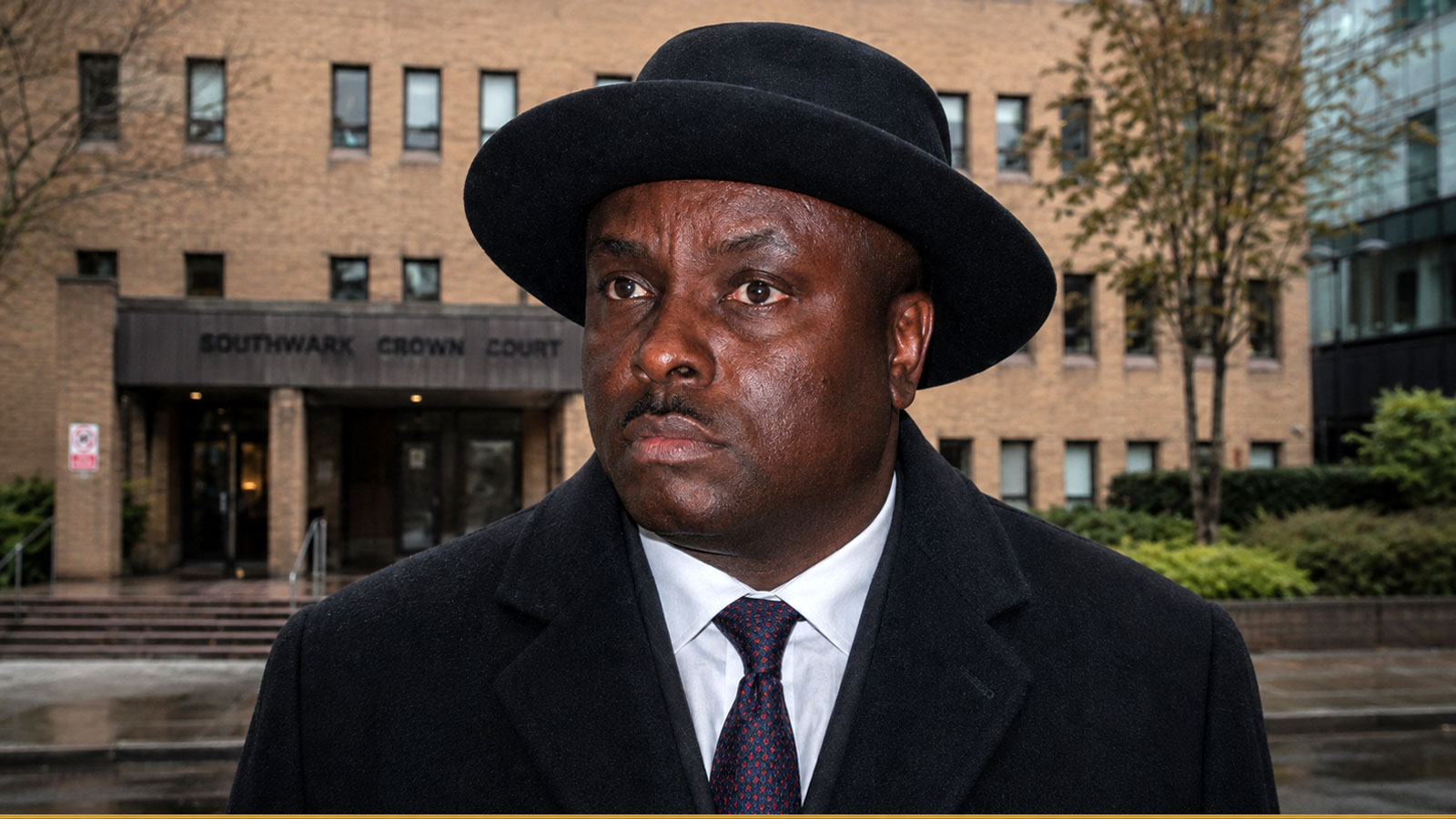
- On 21 July 2023, Southwark Crown Court ordered former Delta State governor James Onanefe Ibori to pay £101,514,315.21 under the United Kingdom’s confiscation regime.
- The court found that Ibori had benefited from his offending in that amount and had at least that much in available assets.
- Failure to pay exposed him to an additional eight years in prison.
- The order came more than eleven years after Ibori pleaded guilty in London to money laundering, conspiracy to defraud and related offences and was sentenced to 13 years in prison.
- The proceeds moved through relatives, associates, companies, bank accounts and property in the United Kingdom and abroad.
EXECUTIVE FINDING
On 21 July 2023, Southwark Crown Court ordered former Delta State governor James Onanefe Ibori to pay £101,514,315.21 under the United Kingdom’s confiscation regime.
The court found that Ibori had benefited from his offending in that amount and had at least that much in available assets.
Failure to pay exposed him to an additional eight years in prison.
The order came more than eleven years after Ibori pleaded guilty in London to money laundering, conspiracy to defraud and related offences and was sentenced to 13 years in prison.
The underlying corruption was Nigerian.
The laundering network was international.
The asset hunt was British.
The proceeds moved through relatives, associates, companies, bank accounts and property in the United Kingdom and abroad.
The Crown Prosecution Service said Ibori had gone to great lengths to disguise the assets he owned.
In a 2012 financial statement, he listed 20 bank accounts without balances and claimed legitimate earnings of US$2.5 million, but prosecutors said there was no paperwork or evidence to verify that source.
Text messages were used to prove his ownership of an additional property held in a company name.
The confiscation proceedings ultimately treated the visible lifestyle as only part of the problem.
The deeper question was beneficial ownership.
Which assets really belonged to Ibori even when someone else’s name, a company, a trust or a family relationship stood between him and the title?
THE CONVICTION PUNISHED THE CRIME. THE £101.5 MILLION ORDER TARGETED THE BUSINESS MODEL.
The central Kleptik question is therefore:
WHAT DOES ASSET RECOVERY LOOK LIKE WHEN THE CORRUPTION IS OLD, THE MONEY HAS MOVED, THE ASSETS ARE HELD THROUGH OTHER PEOPLE — AND THE POLITICIAN INSISTS MUCH OF THE WEALTH WAS LEGITIMATE?
THE FINDING
The Ibori case is a study in the second half of corruption enforcement.
Conviction establishes criminal responsibility.
Confiscation asks what the crime produced and what can still be recovered.
Those are different inquiries.
The first can end with prison.
The second can last for years.
PUBLIC OFFICE
↓
FRAUD / MONEY LAUNDERING
↓
RELATIVES + ASSOCIATES
↓
COMPANIES + TRUSTS + BANK ACCOUNTS
↓
PROPERTY + CARS + LIFESTYLE ASSETS
↓
UK CONFISCATION PROCEEDINGS
↓
£101.5M ORDER
↓
RETURN-TO-NIGERIA QUESTION
JAMES IBORI
James Ibori served as governor of Nigeria’s oil-rich Delta State from 1999 to 2007.
The office controlled major public resources in one of Nigeria’s wealthiest states.
That made his personal wealth, associates and offshore financial relationships high-risk PEP concerns.
THE 2012 GUILTY PLEA
On 27 February 2012, Ibori pleaded guilty in Southwark Crown Court to conspiracy to commit money laundering, money laundering, conspiracy to defraud and conspiracy to make false instruments.
He was later sentenced to 13 years in prison.
Those convictions pre-date this dossier’s archive window but form the legal basis for the 2023 confiscation proceeding.
WHY A 2023 DOSSIER?
The historic theft is not the archive-date event.
The 21 July 2023 confiscation order is.
That milestone transformed an old corruption conviction into one of the UK’s largest individual proceeds-of-crime orders.
THE £101,514,315.21 ORDER
Judge David Tomlinson ordered Ibori to pay £101,514,315.21.
The figure was not a symbolic estimate.
It was the amount the court determined could be confiscated under the Proceeds of Crime Act after lengthy contested proceedings.
THE BENEFIT FIGURE
The National Crime Agency said Ibori’s assessed criminal benefit was almost £116 million.
The confiscation order was lower because confiscation law distinguishes criminal benefit from the amount currently available to satisfy the order.
BENEFIT ≠ AVAILABLE AMOUNT
Criminal benefit asks how much the defendant obtained from criminal conduct.
Available amount asks how much realisable property exists now.
The court generally cannot confiscate more than the available amount at the time of the order.
THE EIGHT-YEAR DEFAULT SENTENCE
The court imposed an additional eight-year default sentence if the order was not paid.
Serving a default sentence does not ordinarily extinguish the confiscation debt.
The purpose is enforcement pressure, not substitution.
IBORI’S RESPONSE
Ibori said he would appeal.
He criticised the confiscation process and argued that assets were being attributed to him unfairly.
That position must remain part of the archive-date record because the confiscation order had been made but appellate challenge was still contemplated.
THE ASSET-DISCLOSURE BATTLE
Confiscation proceedings turned heavily on what Ibori actually owned.
In 2012 he provided information concerning income, property, shares, gifts and transfers.
The CPS disputed that his statement accurately reflected the full asset picture.
THE 20 BANK ACCOUNTS
The CPS said Ibori listed 20 bank accounts but did not provide balances.
A list without values does not answer the confiscation question.
Asset disclosure must establish control and current value.
THE US$2.5 MILLION LEGITIMATE-INCOME CLAIM
Ibori said he had legitimately earned US$2.5 million and used that money to purchase assets.
The CPS said there was no paperwork or evidence verifying that claimed source.
The dispute is a classic source-of-wealth problem.
SOURCE OF WEALTH
A defendant may own expensive assets lawfully.
The State must distinguish criminal wealth from genuine income.
The defendant’s explanation becomes much stronger when supported by tax returns, company accounts, contracts, dividends and banking history.
THE TEXT-MESSAGE PROPERTY
The CPS said text messages helped prove Ibori owned an additional property held through a company.
This is a modern beneficial-ownership lesson.
Legal title can be contradicted by communications showing who actually controls the asset.
BENEFICIAL OWNERSHIP
- Who paid for the asset?
- Who uses it?
- Who directs sale?
- Who receives proceeds?
These questions can matter more than the name on the deed.
THE FAMILY NETWORK
Ibori’s laundering network involved close associates and relatives, including his wife, sister and former lover.
Several were convicted in related UK proceedings.
Family proximity created trusted channels for money and assets.
FAMILY ≠ AUTOMATIC GUILT
The Ibori network demonstrates why family members matter in PEP analysis.
It does not justify guilt by relationship.
Each person’s liability depends on their own conduct and legal status.
UDOMAKA ONUIGBO
CPS records state that Udomaka Onuigbo controlled Nigerian companies used to transfer Ibori’s criminal proceeds to UK bank accounts and to a Guernsey trust.
She pleaded guilty to money-laundering offences and received a five-year sentence.
THERESA IBORI
Ibori’s wife Theresa was convicted of money laundering and received a five-year sentence.
A confiscation order was later made against her, with the amount subsequently adjusted to the assets available.
CHRISTINA IBORI-IBIE
Ibori’s sister Christina Ibori-Ibie was convicted of money laundering and deception offences and sentenced to five years.
Her case formed another branch of the laundering network.
BHADRESH GOHIL
Bhadresh Gohil, Ibori’s UK solicitor, was convicted in 2010 of money laundering, prejudicing a money-laundering investigation and conspiracy to defraud.
His professional role is especially significant because lawyers can provide the corporate and transactional infrastructure through which assets are hidden.
THE LAWYER-AS-GATEKEEPER
A lawyer can create companies.
move transactions.
document ownership.
manage trusts.
Professional services are legitimate.
When knowingly used to conceal criminal wealth, the professional becomes part of the laundering architecture.
ROWLAND NAKANDA
Rowland Nakanda was later convicted of money laundering and received a prison sentence.
His confiscation proceedings produced a separate order based on assets available to him.
ELIAS PREKO
Elias Preko was convicted of money laundering in 2013 and later became subject to a substantial confiscation order.
The network therefore extended beyond immediate family.
GOVERNOR
↓
TRUSTED PERSON
↓
COMPANY / TRUST
↓
BANK ACCOUNT
↓
PROPERTY OR LUXURY ASSET
↓
BENEFICIAL CONTROL
↓
CONFISCATION
THE LUXURY LIFESTYLE
CPS material described property in London, Washington DC and Texas, along with luxury vehicles including a Mercedes and a Bentley.
Luxury assets are not proof of corruption.
They become probative when legitimate wealth cannot explain them.
PRIVATE SCHOOLING
The wider case also associated criminal proceeds with elite private-school expenditure.
Lifestyle spending can reveal the economic benefit of corruption even where the asset itself is consumed rather than retained.
CONSUMED BENEFIT
A car can be sold.
A house can be confiscated.
School fees and travel are consumed.
Confiscation law therefore often measures benefit beyond assets still physically present.
THE COMPLEX-SCHEME MODEL
Public money leaves the State.
related people receive or move it.
companies give legal form.
banks provide transfer infrastructure.
property stores value.
luxury spending consumes value.
The network does not need one central account.
THE UK AS LAUNDERING DESTINATION
The case demonstrates why London and the wider UK financial system have long been attractive to foreign political wealth.
Stable property rights, deep finance and sophisticated professional services are valuable to legitimate investors and corrupt actors alike.
THE SAFE-HAVEN PARADOX
The stronger the rule of law, the more attractive the jurisdiction may be for storing wealth.
The same rule of law can later enable aggressive asset recovery.
THE NCA ROLE
National Crime Agency financial investigators pursued the confiscation proceedings after the convictions.
Their task was not simply to prove old transfers.
It was to identify what assets remained and who truly owned them.
THE METROPOLITAN POLICE ORIGIN
The original investigation arose from Metropolitan Police work into Ibori and his network.
The asset-recovery phase became a long-running continuation rather than a separate story.
THE DUBAI EXTRADITION
Ibori was arrested in Dubai in 2010 and extradited to the United Kingdom in 2011.
That history shows how cross-border corruption cases depend on extradition and mutual legal cooperation.
THE UAE NODE
The United Arab Emirates was not the laundering destination in the 2023 confiscation order.
It was a key jurisdiction in bringing Ibori into British custody.
Jurisdictional roles must be kept separate.
THE GUERNSEY TRUST
CPS records said funds were transferred to a trust in Guernsey through companies controlled by an associate.
Trusts can be legitimate wealth-management vehicles.
Their relevance here lies in how they functioned in the laundering network established by the criminal cases.
THE TRUST-BENEFICIARY QUESTION
- Who settled the trust?
- who controlled trustees?
- who received distributions?
A trust separates legal ownership, control and benefit — making beneficial-ownership analysis essential.
THE COMPANY-NAME PROPERTY
The CPS’s use of text messages to prove Ibori’s ownership of a property held in a company name is an important evidentiary pattern.
Communications can expose nominee structures that registries alone cannot.
TEXT MESSAGES AS FINANCIAL EVIDENCE
- Who calls the property 'mine'?
- who instructs repairs?
- who decides sale?
Digital communications can reveal economic ownership.
THE CONFISCATION HEARING
The court heard four weeks of evidence and submissions before determining Ibori’s benefit and available assets.
Confiscation is therefore not a simple administrative calculation.
It can become a major financial trial after the criminal trial has ended.
THE YEARS OF DELAY
The 2023 order arrived more than a decade after the 2012 guilty plea.
That delay illustrates a major weakness in international corruption enforcement.
A conviction can be swift relative to recovering the money.
WHY ASSET RECOVERY TAKES LONGER
Ownership disputes.
foreign jurisdictions.
trusts.
companies.
valuation.
appeals.
third-party claims.
Every asset can become its own case.
THE TIME-VALUE PROBLEM
While proceedings continue, assets may appreciate, depreciate or generate income.
Interest and enforcement rules become economically significant.
THE DISSIPATION RISK
Assets can be sold, transferred or encumbered during long proceedings unless restrained.
Early freezing is therefore central to meaningful confiscation.
RESTRAINT BEFORE CONFISCATION
A restraint order preserves.
A confiscation order creates a debt.
An enforcement receiver may later sell assets.
These are separate stages of the proceeds-of-crime system.
THE £4.214 MILLION RETURN
Before the 2023 order, the UK and Nigeria had already agreed the return of £4,214,017.66 recovered from Ibori-linked proceedings.
A 2021 UK-Nigeria memorandum required that returned funds be used for specified infrastructure projects and not benefit perpetrators or related persons.
RETURN WITH CONDITIONS
Asset return creates a governance dilemma.
The victim country should receive its money.
But donors and recovering jurisdictions may fear re-corruption.
Conditional return mechanisms attempt to manage that risk.
THE PROJECT-USE MODEL
The 2021 arrangement directed returned Ibori-linked funds to specific Nigerian infrastructure projects.
That makes restitution auditable in principle.
It also raises sovereignty questions about external conditions on stolen national wealth.
WHO OWNS THE RECOVERED MONEY?
Legally, the confiscating state controls the asset during enforcement.
Morally, the wealth belongs to the people harmed by corruption.
Restitution frameworks exist to bridge that gap.
THE DELTA-STATE VERSUS FEDERAL QUESTION
Ibori’s original corruption affected Delta State.
Returned funds were channelled through arrangements involving Nigeria’s Federal Government.
That can create political disputes over which level of government should receive benefit.
THE VICTIM-IDENTIFICATION PROBLEM
Victims of grand corruption are diffuse.
Citizens lose hospitals, roads, schools and trust rather than one identifiable bank balance.
Compensation therefore often takes the form of public projects.
THE ASSET-RETURN INTEGRITY STANDARD
Return should be transparent.
project-specific where appropriate.
independently monitored.
publicly reported.
The goal is to stop recovered corruption proceeds becoming a second corruption opportunity.
THE IBORI LEGITIMATE-WEALTH DEFENCE
Ibori’s position was that some assets were funded from legitimate income and that the confiscation process attributed property to him unfairly.
This is not an irrelevant defence.
Confiscation must distinguish lawful wealth from criminal benefit.
THE BURDEN OF DOCUMENTATION
Claims of legitimate wealth are strongest when supported by contemporaneous records.
Tax filings.
salary.
company profits.
dividend records.
contracts.
bank statements.
THE FABRICATED-WEALTH PROSECUTION THEORY
The CPS argued that Ibori’s asserted legitimate wealth was fabricated to disguise criminal proceeds.
The court’s 2023 findings accepted the prosecution’s case sufficiently to support the £101.5 million order.
THE REALISABLE-ASSET TEST
Asset recovery asks what can actually be converted into money.
A theoretical benefit is not enough.
The prosecutor must find property with realisable value.
THE HIDDEN-ASSET TEST
Property held by another person may still be relevant if the defendant has the true economic interest.
That is where nominee, trust and company evidence becomes decisive.
THE THIRD-PARTY-RIGHTS PROBLEM
Confiscation can affect spouses, relatives, companies and creditors.
Courts must distinguish sham ownership from genuine third-party property rights.
THE CORPORATE-STRUCTURE RISK
A company can hold property for ordinary tax or commercial reasons.
In a laundering case, the same structure can hide ownership.
Economic substance decides significance.
THE SOLICITOR NETWORK
Gohil’s role shows why professional facilitators can multiply corruption risk.
The politician brings the money.
The professional can give it structure.
PROFESSIONAL FORM DOES NOT PROVE ECONOMIC SUBSTANCE
A company certificate.
trust deed.
sale contract.
loan agreement.
Documents can be genuine while the economic story behind them is false.
THE BANKING NETWORK
Multiple accounts and jurisdictions can fragment transaction monitoring.
One bank sees a transfer.
another sees property purchase.
another sees trust movement.
No single institution sees the complete PEP relationship.
THE DATA-FUSION PROBLEM
Police intelligence.
bank records.
property registries.
company filings.
messages.
tax records.
The asset map emerges only when datasets are combined.
THE £101.5 MILLION AS A POLICY SIGNAL
The order was exceptional in size.
It signalled that the UK could use proceeds-of-crime powers against foreign political corruption long after the original sentence had been served.
THE DEFAULT-SENTENCE SIGNAL
The additional eight-year threat shows that confiscation is not optional debt collection.
The criminal justice system treats non-payment as serious defiance.
THE DEBT-SURVIVAL PRINCIPLE
Serving the default term does not normally wipe out the confiscation debt.
That prevents a wealthy defendant from treating prison as a cheaper substitute for payment.
THE APPEAL QUESTION
Ibori announced that he would appeal the order.
As of the archive date, Kleptik therefore treats the £101.5 million as an entered confiscation order, not as an unchallengeable final appellate outcome.
THE ENFORCEMENT QUESTION
An order is not recovery.
The next phase is collection.
- Which assets will be sold?
- which jurisdictions will cooperate?
- what will ultimately be returned?
ORDER ≠ CASH IN TREASURY
A £101.5 million order can exist on paper while enforcement takes years.
Kleptik distinguishes ordered amount, recovered amount and returned amount.
THE ASSET-RECOVERY MATRIX
| Stage | Question | Ibori relevance |
|---|---|---|
| Criminal benefit | How much was obtained through offending? | NCA assessed almost £116m |
| Available assets | What can be realised now? | Court found at least £101.5m |
| Confiscation order | What must defendant pay? | £101,514,315.21 |
| Default sentence | What if unpaid? | Additional eight years |
| Enforcement | Which assets are actually sold/collected? | Ongoing after order |
| Restitution | What reaches Nigeria? | Separate return framework required |
THE EVIDENTIARY-STATUS MATRIX
| Issue | Status at 21 Jul 2023 | Kleptik treatment |
|---|---|---|
| 2012 guilty plea / sentence | Final historical conviction | ESTABLISHED — GUILTY PLEA |
| £101.5m confiscation order | Southwark Crown Court order entered | ESTABLISHED — CONFISCATION ORDER |
| Almost £116m criminal benefit | NCA/CPS confiscation finding | ESTABLISHED — BENEFIT FINDING |
| Ibori legitimate-wealth claim | Defendant position rejected in material part | SUBJECT POSITION |
| Appeal of confiscation order | Announced / unresolved | OPEN |
| Actual amount ultimately recovered | Not yet equal to order on archive date | OPEN |
CHRONOLOGY
1999–2007
James Ibori serves two terms as governor of Delta State.
2007 onward
UK investigations intensify into Ibori-linked money laundering and assets.
2010
Several relatives and associates are convicted in UK proceedings; Ibori is arrested in Dubai.
2011
Ibori is extradited from the United Arab Emirates to the United Kingdom.
27 February 2012
Ibori pleads guilty in Southwark Crown Court to money laundering, conspiracy to defraud and related offences.
April 2012
He is sentenced to 13 years in prison.
2012
Ibori provides asset and income information later disputed by prosecutors in confiscation proceedings.
December 2016
Ibori is released after serving the custodial portion of his sentence and later returns to Nigeria.
March 2021
The UK and Nigeria sign arrangements concerning return of £4.214 million recovered from Ibori-linked assets for specified infrastructure projects.
2021–2023
Confiscation litigation continues over Ibori’s criminal benefit, lawful wealth claims and available assets.
July 2023
A four-week confiscation hearing concludes at Southwark Crown Court.
21 July 2023
Judge David Tomlinson orders Ibori to pay £101,514,315.21 or face an additional eight-year default sentence; Ibori says he will appeal.
DOCUMENTARY RECORD
SOUTHWARK CROWN COURT / CPS — 21 JULY 2023
The confiscation ruling established the £101,514,315.21 payment order and eight-year default sentence.
CROWN PROSECUTION SERVICE — JULY 2023
The CPS described the asset-disclosure dispute, the 20 bank accounts, unsupported US$2.5 million legitimate-income claim, property proved through text messages, the laundering network and the conclusion that Ibori had significantly more assets than disclosed.
NATIONAL CRIME AGENCY — JULY 2023
The NCA said Ibori’s assessed criminal benefit was almost £116 million and described the order as part of one of the largest UK international confiscation cases.
UK-NIGERIA ASSET RETURN MOU — 2021
The memorandum set out conditions for returning £4,214,017.66 recovered from Ibori-linked proceedings and directed the money to specified Nigerian infrastructure projects.
WHAT THE COURT ESTABLISHED
The court determined that Ibori had benefited from his criminal conduct in an amount supporting a confiscation order of £101,514,315.21.
It determined that at least that amount was available for payment.
It imposed an eight-year default sentence for non-payment.
WHAT IBORI SAID
Ibori challenged the fairness of the confiscation process and said assets were being attributed to him improperly.
He maintained that he had legitimate wealth and announced an intention to appeal.
Those positions remained unresolved at the archive date.
WHAT THIS DOSSIER DOES NOT ESTABLISH
This dossier does not state that the £101.5 million order had been fully collected by 21 July 2023.
It does not state that the confiscation order was beyond appeal on the archive date.
It does not equate the almost £116 million benefit figure with cash sitting in one account.
It does not infer wrongdoing by every family member, associate, bank, lawyer, trustee or company connected to Ibori.
It does not treat every asset held through a company or trust as criminal property.
It does not incorporate later confiscation orders entered after 21 July 2023 against other defendants.
RIGHT OF REPLY
Historical publication should reproduce Ibori’s announced appeal position and legitimate-wealth claim fairly.
Any associate or professional intermediary criticised beyond established convictions should receive transaction-specific questions.
Any current statement about collection or restitution should be separately verified rather than inferred from the 21 July 2023 order.
UNANSWERED QUESTIONS
1. THE £101.5 MILLION
Which specific assets make up the court’s available-asset calculation?
2. THE £116 MILLION BENEFIT
How did the NCA calculate the full criminal benefit figure?
3. THE 20 ACCOUNTS
What were the balances, jurisdictions and beneficial owners of the accounts Ibori disclosed?
4. THE UNDISCLOSED ACCOUNTS
What additional accounts were identified by investigators?
5. THE US$2.5 MILLION CLAIM
What business or employment activity did Ibori say generated this legitimate income?
6. TAX RECORDS
What tax evidence supported or contradicted the claimed lawful wealth?
7. THE TEXT-MESSAGE PROPERTY
Which company held the property proved through communications and who appeared as legal owner?
8. GUERNSEY
What assets or proceeds entered the trust identified in the associate network?
9. THE UK PROPERTIES
Which London properties remained available for confiscation on the archive date?
10. THE U.S. PROPERTIES
What was the status of Washington DC and Texas assets associated with the scheme?
11. THE VEHICLES
Which luxury vehicles were sold, forfeited or otherwise realised?
12. THE FAMILY NETWORK
Which assets were genuinely owned by relatives and which were beneficially Ibori’s?
13. THE SOLICITOR STRUCTURES
Which companies, trusts or transactions were created or managed through professional advisers?
14. THIRD-PARTY RIGHTS
Which ownership claims from relatives or companies were accepted by the court?
15. THE APPEAL
On what legal and valuation grounds did Ibori intend to challenge the confiscation order?
16. ENFORCEMENT
Which jurisdictions would need to cooperate to realise the full £101.5 million?
17. INTEREST
How much additional interest would accrue if the order remained unpaid?
18. RETURN TO NIGERIA
What proportion of sums ultimately recovered would be returned to Nigeria rather than retained under UK asset-recovery rules?
19. DELTA STATE
What mechanism would ensure the people of Delta State receive a direct public benefit?
20. THE CENTRAL QUESTION
Why did it take more than a decade after conviction to determine the full economic benefit and available wealth of one of Africa’s best-known corruption defendants?
KLEPTIK INTELLIGENCE ASSESSMENT
ASSESSMENT: ESTABLISHED — GUILTY PLEA
Ibori pleaded guilty in 2012 to money laundering, conspiracy to defraud and related offences and received a 13-year sentence.
ASSESSMENT: ESTABLISHED — CONFISCATION ORDER
On 21 July 2023, Southwark Crown Court ordered Ibori to pay £101,514,315.21.
ASSESSMENT: ESTABLISHED — BENEFIT FINDING
UK authorities assessed Ibori’s criminal benefit at almost £116 million and the court found at least £101.5 million in available assets.
ASSESSMENT: ESTABLISHED — DEFAULT SENTENCE
Non-payment exposed Ibori to an additional eight years in prison.
ASSESSMENT: SUBJECT POSITION
Ibori disputed the confiscation findings, asserted legitimate wealth and announced an intention to appeal.
ASSESSMENT: HIGH CONFIDENCE
The case demonstrates that beneficial ownership, not registered title alone, is the central forensic problem in high-level asset recovery.
ASSESSMENT: HIGH CONFIDENCE
Professional and family networks can convert one politician’s criminal wealth into dozens of separate legal relationships that must be unwound individually.
ASSESSMENT: HIGH CONFIDENCE
Asset return is a second governance challenge after confiscation because recovered money must be protected from re-diversion and tied to visible public benefit.
THE KLEPTIK VIEW
A corruption conviction answers the moral question quickly.
Did the official steal or launder public money?
Asset recovery answers the practical question slowly.
Where is it now?
That is harder.
Money does not sit still for eleven years.
It becomes property.
shares.
cars.
school fees.
trusts.
companies.
accounts in someone else’s name.
The criminal fortune stops looking like a pile of stolen cash.
It starts looking like ordinary wealth.
That is why the Ibori case took so long.
Every layer creates another legal question.
- Does he own it?
- Did she receive it honestly?
- Is the company genuine?
- Was the income legitimate?
- Can the asset be sold?
- Will the foreign jurisdiction cooperate?
The £101.5 million order is therefore not the end of the case.
It is the court’s attempt to convert a decade of hidden ownership back into one number.
THE CRIME CREATED THE FORTUNE.
THE NETWORK CREATED THE DISTANCE.
And confiscation tries to collapse that distance.
Company back to owner.
trust back to beneficiary.
property back to purchase money.
lifestyle back to criminal benefit.
The final challenge is restitution.
Because recovering stolen public money in London is not enough if the people from whom it was stolen never see the benefit.
FOLLOW THE BENEFICIAL OWNER.
FOLLOW THE ASSET AFTER THE SENTENCE.
THEN FOLLOW THE RECOVERED MONEY ALL THE WAY BACK TO THE PUBLIC.
KLEPTIK METHODOLOGY
This dossier is dated 21 July 2023 and is intentionally fixed to the confiscation and evidentiary position existing on that date.
The principal sources are the Southwark Crown Court confiscation outcome, Crown Prosecution Service and National Crime Agency records concerning Ibori’s benefit and asset holdings, and the 2021 UK-Nigeria memorandum governing return of previously recovered Ibori-linked assets.
Kleptik distinguishes among historic criminal conviction, criminal benefit, available amount, confiscation order, enforcement, default sentence and restitution.
CRIMINAL BENEFIT
The value determined to have been obtained through criminal conduct.
AVAILABLE AMOUNT
The defendant’s realisable assets available to satisfy the order.
CONFISCATION ORDER
The amount the Crown Court requires the convicted defendant to pay.
RECOVERED AMOUNT
Cash actually collected through enforcement.
RETURNED AMOUNT
Recovered value transferred for the benefit of the victim country.
For beneficial-ownership analysis, registered title is treated as one evidentiary input rather than conclusive proof of economic ownership.
For legitimate-wealth claims, contemporaneous tax, business and banking records are required before a source-of-wealth explanation is treated as verified.
For relatives and professionals, relationship or transactional involvement does not establish criminal knowledge without case-specific evidence.
Later appeal, enforcement and co-defendant developments after 21 July 2023 are excluded from the archive-date status.
EVIDENTIARY LABELS
ESTABLISHED — GUILTY PLEA
Conduct admitted by Ibori in the historic UK criminal proceeding.
ESTABLISHED — CONFISCATION ORDER
Order entered by Southwark Crown Court on 21 July 2023.
ESTABLISHED — BENEFIT FINDING
Financial benefit finding made for confiscation purposes.
SUBJECT POSITION
Ibori’s legitimate-wealth and appeal arguments.
BENEFICIAL-OWNERSHIP INDICATOR
Evidence that legal title may differ from economic ownership.
PEP-NETWORK INDICATOR
Family, associate or professional relationship relevant to asset tracing; not guilt by association.
ASSET-RECOVERY INDICATOR
Fact relevant to restraint, confiscation, enforcement or return.
KLEPTIK VERIFIED
Fact independently corroborated through court, CPS, NCA or government records.
KLEPTIK ASSESSMENT
Analytical conclusion derived from identified evidence.
INVESTIGATIVE LEAD
Matter requiring additional property, banking, trust, company or restitution verification.
DOCUMENT STATUS
KLTK-2023-040
Subject: James Ibori / Delta State / United Kingdom / Money Laundering / Beneficial Ownership / Confiscation
Archive date: 21 July 2023
Status at archive date: £101,514,315.21 confiscation order entered; additional eight-year default sentence for non-payment; appeal announced
Historical treatment: Fixed to report date
© KLEPTIK — Investigations into Power, Money and the Systems Designed to Hide Both