THE FOUNDER, THE $80 BILLION MIRAGE AND THE $300 BILLION COLLAPSE

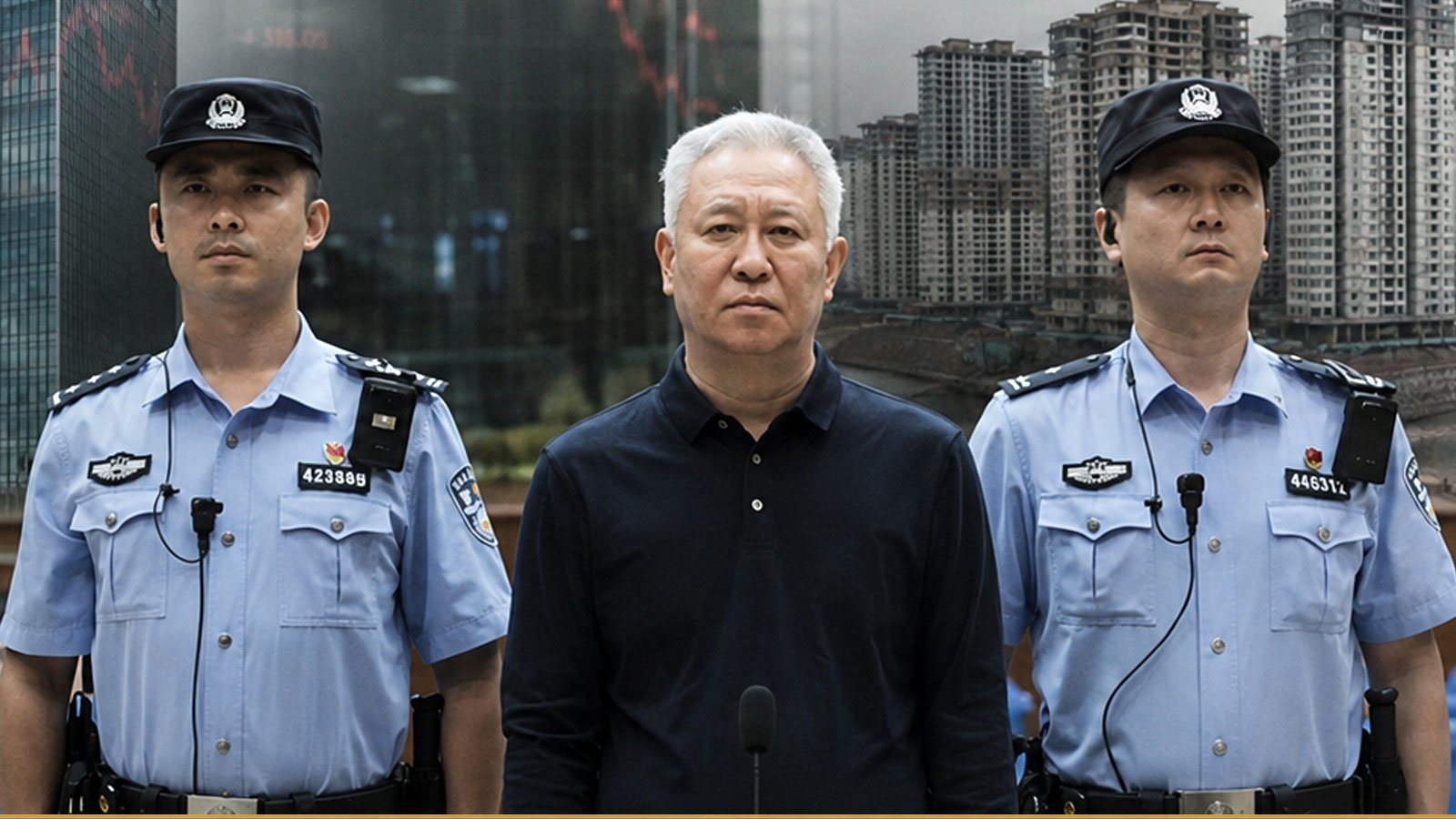
- On 20 August 2026, the Shenzhen Intermediate People’s Court imposed the defining criminal judgment in the collapse of China Evergrande Group.
- Founder and controlling shareholder Hui Ka Yan — also known as Xu Jiayin — received life imprisonment, permanent deprivation of political rights and confiscation of all personal property.
- Evergrande Real Estate Group, the principal mainland property arm known as Hengda Real Estate, was fined RMB 7 billion.
- The court ordered continued recovery of illegal proceeds and restitution where recovered assets were insufficient.
- The judgment therefore transformed Evergrande from a failed property developer into an adjudicated corporate-crime system.
EXECUTIVE FINDING
On 20 August 2026, the Shenzhen Intermediate People’s Court imposed the defining criminal judgment in the collapse of China Evergrande Group.
Founder and controlling shareholder Hui Ka Yan — also known as Xu Jiayin — received life imprisonment, permanent deprivation of political rights and confiscation of all personal property.
Evergrande Group was fined RMB 8.82 billion.
Evergrande Real Estate Group, the principal mainland property arm known as Hengda Real Estate, was fined RMB 7 billion.
The court ordered continued recovery of illegal proceeds and restitution where recovered assets were insufficient.
The court found that from 2016 to 2021 Hui exercised effective control over a group spanning property, wealth management, finance and other businesses and directed a system that inflated assets, hid liabilities and used sustained large-scale financial falsification.
The criminal findings covered illegal absorption of public deposits, fundraising fraud, illegal lending, fraudulent issuance of securities, illegal disclosure of important information and corporate bribery; Hui was additionally convicted of illegal use of funds and embezzlement.
The judgment therefore transformed Evergrande from a failed property developer into an adjudicated corporate-crime system.
The fraud did not begin in 2021 when the company defaulted.
Chinese securities regulators had already established that Hengda prematurely recognised revenue to inflate its 2019 revenue by RMB 213.989 billion and its 2020 revenue by RMB 350.157 billion — a combined RMB 564.146 billion, roughly US$80 billion at contemporary exchange rates.
In 2020 alone, the overstated revenue represented 78.54% of reported turnover and inflated profit by RMB 51.289 billion, or 86.88% of reported total profit.
The false accounts were then cited in five domestic bond offerings totalling RMB 20.8 billion, producing a separate 2024 securities-regulatory finding of fraudulent issuance.
The same regulatory record said Evergrande failed to disclose 1,533 major litigation and arbitration matters involving RMB 431.259 billion and failed to disclose overdue debt as required.
PwC, which issued standard unqualified audit opinions on the 2019 and 2020 accounts, was later punished by Chinese regulators after they found major audit failures, loss of professional scepticism and false audit reports.
By the time criminal judgment arrived, Evergrande had defaulted on more than US$300 billion in liabilities, entered Hong Kong liquidation, lost its stock-market listing and left offshore creditors pursuing a fraction of their claims.
Liquidators reported in 2025 that they had recovered only about US$255 million in assets while receiving proofs of debt totalling roughly US$45 billion at the offshore holding-company level.
The criminal sentence punished the founder.
It did not rebuild unfinished apartments, restore creditor value or answer how a company could falsify financial statements at this scale while banks, bond investors, auditors, regulators and homebuyers continued supplying money.
EVERGRANDE DID NOT FAIL BECAUSE THE NUMBERS BECAME BAD. THE COURT FOUND THAT THE NUMBERS HAD BEEN MADE FALSE WHILE THE COMPANY WAS STILL RAISING MONEY.
The central Kleptik question is therefore:
HOW CAN A DEVELOPER OVERSTATE REVENUE BY ROUGHLY US$80 BILLION, HIDE LIABILITIES, SELL BONDS, TAKE PUBLIC MONEY AND KEEP EXPANDING — WITHOUT EVERY MAJOR GATEKEEPER FAILING AT THE SAME TIME?
THE FINDING
Evergrande’s collapse was a leverage crisis.
It was also an accounting crisis.
a fundraising crisis.
a governance crisis.
an audit crisis.
and ultimately a criminal case.
The common mechanism was confidence.
Homebuyers trusted future delivery.
bondholders trusted financial statements.
banks trusted collateral and cash flow.
auditors signed accounts.
regulators relied on disclosure.
When the numbers were false, each layer of confidence amplified the next.
HUI KA YAN / XU JIAYIN
Hui founded Evergrande in 1996 and built it into one of China’s largest property groups.
At his peak he was among Asia’s wealthiest individuals and a prominent member of China’s political-business elite.
The 2026 court described him as Evergrande’s actual controller with comprehensive responsibility for group operations.
THE LIFE SENTENCE
The Shenzhen court imposed life imprisonment after combining multiple offences.
Hui also lost political rights for life and all personal property was ordered confiscated.
This was a first-instance criminal judgment and should not be described as final until appellate status is known.
THE RMB 8.82 BILLION EVERGRANDE FINE
Evergrande Group itself was fined RMB 8.82 billion.
The corporate fine is distinct from creditor liabilities, restitution and earlier regulatory penalties.
THE RMB 7 BILLION HENGDA FINE
Evergrande Real Estate Group received a separate RMB 7 billion criminal fine.
The combined corporate criminal fines totalled RMB 15.82 billion, roughly US$2.3-$2.4 billion depending on exchange rate.
THE CRIMINAL OFFENCE STACK
The Shenzhen court convicted Evergrande Group and Hui on offences including illegal public-deposit absorption, fundraising fraud, illegal lending, fraudulent securities issuance, unlawful disclosure and corporate bribery.
Hui was additionally convicted of illegal use of funds and embezzlement.
Evergrande Real Estate was convicted of fraudulent securities issuance.
FINANCIAL FALSIFICATION AS CORE MECHANISM
The court said sustained, large-scale financial falsification was used to inflate assets and conceal liabilities from 2016 to 2021.
That language links the accounting system directly to the later fundraising and securities offences.
THE RMB 564.146 BILLION REVENUE MIRAGE
China Securities Regulatory Commission findings showed Hengda overstated 2019 revenue by RMB 213.989 billion and 2020 revenue by RMB 350.157 billion.
Together, the two years contained RMB 564.146 billion of overstated revenue — roughly US$80 billion at the time.
2019: HALF THE REVENUE
The 2019 overstatement represented 50.14% of reported operating revenue.
Profit was overstated by RMB 40.722 billion, equal to 63.31% of reported total profit.
2020: ALMOST FOUR-FIFTHS OF REVENUE
The 2020 overstatement represented 78.54% of operating revenue.
Profit was overstated by RMB 51.289 billion, equal to 86.88% of reported total profit.
EARLY REVENUE RECOGNITION
The regulatory mechanism was premature recognition of property revenue.
Property development naturally involves long construction periods and customer prepayments, making revenue cut-off a critical accounting control.
THE ECONOMIC EFFECT OF EARLY RECOGNITION
Recognise tomorrow’s sale today.
profit rises.
leverage appears lower relative to earnings.
credit metrics improve.
investors see growth that has not economically occurred yet.
THE BOND ISSUANCES
Hengda used the false financial reports in five domestic bond offerings.
The offerings totalled RMB 20.8 billion.
FRAUDULENT ISSUANCE
The CSRC concluded that referencing false 2019 and 2020 financial information in those bond materials constituted fraudulent issuance.
The company was fined RMB 4.175 billion in 2024 under the securities regime.
HUI’S 2024 REGULATORY PENALTY
Before the criminal trial, Hui was personally fined RMB 47 million and permanently barred from China’s securities market.
The regulator found that he organised and directed the financial falsification.
THE 1,533 UNDISCLOSED CASES
The CSRC found that Hengda failed to disclose 1,533 major lawsuits and arbitrations above the regulatory threshold.
Those matters involved RMB 431.259 billion.
HIDDEN LEGAL RISK
Litigation is a liability signal.
Failing to disclose hundreds of billions of yuan in contested obligations deprives investors of information about solvency and cash pressure.
UNDISCLOSED OVERDUE DEBT
Regulators also found failures to disclose inability to repay matured debts as required.
That is especially serious for a company continuously raising new money.
THE PUBLIC-DEPOSIT / WEALTH-MANAGEMENT PROBLEM
Evergrande’s financial ecosystem extended beyond ordinary property sales and public bonds.
The criminal judgment included illegal absorption of public deposits and fundraising fraud, reflecting the role of wealth-management and public funding channels.
THE BANK-CONTROL / CREDIT FINDING
The court said Evergrande Group and Hui used bribery to obtain control over financial institutions and illegally drew credit and insurance funds for group use.
This shifts part of the case from false disclosure into direct corruption of financial intermediation.
CORPORATE BRIBERY
The corporate-bribery conviction means Evergrande’s growth model was not only based on aggressive borrowing and accounting manipulation.
The court also found corrupt methods were used to obtain financial control or advantages.
THE MISUSE OF FUNDS
Hui was separately convicted of illegal use of funds and embezzlement.
The judgment therefore attributes personal criminal liability beyond false reporting and corporate fundraising.
THE PRE-SALE MODEL
Chinese developers historically relied heavily on pre-sales of unfinished homes.
Customer deposits and mortgage proceeds therefore financed construction before delivery.
HOME BUYERS AS UNWITTING FINANCIERS
A household thought it was buying an apartment.
Economically, its cash also financed the developer’s balance sheet.
When construction stopped, the buyer became both consumer and creditor.
THE THREE RED LINES
China’s 2020 leverage restrictions sharply reduced the ability of highly indebted developers to continue borrowing.
Evergrande’s model depended on continuing access to refinancing and sales.
THE 2021 DEFAULT
Evergrande defaulted on offshore debt in 2021 and ultimately failed to service most of a liability stack exceeding US$300 billion.
The default became the symbol of China’s broader property-sector crisis.
US$300 BILLION IS A LIABILITY NUMBER, NOT A THEFT NUMBER
Evergrande’s total liabilities included bank loans, bonds, trade creditors, homebuyer obligations and other claims.
It is inaccurate to describe US$300 billion as money criminally stolen by Hui.
THE PROPERTY CRISIS TRANSMISSION
Evergrande’s collapse weakened confidence in pre-sales, pressured developers, suppliers, local-government land revenues and property prices.
The criminal case sits inside a macroeconomic crisis larger than one company.
THE HONG KONG LIQUIDATION
On 29 January 2024, a Hong Kong court ordered China Evergrande Group into liquidation.
The offshore holding company and mainland operating companies sit across different legal systems, complicating recovery.
THE DELISTING
Hong Kong Exchange cancelled Evergrande’s listing effective 25 August 2025 after trading remained suspended and resumption requirements were not met.
Delisting ended the stock-market life of a company once valued as a national property champion.
THE US$255 MILLION RECOVERY
Liquidators reported by July 2025 that approximately US$255 million in assets had been recovered or realised across the offshore group structure.
That was tiny relative to the claims and historic balance sheet.
THE US$45 BILLION CLAIMS
Liquidators reported 187 proofs of debt totalling approximately HK$350 billion, around US$45 billion, against the offshore holding company by 31 July 2025.
This figure is separate from the broader group’s more than US$300 billion liabilities.
CONTROL OF 100+ SUBSIDIARIES
Liquidators said they had assumed control of more than 100 group companies by mid-2025.
Corporate control is necessary before assets can be sold, claims pursued or records obtained.
MAINLAND / HONG KONG FRICTION
Most Evergrande property assets were in mainland China, while the liquidation order came from Hong Kong.
Cross-border insolvency effectiveness depends on recognition, local creditors and policy priorities such as completing homes.
HOME DELIVERY VERSUS CREDITOR RECOVERY
Chinese authorities prioritised completion of unfinished housing projects.
Offshore creditors prioritised maximising recovery.
Those objectives can compete for the same remaining value.
PWC
PwC audited Evergrande Real Estate’s 2019 and 2020 financial statements and issued standard unqualified opinions.
Chinese regulators later concluded the audit reports contained false statements and that audit procedures failed on a massive scale.
THE CLEAN-AUDIT PARADOX
A standard unqualified audit opinion tells investors the financial statements present fairly in all material respects under the applicable framework.
That message is difficult to reconcile with revenue later found to be overstated by more than 50% in one year and nearly 80% in the next.
THE RMB 325 MILLION CSRC PWC PENALTY
The CSRC confiscated PwC’s relevant audit fees and imposed penalties totalling RMB 325 million for the 2019-2020 securities-related audit failures.
THE RMB 116 MILLION MINISTRY OF FINANCE PENALTY
The Ministry of Finance separately imposed disgorgement and fines totalling RMB 116 million in relation to Evergrande audit work, including 2018.
The combined mainland regulatory penalties against PwC in the Evergrande matter totalled RMB 441 million.
THE AUDIT FAILURES
Regulators said PwC failed to maintain professional scepticism, failed to detect premature revenue recognition, failed on sampling and going-concern procedures and failed to identify other major accounting errors and disclosure problems.
MANAGEMENT RESPONSIBILITY VERSUS AUDITOR RESPONSIBILITY
Management prepares the accounts.
Auditors test them.
Audit failure does not make the auditor the author of the fraud, but it can allow false information to remain credible.
THE GATEKEEPER CHAIN
Board.
finance department.
auditor.
underwriter.
rating agency.
bank.
regulator.
Every gatekeeper saw a different piece of the system.
THE BOARD QUESTION
What did Evergrande directors know about the early-recognition adjustments, off-balance-sheet obligations and cash pressure?
The criminal case included numerous other individuals, but liability varies by role.
THE FIVE SENIOR EXECUTIVES
Reuters reported that five senior Evergrande executives received prison terms ranging from six to 18 years in the 2026 criminal case.
The founder’s life sentence should not be projected automatically onto every executive.
THE 56 OTHER SENTENCES
Reuters reported 56 other individuals sentenced in the wider case.
Each person’s offence and sentence should be treated separately in any follow-up network dossier.
THE SONS AND ASSOCIATES
Contemporary reporting said family members and associates were among those punished.
Kleptik does not attribute specific criminal conduct to relatives unless the judgment identifies it.
THE POLITICAL-ADVISORY STATUS
Hui had served in China’s top political advisory system and was once a high-profile patriotic businessman.
Political access is context, not proof of corruption.
THE SOCCER / EV / DIVERSIFICATION ERA
Evergrande invested beyond property into football, electric vehicles, health and other sectors.
Diversification consumed capital and expanded the number of entities and creditors exposed to group decisions.
THE CASH-POOL PROBLEM
Conglomerates can move liquidity among subsidiaries and business lines.
Without ring-fencing, a profitable unit can finance a failing one until both become stressed.
THE WEALTH-MANAGEMENT PRODUCT PROBLEM
Employees, investors and members of the public bought wealth-management products tied to Evergrande.
Public fundraising outside ordinary bank deposits created additional creditor classes.
THE CORPORATE-BRIBERY QUESTION
- Who was bribed?
- which financial institution was controlled or influenced?
- what credit or insurance funds were obtained?
The 20 August public court summary establishes the offence category but does not publish a complete transaction ledger.
THE EMBEZZLEMENT QUESTION
Which specific company assets did Hui misappropriate?
The public sentencing summary confirms the conviction but does not provide the complete asset schedule.
THE RESTITUTION ORDER
The court ordered continued recovery of illegal gains and repayment where recovery was insufficient.
The practical value of that order depends on what property can actually be located and realised.
ALL PERSONAL PROPERTY CONFISCATED
Confiscating all Hui’s personal property is extraordinary but does not mean all assets will be liquid, uncontested or available to creditors.
Ownership, family claims and offshore structures can complicate execution.
CRIMINAL CONFISCATION VERSUS LIQUIDATION ESTATE
Criminal recovery serves the State’s penal and restitution objectives.
Liquidation serves creditor claims.
The priority and interaction of the two systems can determine who ultimately receives value.
THE OFFSHORE ASSET HUNT
Evergrande liquidators have pursued claims against former insiders and professional advisers to increase the estate available to creditors.
Those civil claims are separate from the August 2026 criminal judgment.
THE PWC CIVIL CLAIM
Liquidators had brought a large civil claim against PwC-related entities alleging audit failures contributed to creditor losses.
That civil claim remained separate from the regulatory penalties and should not be treated as adjudicated damages on the archive date.
THE DIVIDEND QUESTION
Liquidators have scrutinised billions of dollars of dividends distributed before collapse.
Dividends can be lawful even before insolvency, but false financial statements may change whether distributions were justified.
THE CREDIT-RATING QUESTION
Rating agencies react to information provided by issuers and markets.
The case raises the question of whether leverage and cash-flow stress should have triggered earlier scepticism despite reported profits.
THE BANK-LENDING QUESTION
Banks financed Evergrande and its projects for years.
Collateral values, implicit support assumptions and rolling credit can hide declining repayment capacity.
THE LOCAL-GOVERNMENT INCENTIVE
Local governments benefited from land sales and construction activity.
That creates an economic incentive to prefer continued development over early failure, even where leverage is excessive.
THE LAND-FINANCE LOOP
Developer buys land.
local government receives revenue.
developer pre-sells apartments.
banks lend.
new land is purchased.
The cycle works until financing stops.
THE TOO-BIG-TO-FAIL ILLUSION
Evergrande’s size encouraged assumptions that authorities would not permit disorderly collapse.
The 2021 default demonstrated that political importance did not guarantee a full bailout.
THE MORAL-HAZARD LESSON
If creditors believe a national champion will always be rescued, they price risk too cheaply.
Allowing failure can restore discipline but creates enormous social cost when homebuyers are involved.
THE PROPERTY-SECTOR MODEL
Evergrande’s fate accelerated a shift away from speculative, leverage-driven development.
The judgment is therefore not only punishment of a founder but a legal epitaph for a growth model.
THE MACROECONOMIC COST
China’s property downturn reduced household wealth, construction activity, local-government revenue and confidence.
Not all of that damage was caused by Evergrande, but Evergrande became the sector’s most visible failure.
THE HOME-PRICE EFFECT
Property weakness after 2021 extended far beyond Evergrande projects.
Sectorwide oversupply, demographic change, credit tightening and confidence all contributed.
DO NOT ATTRIBUTE THE ENTIRE PROPERTY CRISIS TO HUI
Evergrande was a catalyst and symbol.
China’s property crisis also reflected structural leverage and policy problems across the sector.
THE ACCOUNTING-FRAUD SIGNAL
When revenue is overstated by hundreds of billions of yuan, conventional ratio analysis becomes contaminated.
Investors cannot accurately evaluate debt capacity using false earnings.
THE CASH-FLOW SIGNAL
Cash flow is harder to manufacture than accounting revenue over long periods.
Analysts should compare reported profit with actual operating cash, receivables and construction obligations.
THE RECEIVABLE / CONTRACT-ASSET SIGNAL
Rapid growth in recognised revenue without matching collections can signal aggressive recognition.
Property developers require special scrutiny of contract liabilities, receivables and completion status.
THE DEBT-DISCLOSURE SIGNAL
A developer facing hundreds of undisclosed legal claims and overdue obligations should not be analysed using reported debt alone.
Contingent and hidden liabilities are central solvency variables.
THE AUDITOR-INDEPENDENCE SIGNAL
China’s Ministry of Finance said PwC lost independence in parts of the Evergrande audit relationship and performed management-like functions in preparing consolidated financial statements.
That finding raises a core governance question about the boundary between auditing and helping management produce the accounts.
THE MANAGEMENT-LETTER QUESTION
- What warnings were raised internally by auditors?
- Which issues reached the audit committee?
- Which were overridden or judged immaterial?
Those records matter for understanding gatekeeper failure.
THE REGULATORY-TIMING QUESTION
Why did securities enforcement crystallise only after the liquidity crisis had already exposed the group?
The fraud existed during active bond issuance.
THE HOME-BUYER DATA QUESTION
How many unfinished Evergrande homes remained at each stage of the crisis?
China prioritised project completion, but a complete project-by-project public reconciliation remains difficult.
THE EMPLOYEE / WMP QUESTION
How much did Evergrande employees and retail investors lose in wealth-management products?
The criminal offences involving public deposits and fundraising make those investor groups central victims.
THE CREDITOR WATERFALL QUESTION
Who receives value first after criminal recovery, mainland project completion costs, secured claims and offshore liquidation costs?
The answer depends on multiple legal systems.
THE EVERGRANDE FRAUD-TO-COLLAPSE MATRIX
| Stage | Mechanism | Economic effect |
|---|---|---|
| Financial reporting | Premature revenue recognition / hidden liabilities | Artificial earnings and stronger apparent balance sheet |
| Capital raising | Bonds / public deposits / credit | New liquidity based on distorted information |
| Expansion | Land + projects + diversification | Higher fixed obligations and leverage |
| Gatekeeping | Audit / disclosure / credit review failures | Risk remains mispriced |
| Liquidity break | Credit restrictions + weak sales | Refinancing cycle stops |
| Aftermath | Default / liquidation / criminal recovery | Loss transferred to creditors, buyers and State systems |
THE LEGAL-STATUS MATRIX
| Issue | Status at 20 Aug 2026 | Kleptik treatment |
|---|---|---|
| Hui criminal liability | Shenzhen first-instance conviction | ESTABLISHED — FIRST-INSTANCE CONVICTION |
| Life sentence | Entered | ESTABLISHED — SENTENCE |
| All personal property confiscation | Ordered | ESTABLISHED — CONFISCATION |
| Evergrande RMB8.82bn fine | Corporate criminal fine | ESTABLISHED |
| Hengda RMB7bn fine | Corporate criminal fine | ESTABLISHED |
| PwC regulatory misconduct | 2024 CSRC/MOF penalties | ESTABLISHED — REGULATORY FINDING |
| Liquidator civil claims against PwC / insiders | Ongoing | CIVIL ALLEGATION / NOT YET DAMAGES JUDGMENT |
THE NUMBER DISCIPLINE
| Number | What it means | What it does NOT mean |
|---|---|---|
| RMB564.146bn | 2019-2020 overstated revenue | Cash stolen |
| US$300bn+ | Group liabilities near default | Criminal loss caused by Hui alone |
| RMB15.82bn | Combined 2026 corporate criminal fines | Creditor recovery |
| RMB4.175bn | 2024 securities regulatory fine on Hengda | 2026 criminal fine |
| US$255m | Assets recovered/realised by offshore liquidators by Jul 2025 | Total recoverable group assets |
| US$45bn | Offshore holding-company proofs of debt by Jul 2025 | Total group liabilities |
CHRONOLOGY
1996
Hui Ka Yan founds Evergrande in Guangzhou.
2009
China Evergrande lists in Hong Kong.
2016-2021
The 2026 criminal court later finds sustained large-scale financial falsification and other crimes across the group.
2017
Hui’s personal wealth peaks at roughly US$45 billion; Evergrande becomes emblematic of China’s property boom.
2019
Hengda overstates revenue by RMB213.989bn and profit by RMB40.722bn, according to the CSRC.
2020
Hengda overstates revenue by RMB350.157bn and profit by RMB51.289bn; China introduces stricter developer leverage rules.
2020-2021
Hengda issues five domestic bonds totalling RMB20.8bn using financial reports later found false.
2021
Evergrande’s liquidity crisis intensifies and it defaults on offshore debt.
2022-2023
Construction delays, restructuring negotiations and investigations deepen; financial and legal disclosures reveal severe group stress.
September 2023
Hui is placed under compulsory measures / detained as investigations intensify.
29 January 2024
Hong Kong High Court orders China Evergrande Group into liquidation.
31 May 2024
CSRC announces RMB4.175bn penalty on Hengda and RMB47m fine plus lifetime securities ban on Hui.
September 2024
CSRC and Ministry of Finance impose combined RMB441m penalties on PwC over Evergrande audit failures.
25 August 2025
Evergrande shares are delisted from Hong Kong after extended suspension.
31 July 2025
Liquidators report roughly US$255m recovered/realised and approximately US$45bn in proofs of debt at the holding company.
April 2026
Hui pleads guilty to multiple criminal charges, according to later court reporting.
20 August 2026
Shenzhen Intermediate People’s Court sentences Hui to life, fines Evergrande RMB8.82bn and Hengda RMB7bn, and orders continued recovery and restitution.
DOCUMENTARY RECORD
SHENZHEN INTERMEDIATE PEOPLE’S COURT / SUPREME PEOPLE’S COURT — 20 AUGUST 2026
The official judgment summary establishes the life sentence, permanent deprivation of political rights, confiscation of Hui’s personal property, corporate fines and offence categories.
It states that sustained large-scale financial falsification inflated assets and concealed liabilities and that bribery was used to obtain control of financial institutions and access to credit and insurance funds.
CHINA SECURITIES REGULATORY COMMISSION — 2024
The CSRC established the RMB564.146bn 2019-2020 revenue overstatement, fraudulent bond issuance, non-disclosure of major litigation and overdue debt, the RMB4.175bn Hengda penalty, Hui’s RMB47m fine and lifetime securities-market ban.
CSRC / MINISTRY OF FINANCE — PWC, SEPTEMBER 2024
Regulators found that PwC’s 2019-2020 audit reports contained false statements, that audit procedures failed and professional scepticism was inadequate, and imposed combined mainland penalties of RMB441m in the Evergrande matter.
HONG KONG EXCHANGE / EVERGRANDE LIQUIDATORS — 2025
The Exchange cancelled Evergrande’s listing effective 25 August 2025.
Liquidators reported control of more than 100 group companies, about US$255m in recovered or realised assets and proofs of debt of approximately US$45bn by 31 July 2025.
REUTERS / AP — AUGUST 2026
Independent reporting confirms the life sentence, more than US$300bn historic liabilities, other executive sentences and the continuing gulf between criminal punishment and creditor recovery.
WHAT THE COURT ESTABLISHED
Hui Ka Yan and Evergrande entities committed multiple financial and corporate crimes.
The group used sustained large-scale financial falsification to inflate assets and conceal liabilities.
Corporate bribery was used to obtain control or advantages involving financial institutions.
Hui was additionally guilty of illegal use of funds and embezzlement.
The criminal punishment included life imprisonment and complete confiscation of Hui’s personal property.
WHAT SECURITIES REGULATORS ESTABLISHED
Hengda materially overstated 2019 and 2020 revenue and profit through premature revenue recognition.
Five domestic bond issuances relied on financial reports containing false information.
The company failed to disclose major litigation and overdue obligations as required.
Hui organised and directed the financial fraud and was permanently barred from securities markets.
WHAT AUDIT REGULATORS ESTABLISHED
PwC’s audits of Evergrande Real Estate contained serious deficiencies and false audit reporting.
PwC failed to detect extremely large revenue and profit falsification and failed multiple audit procedures.
The Ministry of Finance also found independence and management-role problems in parts of the audit relationship.
WHAT THIS DOSSIER DOES NOT ESTABLISH
This dossier does not state that all US$300bn-plus of Evergrande liabilities were fraud proceeds.
It does not state that every Evergrande employee, director, banker, auditor or government official knowingly participated in criminal conduct.
It does not equate the RMB564.146bn revenue overstatement with cash stolen from investors.
It does not state that PwC caused Evergrande’s collapse; regulatory audit failures and any civil damages claims are analytically separate.
It does not treat the Shenzhen first-instance judgment as final before appellate status is known.
It does not incorporate the 21 August 2026 mainland bankruptcy decision or any developments after the 20 August archive date.
RIGHT OF REPLY
Hui pleaded guilty in the 2026 criminal proceedings according to court and contemporary reporting; any appeal or sentencing challenge should be incorporated only when formally filed.
Evergrande entities in liquidation should be offered an opportunity to address transaction-specific questions through their liquidators or authorised representatives.
PwC has accepted regulatory penalties in mainland China but disputes or may contest separate civil claims; civil negligence allegations must not be described as adjudicated damages before judgment.
Any bank, underwriter, rating agency or executive named in a follow-up dossier should receive specific questions tied to the transaction and legal status at issue.
UNANSWERED QUESTIONS
1. THE FULL CRIMINAL LEDGER
What exact amounts did the Shenzhen court attribute to each of Hui’s eight criminal counts?
2. THE PUBLIC DEPOSITS
How much retail or wealth-management money was illegally absorbed?
3. FUNDRAISING FRAUD
Which products, entities and investors were included in the fundraising-fraud count?
4. THE BRIBES
Which officials or financial-institution executives received corporate bribes?
5. FINANCIAL CONTROL
Which financial institutions did Evergrande obtain control over through bribery?
6. CREDIT FUNDS
How much credit and insurance money was illegally extracted?
7. EMBEZZLEMENT
What specific assets or funds did Hui personally misappropriate?
8. THE 2016-2018 PERIOD
What falsification occurred before the 2019-2020 CSRC revenue findings?
9. THE AUDIT COMMITTEE
What did Evergrande’s board and audit committee know about revenue-recognition adjustments?
10. PWC WORKPAPERS
Which audit red flags were identified internally but not reflected in the opinion?
11. BANKS
Which lenders continued expanding exposure after cash-flow stress became visible?
12. BOND UNDERWRITERS
What due diligence was conducted on the five fraudulently issued domestic bonds?
13. RATING AGENCIES
When did rating models first indicate that reported earnings were inconsistent with leverage and liquidity?
14. HOME BUYERS
How many unfinished units were attributable to Evergrande at peak crisis and how many had been delivered by the archive date?
15. WEALTH-MANAGEMENT INVESTORS
How much principal remained unpaid to retail WMP investors?
16. PERSONAL ASSETS
What assets fall within Hui’s order confiscating all personal property?
17. OFFSHORE ASSETS
Which Hui- or family-linked assets exist outside mainland China?
18. CREDITOR PRIORITY
How will criminal restitution interact with Hong Kong liquidation and mainland project-completion priorities?
19. GATEKEEPER LIABILITY
Which auditors, bankers, executives or intermediaries will face further criminal or civil consequences?
20. THE CENTRAL QUESTION
Was Evergrande an unusually fraudulent company inside an otherwise functioning property system — or did its ability to manufacture US$80bn of revenue reveal that China’s entire high-leverage developer model depended on gatekeepers accepting growth before verifying cash?
KLEPTIK INTELLIGENCE ASSESSMENT
ASSESSMENT: ESTABLISHED — FIRST-INSTANCE CONVICTION
On 20 August 2026, Hui Ka Yan was convicted of multiple financial and corporate crimes and sentenced to life imprisonment.
ASSESSMENT: ESTABLISHED — CORPORATE CRIMINAL FINES
Evergrande Group and Evergrande Real Estate received criminal fines totalling RMB15.82bn.
ASSESSMENT: ESTABLISHED — REGULATORY FRAUD FINDING
Hengda overstated 2019-2020 revenue by RMB564.146bn and profit by RMB92.011bn in aggregate.
ASSESSMENT: ESTABLISHED — AUDIT REGULATORY FAILURE
Chinese regulators found severe PwC audit failures and imposed RMB441m in mainland penalties.
ASSESSMENT: HIGH CONFIDENCE
Evergrande’s growth model depended on continuous confidence across pre-sales, debt markets and financial counterparties; false accounting materially prolonged that confidence.
ASSESSMENT: HIGH CONFIDENCE
The greatest systemic failure was not one fraudulent entry but the inability of multiple gatekeepers to reconcile reported growth with cash flow, leverage, litigation and delivery obligations.
ASSESSMENT: HIGH CONFIDENCE
Criminal punishment of Hui does not solve creditor recovery or unfinished-home obligations because most economic loss sits in corporate entities and project assets rather than Hui’s personal balance sheet.
ASSESSMENT: MODERATE CONFIDENCE
Evergrande accelerated China’s property-sector correction but did not single-handedly cause the national housing downturn.
ASSESSMENT: OPEN
The complete bribery, embezzlement and illegal-fund-use transaction schedules remain the most important missing public records after sentencing.
THE KLEPTIK VIEW
Evergrande sold homes before they existed.
borrowed against profits before they were earned.
raised bonds using accounts regulators later found false.
and continued expanding while liabilities became harder to see.
That is not merely aggressive property development.
At the point where accounting stops describing reality and begins manufacturing it, finance becomes the product.
The company no longer sells only apartments.
It sells belief.
The homebuyer believes the tower will be finished.
the bank believes the collateral is sufficient.
the bondholder believes the profits exist.
the auditor tells everyone the accounts are clean.
When those beliefs are wrong at the same time, leverage turns into contagion.
The life sentence closes one man’s story.
It does not close the system that made the story possible.
THE FAKE REVENUE CREATED THE IMAGE OF STRENGTH.
THE IMAGE CREATED ACCESS TO MORE MONEY.
THE NEW MONEY DELAYED THE MOMENT THE SYSTEM HAD TO ADMIT THE OLD MONEY WAS GONE.
That is the Evergrande machine.
Not simply too much debt.
Debt funded by numbers that regulators and the court later said were false.
FOLLOW THE REVENUE RECOGNITION.
FOLLOW THE BOND THAT USED THE FALSE ACCOUNTS.
THEN FOLLOW THE HOME BUYER STILL WAITING FOR THE BUILDING.
KLEPTIK METHODOLOGY
This dossier is dated 20 August 2026 and is intentionally fixed to the first-instance criminal and regulatory position existing that day.
The principal sources are the Shenzhen Intermediate People’s Court / Supreme People’s Court sentencing summary of 20 August 2026; Xinhua; China Securities Regulatory Commission administrative decisions from 2024; Ministry of Finance and CSRC PwC sanctions; Hong Kong Exchange and Evergrande liquidator reports through 2025; and contemporaneous Reuters/AP reporting.
This is a Kleptik original analytical dossier. “Exclusive” refers to the synthesis, gatekeeper map, number discipline and investigative framework, not exclusive ownership of public court or regulatory facts.
FIRST-INSTANCE CRIMINAL CONVICTION
A guilt finding entered by the Shenzhen Intermediate People’s Court and potentially subject to appeal.
REGULATORY FRAUD FINDING
An administrative securities-law finding by the CSRC, separate from the criminal judgment.
AUDIT REGULATORY FINDING
CSRC or Ministry of Finance finding concerning PwC audit conduct; distinct from civil damages liability.
LIQUIDATION FACT
Asset, claim or recovery information reported by court-appointed liquidators or HKEX.
CIVIL ALLEGATION
A claim by liquidators or creditors not yet reduced to a final damages judgment.
For amounts, Kleptik separates overstated revenue, criminal fines, regulatory penalties, total liabilities, creditor claims, asset recoveries and personal confiscation.
For gatekeepers, audit or banking participation is not treated as criminal knowledge without case-specific evidence.
For macroeconomic impact, Evergrande is treated as a major catalyst and symbol rather than the sole cause of China’s property downturn.
Developments after 20 August 2026 are excluded from the archive-date status.
EVIDENTIARY LABELS
ESTABLISHED — FIRST-INSTANCE CONVICTION
Criminal guilt entered by the Shenzhen court on 20 August 2026.
ESTABLISHED — SENTENCE
Life imprisonment, deprivation of political rights and other penalties imposed.
ESTABLISHED — CONFISCATION
All personal property of Hui ordered confiscated and illegal gains subject to continued recovery.
ESTABLISHED — REGULATORY FRAUD FINDING
CSRC finding on false accounts, fraudulent bond issuance and disclosure violations.
ESTABLISHED — AUDIT REGULATORY FINDING
CSRC / Ministry of Finance finding regarding PwC audit violations.
LIQUIDATION FACT
Recovery or claims information reported by liquidators / exchange filings.
CIVIL ALLEGATION
Liquidator or creditor claim not yet finally adjudicated.
GATEKEEPER-RISK INDICATOR
Fact relevant to auditor, bank, board, underwriter or regulator oversight; not guilt by role.
KLEPTIK VERIFIED
Fact corroborated through authoritative court, regulator or liquidation records.
KLEPTIK ASSESSMENT
Analytical conclusion derived from identified evidence.
DOCUMENT STATUS
KLTK-2026-059
Subject: Hui Ka Yan / Xu Jiayin / China Evergrande Group / Hengda Real Estate / Financial Fraud / Property Collapse / PwC / Liquidation
Archive date: 20 August 2026
Status at archive date: Shenzhen first-instance life sentence entered; Hui personal property confiscation ordered; Evergrande fined RMB8.82bn and Hengda RMB7bn; regulatory fraud and audit findings in force; Hong Kong liquidation ongoing
Historical treatment: Fixed to report date
© KLEPTIK — Investigations into Power, Money and the Systems Designed to Hide Both